Southwest Manitoba girl who loves photographing abandoned homes and timeless treasures. I've always loved photography but have never had the time to really explore what's tucked away down those old country roads in the trees. Now I can't get enough. I also enjoy wildlife photography but shy away from it. And people, I would love to take photographs of people but I don't feel I would ever be able to catch their true beauty, I still have a lot to learn.
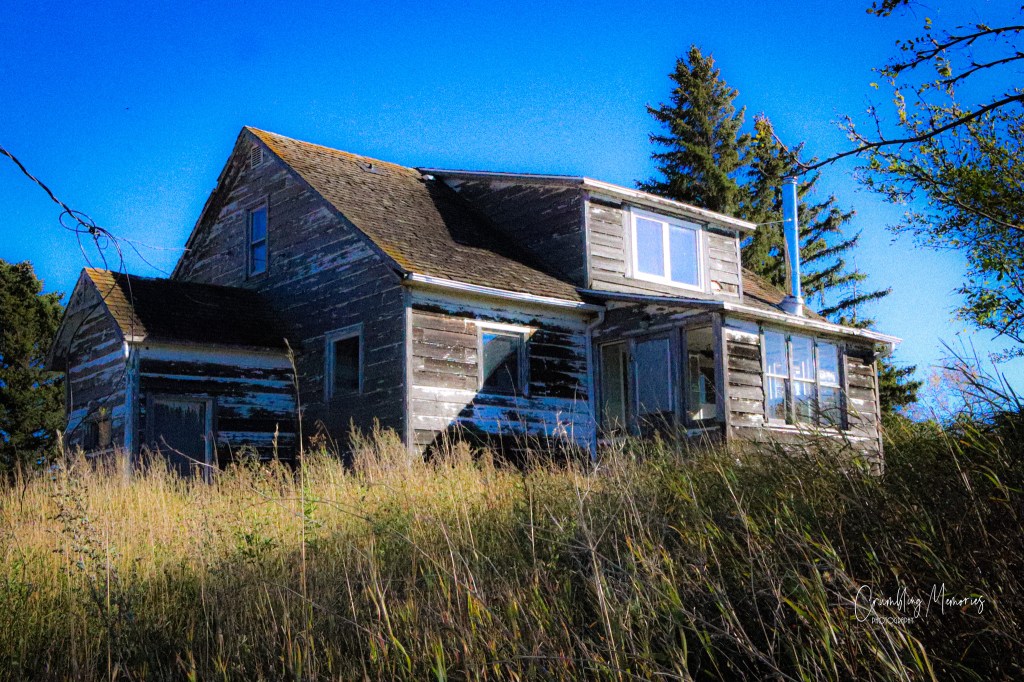
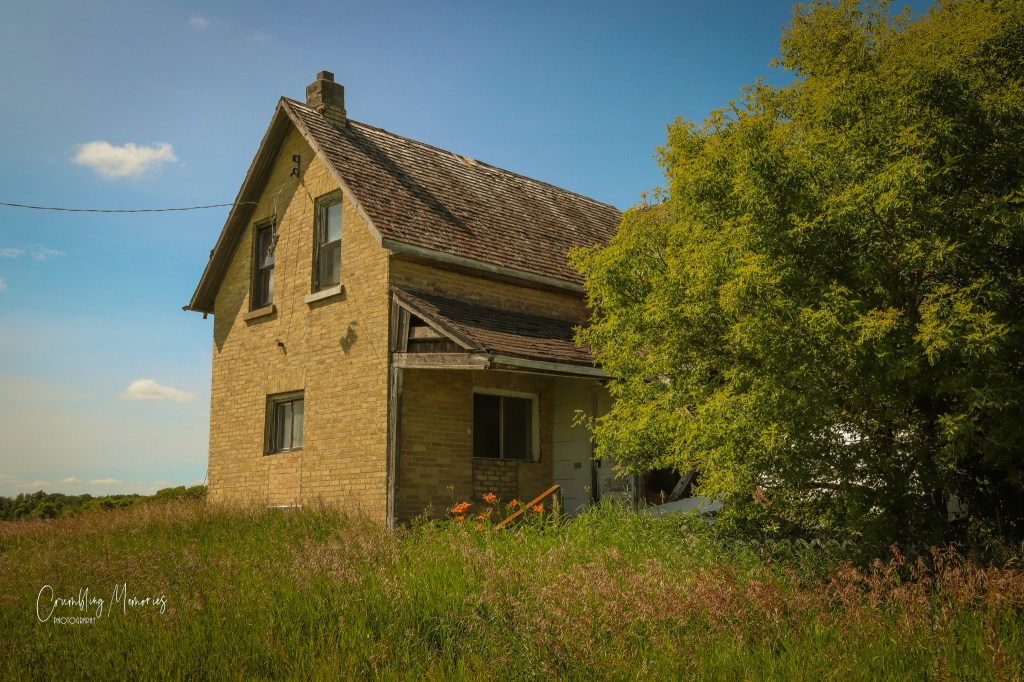
Yet another home I found nothing about. This was a long walk in. When we approached the house, it appeared a little too “new” for our liking. Sounds silly but…
Note the newer windows and the chimney stack. We will mark it down to revisit in a few years.
The barn and house are situated on this section of land. I am not sure that they go together. It might just be a coincidence.
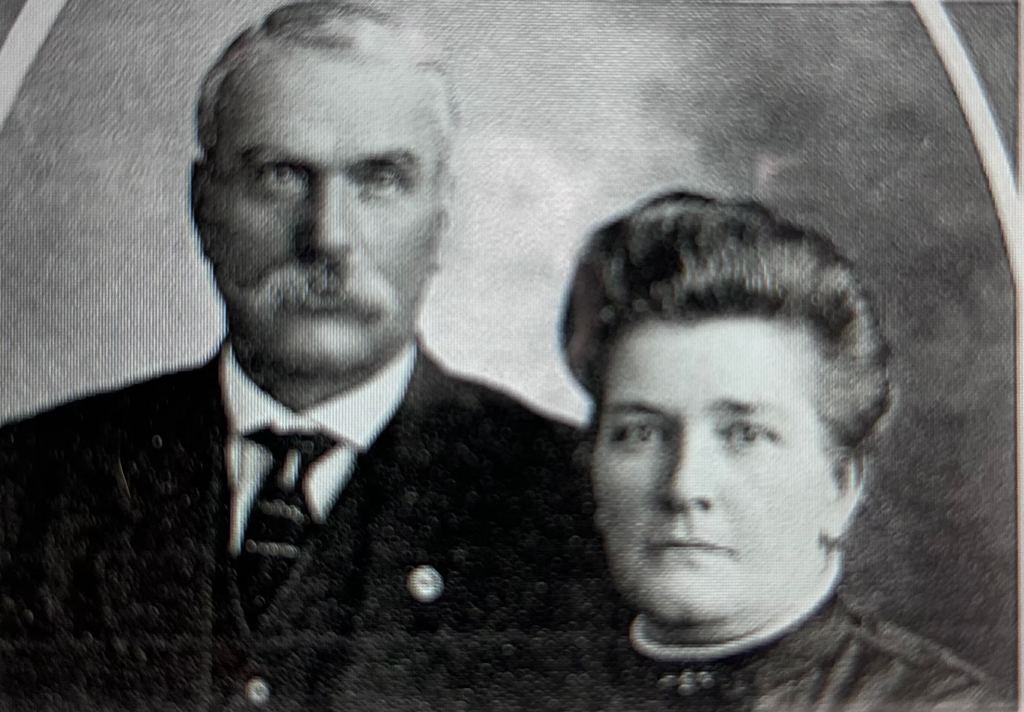
Herman & Albertina from Frankfurt, Germany came to the USA in 1880 and later decided to settle in Canada. Albertina’s family also immigrated to the area at the same time.
In 1890 they moved to this land although record books don’t list them owning this land until 1900.
The couple raised 12 children on this land. I do not know if they built this home or if it came after they left.
In 1929 Albertina passed away and Herman left the property and moved to the nearby town.
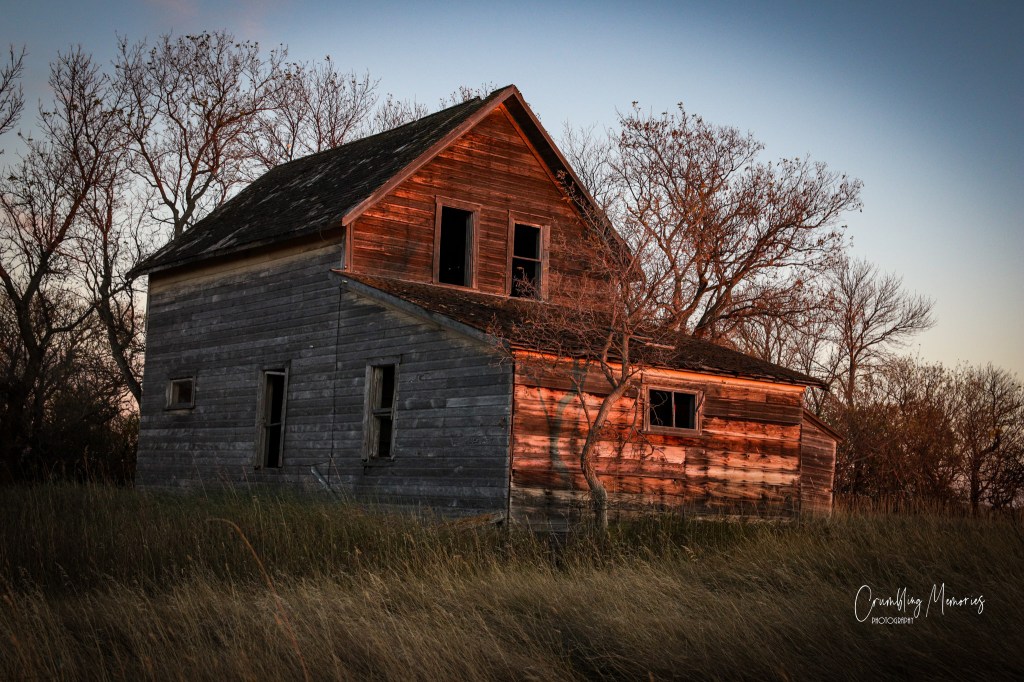
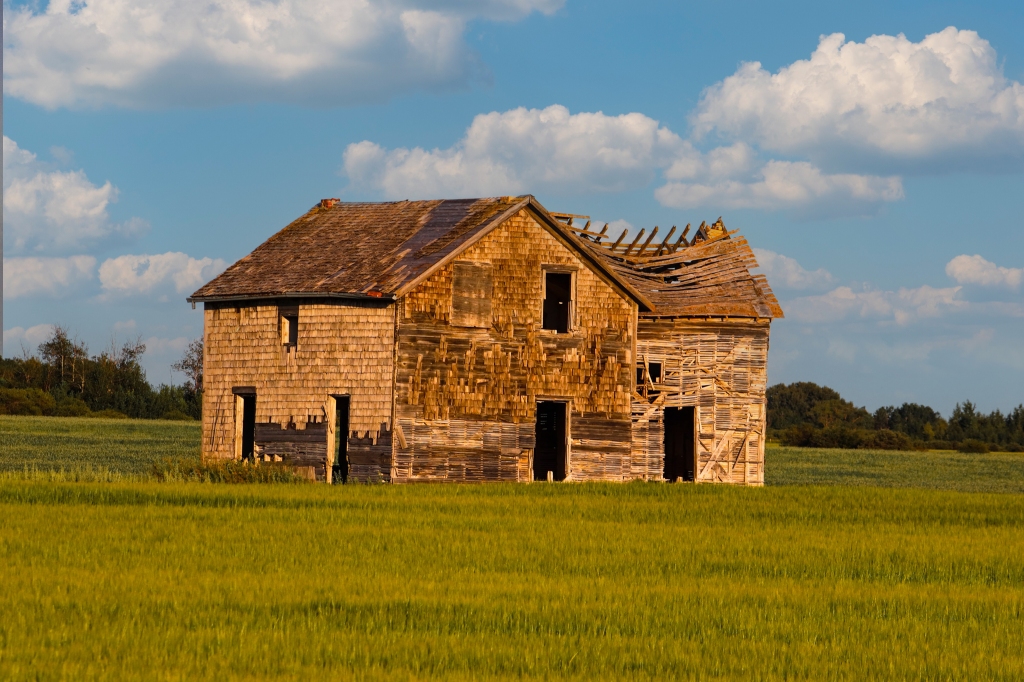
We arrived at this home at what I would call the golden hour. It was a beautiful evening and this property was a perfect way to wrap up a day of bando hunting. Of course I was with my favourite hunting sidekick.
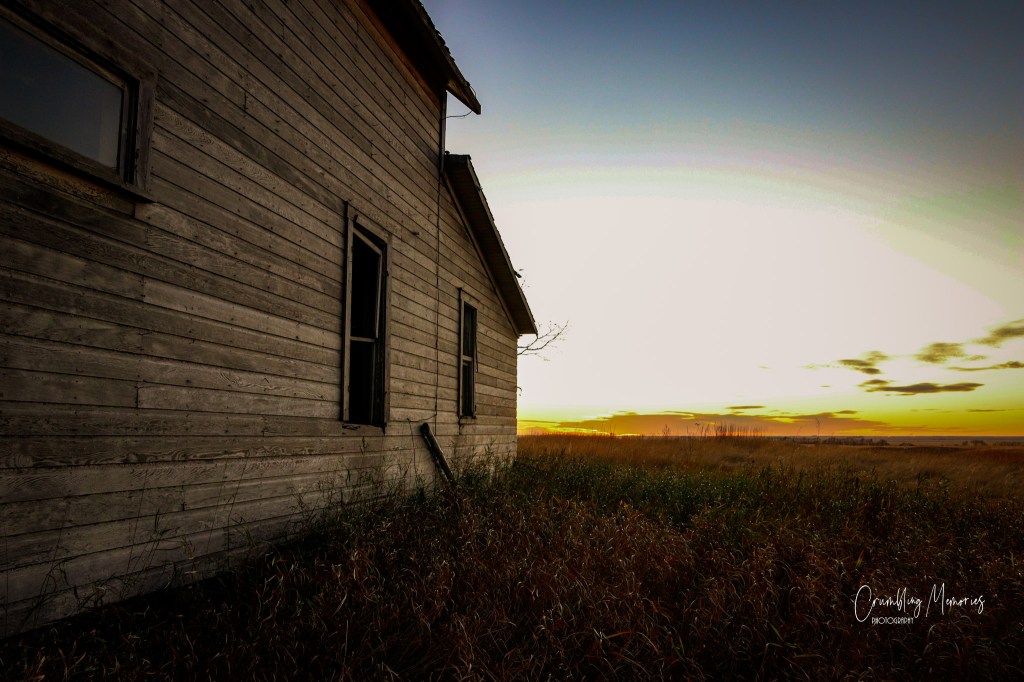
I can only imagine that the family took in many beautiful sunsets from this property. I tried to get a shot of the sun coming through a front, second story window of this house. However, I am too short and couldn’t get a decent one. So, I settled for this instead.
I have searched and searched for some sort of history on this home and have come up with nothing which is really disappointing.
The first recorded owner was a Mr. E. Dunning who acquired the property in 1897. History books for the area acknowledges Mr. Dunning at the owner but write that there is no history for him except to say that he was a bachelor.
You can understand why anyone photographing this home would want to know something about it. Nestled close to the Souris River, this had to be a beautiful home in its prime. Tucked away down a long treed lane you come across the home.
In 1923 Mr. Robinson was the owner of the land. Mr. Robinson also did not have any known history written either except to say that Mr. Robinson farmed with his brother and that they were from the Medora area. A search of that book also came up empty handed.
If I am every lucky enough to find something on this house, I’ll be sure to rewrite what I find out.
Thank you Forgotten Manitoba for taking me out to see this house and getting another one off my to shoot list.
Its been a while. And to make matters worse, I shot this house in 2023! I need to get it together.
That being said, let’s start with a house that I can’t tell you a whole lot about, mainly because the archives are sparse and the details are shrouded in mystery. The first family I could find any history about was the third owner of the land, who purchased the estate in the early 1900s.
Born in Northern Ireland in 1893, he spent his early years surrounded by the lush green hills and rich culture of his homeland. In 1912, seeking new opportunities, he moved to Canada, where he initially farmed for a local landowner, experiencing the challenges and rewards of rural life in a foreign land. However, in 1915, with a strong sense of duty and patriotism, he enlisted to serve in the war, joining the Field Ambulance Militia, where he played a crucial role in providing medical support to soldiers in France amidst the chaos of battle. After several grueling years of service, he returned to his home area in 1923, bringing with him not only memories of his experiences but also a renewed perspective on life. It was during his time overseas that he met Beatrice, whom he married soon after settling back in Canada, eager to start a new chapter together.
DK and Beatrice raised two daughters, both of whom were born in this home, and retired from farming in 1949, after many years of hard work and dedication to their land. The home was filled with laughter and love, as the family created cherished memories together, celebrating milestones such as birthdays and holidays in the warmth of their rural setting. Their daughters grew up immersed in the values of hard work, perseverance, and the importance of family, which were instilled in them by their parents through countless lessons learned on the farm. As their farming days came to an end, DK and Beatrice looked forward to new adventures in retirement, reflecting on a life well-lived while maintaining connections with their community and the land they had nurtured for so long.
On this day we had a little friend out with us. The neighbouring farm dog joined us on our walk out to the house. Honestly, given my fear of dogs, I was more concerned about the bull that was watching us from across the pasture! We survived.
This old house, perfectly situated in a crop didn’t require us to get any closer than this roadside shot.
While I always want to know more, this was another that left me empty-handed. It happens more often than not.
That being said, it also makes me think about house much longer this hobby is going to last. While I have hundreds of markers of houses to see, more and more landowners are burning them down.
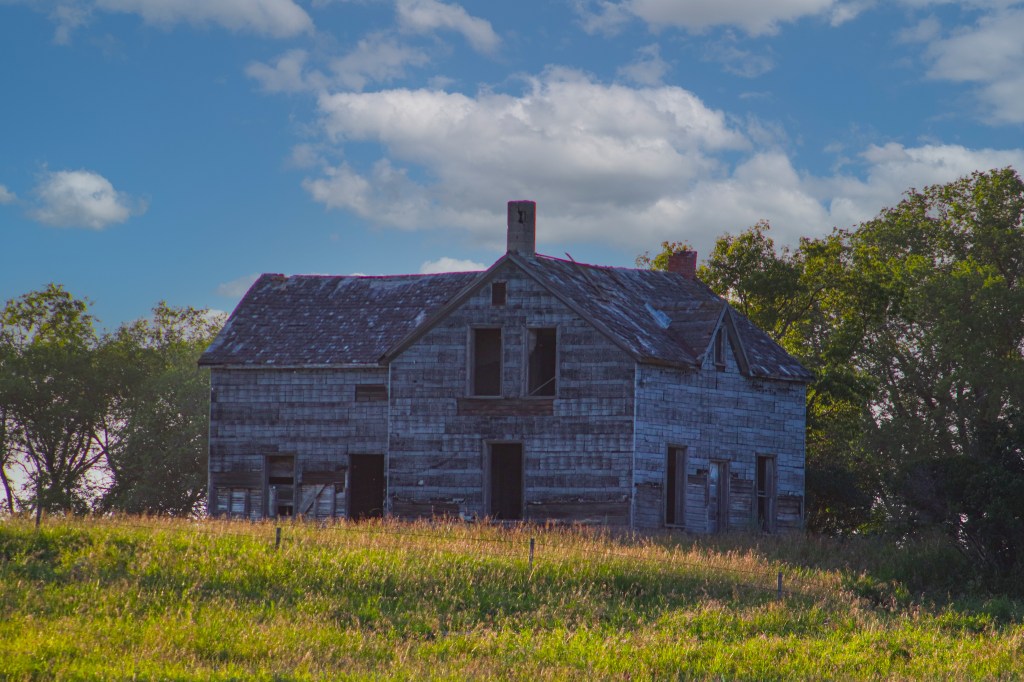
Leaving a roadside stop, we came across this house tucked away in the trees. Taken across the field with my unsteady hand and 300mm I managed to get an okay photo.
I wasn’t too terribly disappointed when I got home and noticed the poor quailty of the shot and made the discovery that there was little to no info on this homestead.
A young couple moved to this property around 1918 and here they raised 5 sons and 1 daughter. They dubbed the property the Graves Estate after the original homesteader who claimed this land in 1882.
There is no history on the first homesteaders of this land even though they owned the property for 14 years. From what I have gathered, they owned this land but did not live on it.
In the 1900’s Mr Fraser acquired this land but raised his family on another section close by. They had a large family and when their son married, he moved his new wife here. Together they farmed this land and raised a family of their own.
When the couple were too old to farm the land anymore, their daughter and her husband took over the land. They did not live on the land either and eventually one of their two sons took over the land.
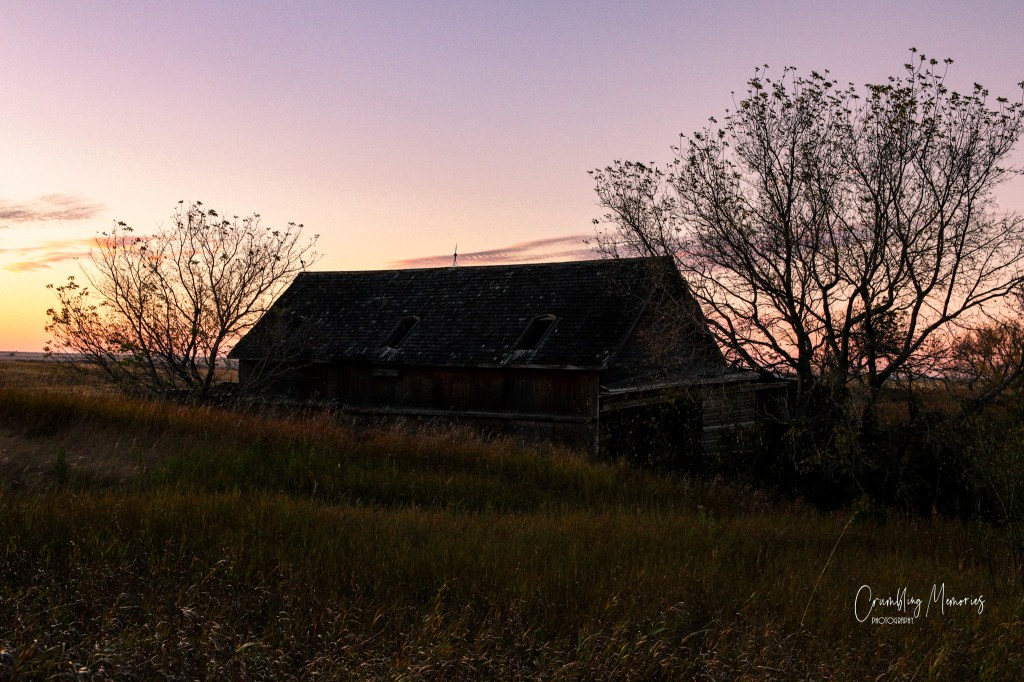
This does not look like a home to me but a school. There was a school on the section of land next to this one. Unfortunately I cannot find any mention of it being moved here.
I will admit that it does look like some of the other schools in the area. It has a different entrance, but that is speculation and I cannot confirm.
I’d be lying if I said I wasn’t disappointed when my search of this old place came up empty handed.
I thought I hit the jackpot when I started looking for history on this one. Yet it turns out that what I found contradicted itself. So, I’m going to consider this one another one that left me empty handed.
But, it was not all for nothing. While trying to make sense of the stories, I found another old abandonded house that I have put on my to do list this coming summer.
I don’t recall how many photos I took, I should count.
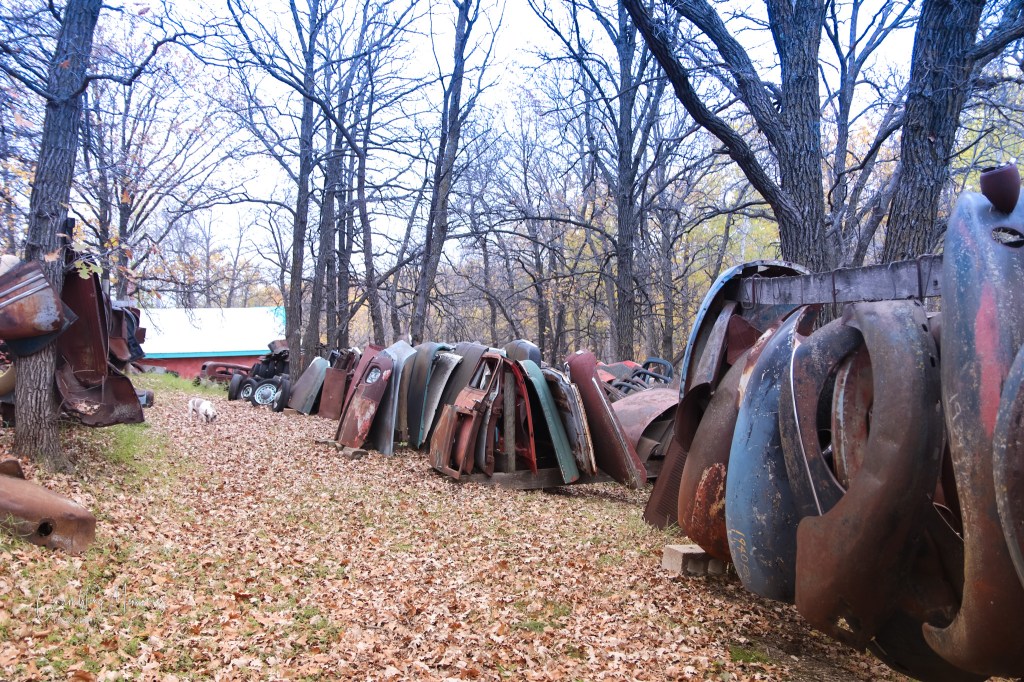
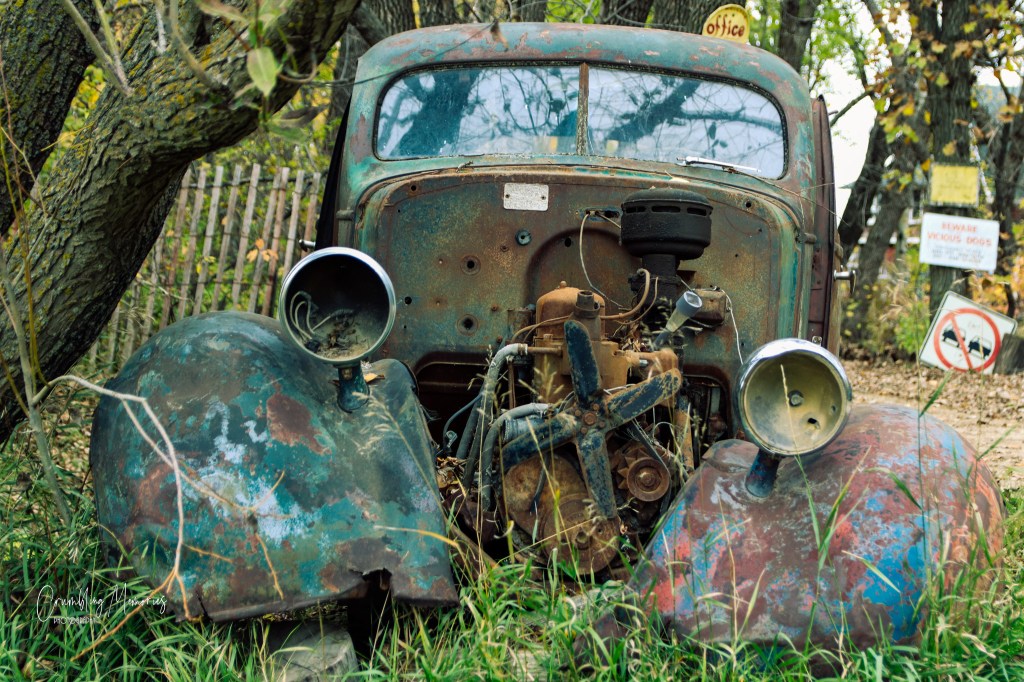
Years ago I remember stopping at an old car lot in Saskatchewan along the number one highway. Not nearly as many cars and most were somewhat intact. And I do not recall seeing an area with parts like this lot.
I love this old car and what is was used for.
Imagine firefighters hauling ass down the highway in this?
This one reminds me of one of those old ice cream trucks. They would circle around the residential streets on the nice evenings in the summer.
Well, today I finally finished up the car folder from the photos I took back in October, 2023.
I will certainly go back this Spring/Summer. I did not have enough time to walk the entire lot when I went the first time.
Like I said before, I have never seen anything like this. You see areas on properties littered with cars but this man has a system. Everything is marked and parts are organized.
If you are an old car enthusiast, he likely has what you need.
Loading these photos made me think of my neighbour. He has an old truck that he restored and if my memory serves me correctly, his dad had a truck just like it. I took his son’s grad photos with. I’m going to have to ask him if he knows about this place.
The next time I go, I’ll take Christian along. He isn’t as enthusiast about the old cars but I know he will take some amazing shots here.
I don’t recall if I mentioned the little dog that lives here. He did explore with me for a little bit.
You can see him in the photo above. He wasn’t interested in me for very long and if my memory serves me correctly, he was deaf.
These photos are all taken on the house section of the land. There are still two quarters to discover. I certainly did not give myself enough time when I planned this trip. I had no idea how many cars were really here.
I give the old car guys a lot of credit. To take an old car, restore it, hunt for parts. The time and dedication and money it would take to make it va-va-voom again!
The original homesteader of this land came to the area in 1881 with his parents and siblings and purchased this land in 1882. In 1890 he left for Australia and there is no recorded record of his return.
Charles came to Manitoba in 1890 with his parents. In 1918 his parents bought this property where Charles grew up and later married, farmed and raised a family of his own.
At this home Charles and his wife raised 5 sons and 4 daughters. Charlie was an active member of the school board and the municipal council. Barbara was a homemaker. It is said that the couple never missed a New Year’s Ball.
The couple retired to Belmont in 1950 when their son took over the farm. Unfortunately Charlie passed away 9 years later leaving Barbara alone until she passed away in 1970.
Charles youngest son, L.D. who had lived on this property since he was 4 years old took over the land and raised 3 kids of his own here.
L.D. and his wife retired to Belmont in 1981. It is my understanding that none of L.D’s children farmed.
T. W. arrived in Canada from Arthur, Ontario in 1885. He settled on this property and in 1907 married Jennie. Together they had 10 children, all of 1 which was born on this farm. And sadly, two of those children there stillborn.
In 1942 T. W. sold the farm to his nephew and he and his bride moved to town. He passed away in 1951 at the young age of 74.
Not a great photo given that it was taken from the road with my 300mm but you can’t pass up shot of an old, abandoned house.
John, originally from England, came to Canada as a young boy. First settling in Cannington, Ontario and then moving west to Southwestern, Manitoba.
In 1882 John married Elizabeth and settled on another homestead. There they raised two boys, Sidney and William. As a young man Sidney purchased a 1/4 section of this same parcel of land and raised two sons of his own.
When Sidney’s son Cecil got married and needed a place of his own to farm and raise a family, he bought the southwest section of this land, close to his parents and started a family of his own.
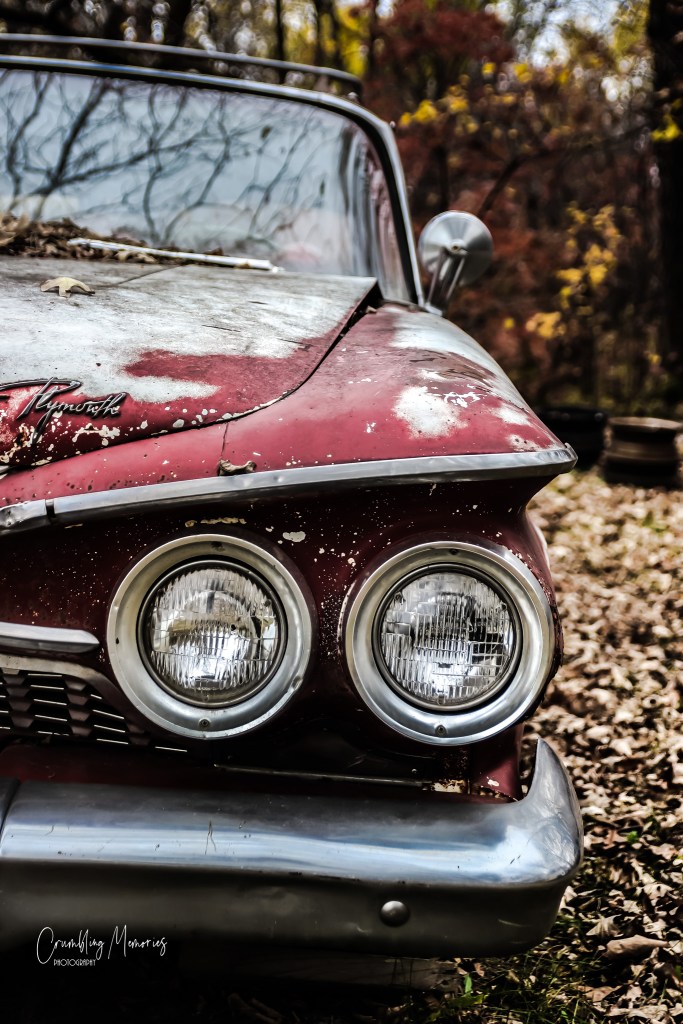
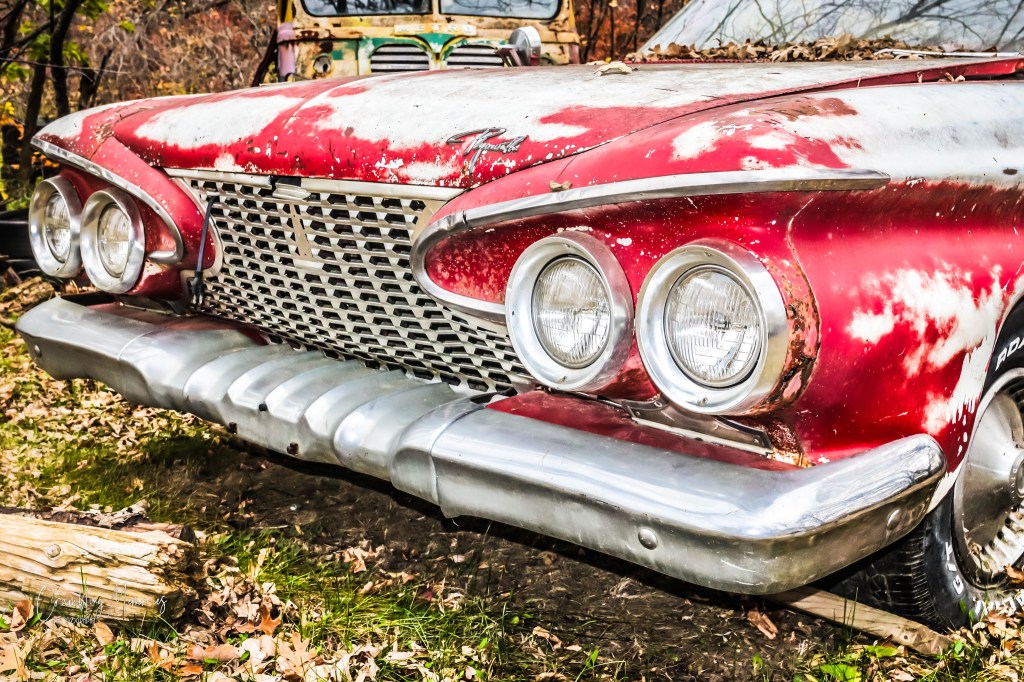
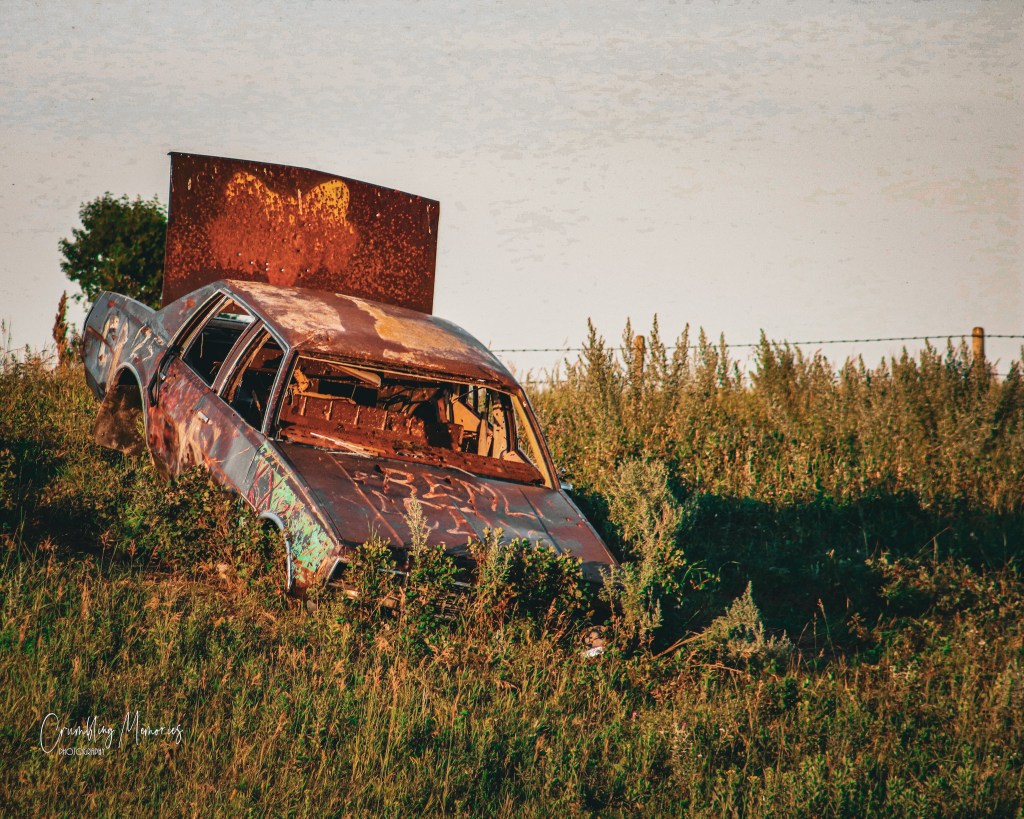
Now this house has been in my to shoot binder for some time but Christian then discovered this old car behind the house and as much as I love old abandoned houses, when you add an old car to the mix, it makes it WAY better.
This was one of many locations we shot on this particular afternoon and thankfully since Christian had already been here, he was gracious enough to come back with me and take a few more shots of his own.
I did not post a photograph but this is another one of those old brick houses where the brick is now starting to fall off. I am going to assume that when the roof goes, the water leaks down between the wood structure and the brick which then causes the brick to fall off. There are a few of these red brick houses in the area and recall that there was a family that owned a company that made these bricks.
Richard Wilson moved with his father, step-mother, siblings and step-siblings to the Marringhurst Plains in the RM of Argyle. Richard’s parents were originally from York, England where theiy married but then moved to Ontario where Richard and his sister were born. Richard chose this property to homestead on. He then married his wife Annie in 1863 and together they would raise a family of 8 on this homestead.
The first house on the property was a log home built by Richard upon his arrival to the Marringhurst Plains. At that time he also erected buildings for his livestock. In 1909, the Wilson’s built this “stately” two-storey, red brick home to replace the original log farmhouse.
In 1898 at the tender age of 34 years, Annie died leaving Richard with many children to raise. Richard married Annie’s sister, Louisa and together they had 3 more children.
The children grew up and went off to operate their own farms and raise their own families and by 1970 the home stood empty.
The home has been restored to its original grandeur and renamed the Marringhurst House. The home now operates as a turn of the century farm house museum and is open upon request for tours.
I cannot believe that I have still not posted these photos. I do beleive that part of my hesitation or procrastination was getting my info together for this family and making sure I could identify the whales I photographed correctly.
Now this is likely going to be a long, boring post if you are not at all interested in killer whales. First let’s start of by clarifying that they aren’t actually whales, they are the largest member of the dolphin family.
Let’s also talk about the name killer whale. In today’s society, people do not like the name killer whale and don’t want us to use it anymore. Let’s face it, they are the apex predator of the ocean so the name fits. Well I guess aside from the whale part but you get my drift. Anyways, instead they want us to call them orca. And orca means demon from hell.
So you may know that there is a pod of orca that are considered endangered. They are known as the Southern Resident Killer whales and they travel the waters of the west coast from northern British Columbia down into Washington. They only eat salmon. And this is why they are endangered and are heavily protected in the waters in which they live. Currently there are only 74 of them as at December, 2023. If you were on a whale watching tour, they would not stop to allow you to observe them.
Then there are the Biggs or Transient Killer Whales. This eco-type eats anything. Dolphins, sea lions, baby humpbacks, seals, birds. Given they will eat a wide variety of marine life, their population is a lot healthier.
You read that right, baby humpbacks. And this year we saw a humpback that was attacked by orcas three times. I shouldn’t say attacked because Valiant has started some of these encounters with orca. But that’s a story for a different day. We did see Valiant on our last trip to B.C.
So, some history. Since seeing orca at Vancouver Aquarium at about 8 years old, I have been obssessed. I read books about them and tried to learn all I could about them. Then last summer, last minute, Colton wanted to go watch them. So I went. He has never seen them before and I had never seen them in the wild. So of course when they surfaced, it was pretty exciting.
That day we came upon a Bigg’s family. There were 3 whales traveling together. Sam, Tread and her 2022 born, unnamed calf.
Let’s start with Sam.
In the summer of 2013, this then 2-year-old orca T46C2 or Sam, was stranded in a small cove near remote Aristazabal Island on the North Coast of B.C. for several weeks. He had swum into a shallow bay and became psychologically stuck, afraid to swim back over the shallow sand bar. He was not eating, was quickly losing weight and was calling loudly for his family.
Luckily this little whale was found by the Vancouver Aquarium who monitored the situation for a few weeks before deciding this animal was not going to leave on its own. In Augst of 2013 on their first try to get T46C2 out of the bay, they were successful! The next dilemma this young whale would face would be locating his family again. In October 2014, Sam was spotted swimming with his mother and siblings in Blackfish Sound, near Telegraph Cove.
On July 22, 2023, I took this photo of Sam swimming happily with members of his extended family. Male orcas are said to be the ulitimate Momma’s boys and they stay with their Mom’s their entire lives. Sam doesn’t travel with his Mom often and moves from family to family.
Here is the 3 of them together. Now in the whale world, there are 3 ways to identify a killer whale. Eye patch, saddle patch and for some, dorsal fin because some have a visible dorsal fin injury or a very distinct shape. On this day we were told that this was an entirely different pod of orca. I was able to confirm otherwise with another naturalist out of Naniamo. She is my go-to whale question person now. In this picture Sam is following behind and the youngster is travelling in echelon position with its mother, Tread.
The other two are T46B Tread and her 2022 calf T46B1C.
Firstly, let’s talk about Tl’uk. In 2018 Tl’uk (T46B1B) was born to Tread.
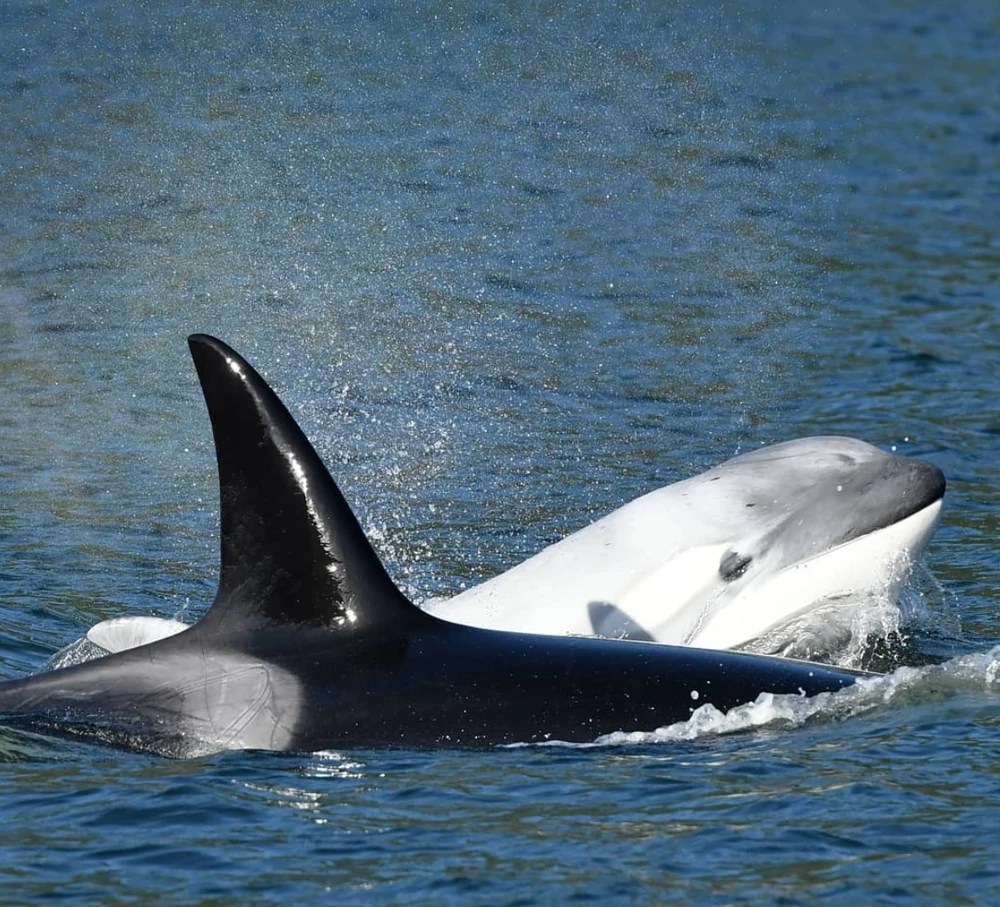
Tl’uk not only caught the eye of local whale watchers and researchers, he also drew the attention of people globally because he is not your average black and white orca. Tl’uk looks like he has been white-washed and scientists are not entirely sure what condition Tl’uk had that caused the muted pigmentation in his cells. Some suspect a condition called leucism may have been the culprit. His pale colouration resulted in naming him Tl’uk, which is a Coast Salish Halq’eméylem name for moon.
Tread was born in 2003 to Raksha who was born in 1988. Tread has had 3 calves including this 2022 born calf who is not named and as far as I know, they haven’t confirmed the sex of. You will note that the little one has a yellowish tinge to its white? This is normal. As the youngster grows and fattens up, that color will turn white.
I was really hoping that these 3 would do something other than just swim along beside us. I was hoping for a belly flop or some spyhopping or some fluke but they just cruised along beside us. Rules say that there is a limited amount of time that a boat can stop and observe and there were a few in this area.
I’m not going to bore you with anymore whale talk.
To me this was a very successful whale watching tour. We were out on the boat about 5 hours. We seen the killer whales and then headed back to Vancouver. Aside from not being able to identify the whales correctly, the tour was okay. We left from Granville Island and went with the Prince of Whales company. After the trip that Colton and I just made to B.C. where we did 3 trips out to look for orcas, I do think I would try another company next summer and the plan is to get over to the island and try either Naniamo or head up to Telegraph Cove. I think we will decide that once we get ourselves to the coast.
The closest relatives to bears are seals, sea lions and walrus. Pinnipeds (the name given to the scientific order for seals, sea lions and walrus) are the sea-going cousins of bears.
Twice the size and just as ornery as a polar bear, these two creatues have almost identical skulls and are marine predators.
Stellar sea lions are abundant in the coastal waters of the pacific ocean but are still considered near threatened.
Males arrive on what scientists called a rookery. Territorial, this sends other dominant males elsewhere as the reproductive rookery is claimed and within weeks the females and immature young arrive.
I wouldn’t say we were close to this island but close enough to hear how loud these animals are. Especially the dominant male who plays a key role in reproduction.
We found fthese three a little further up from the island covered in sea lions. The one didn’t even move. This buoy is in the middle of the ocean, no island or coast nearby. These three are lucky there were no orca sightings in the area!
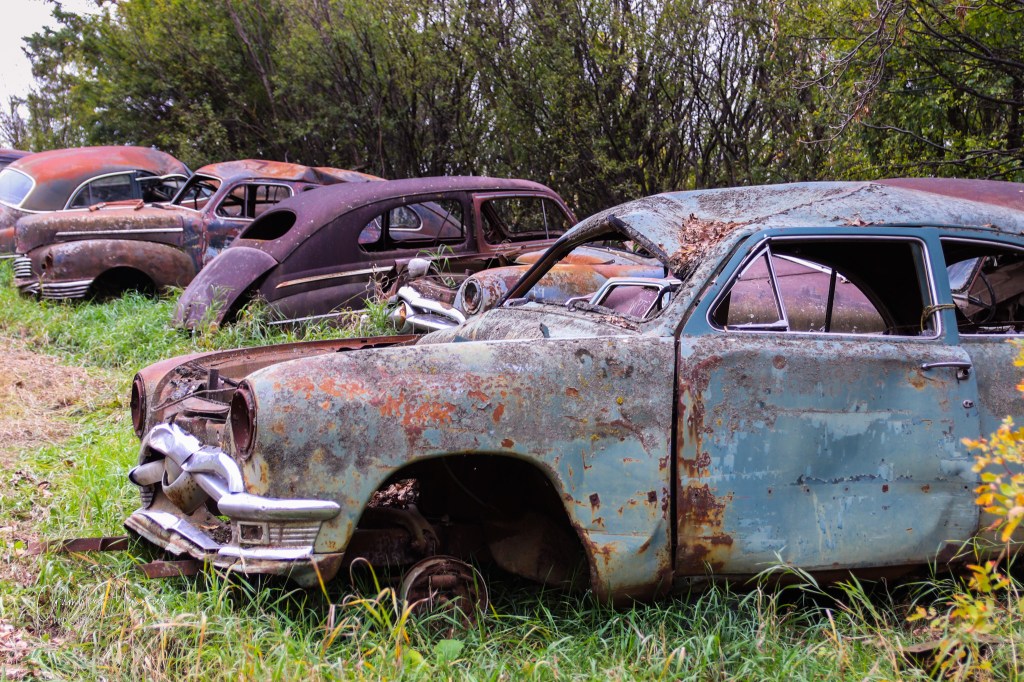
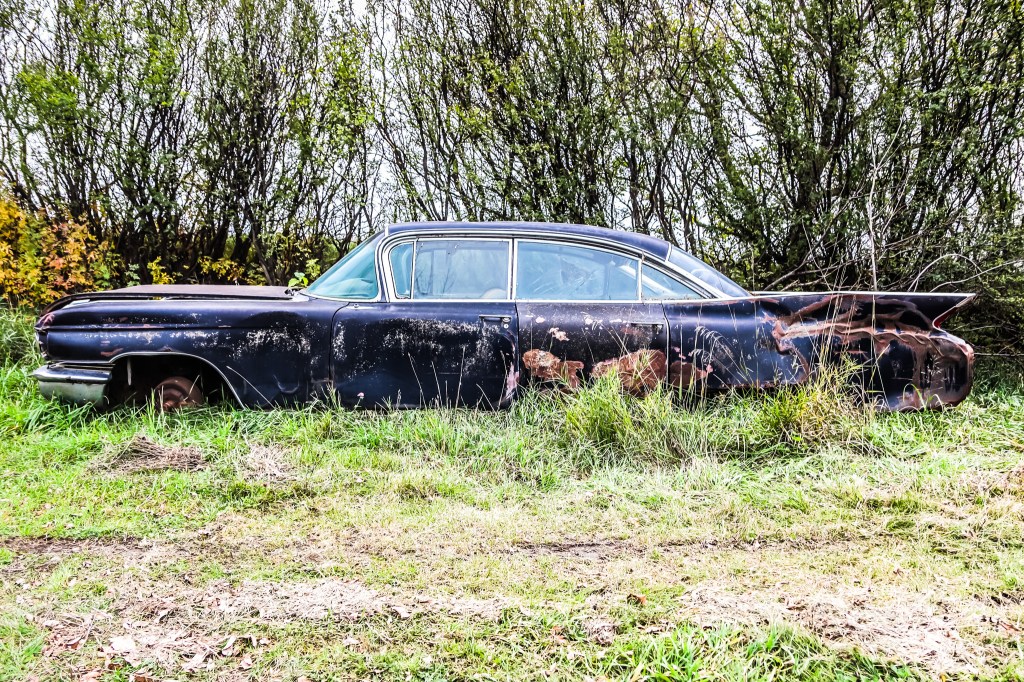
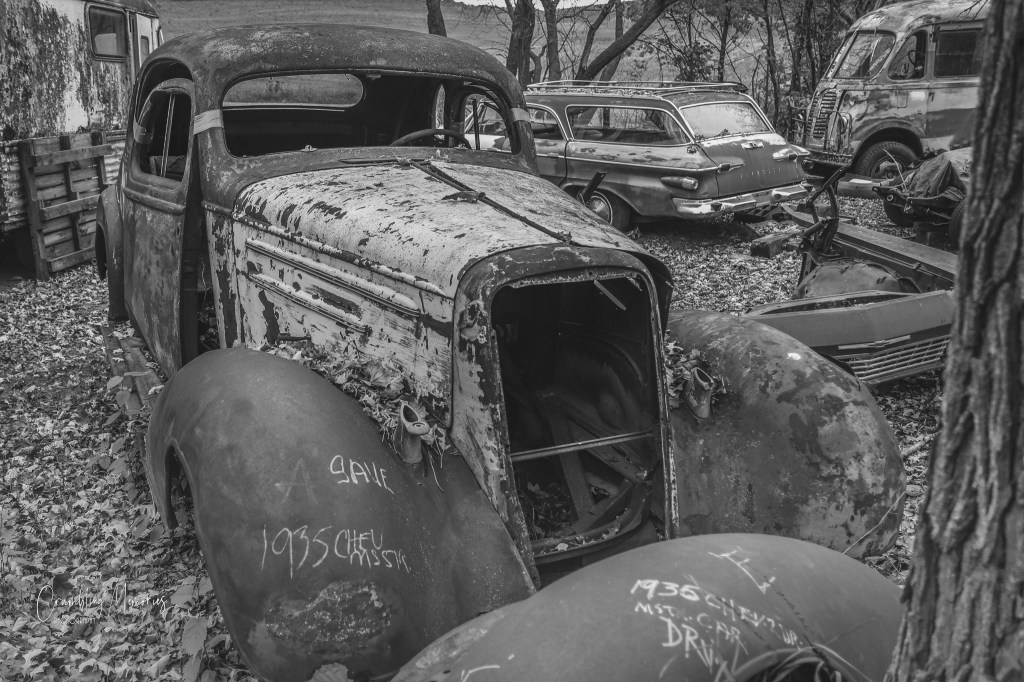
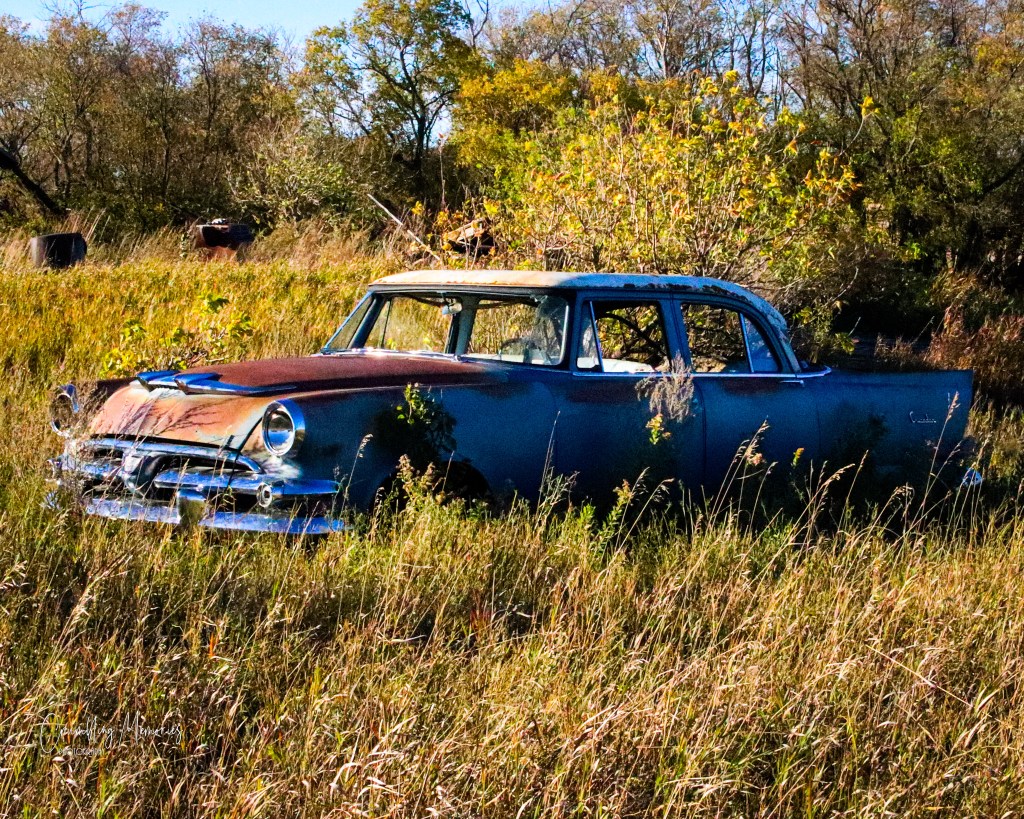
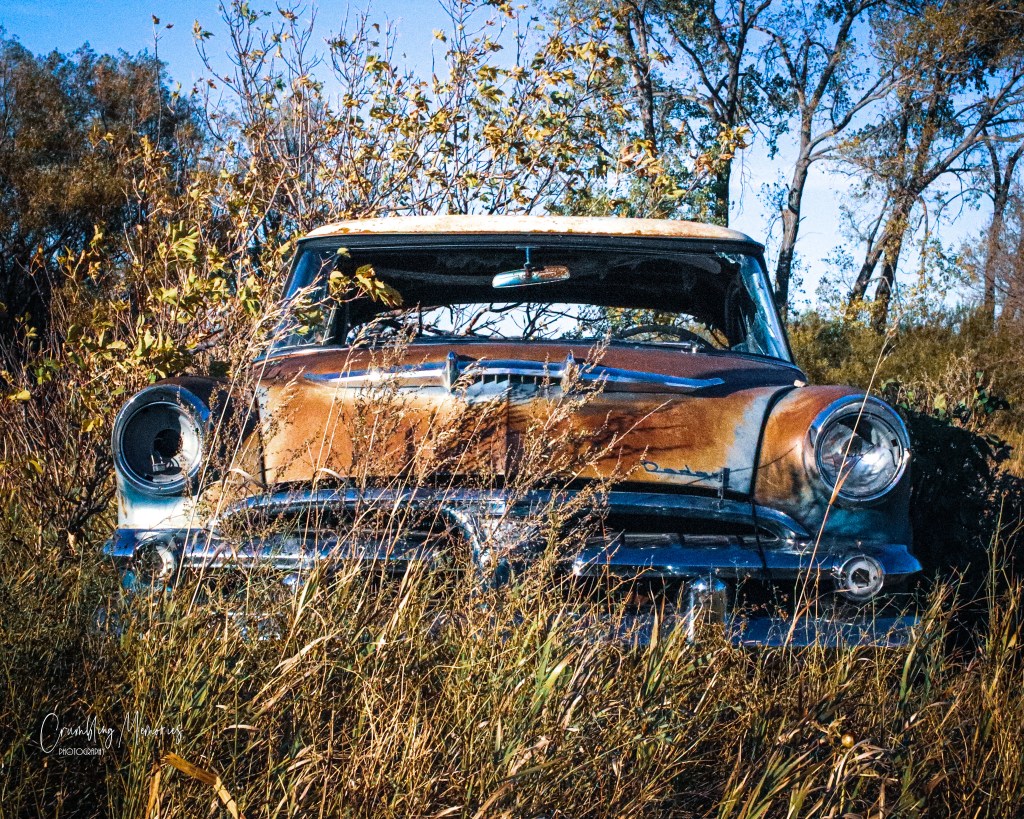
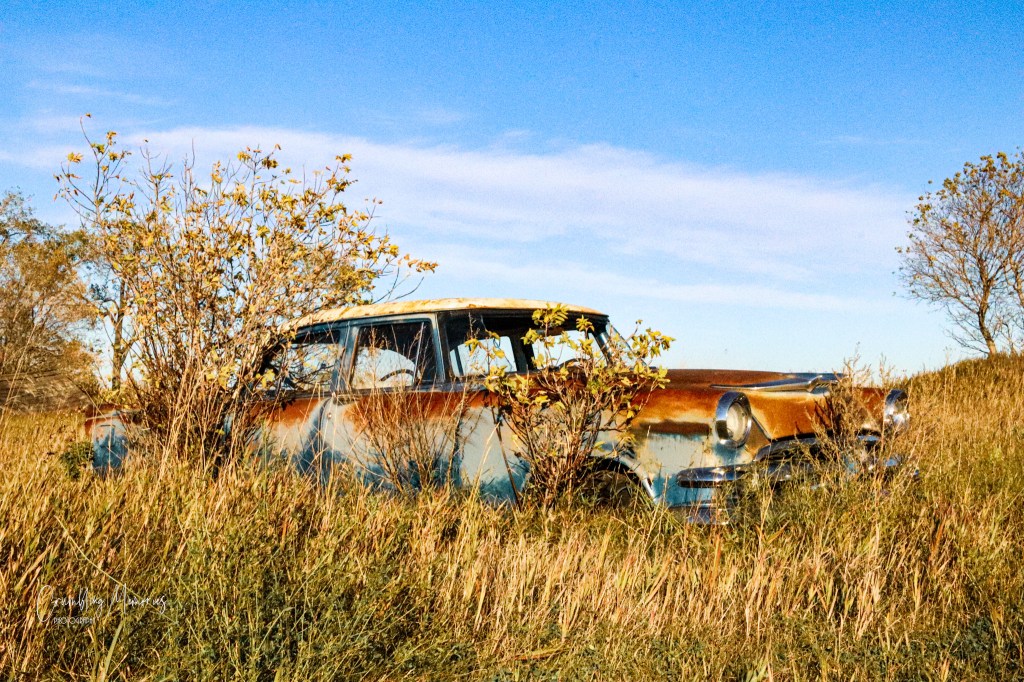
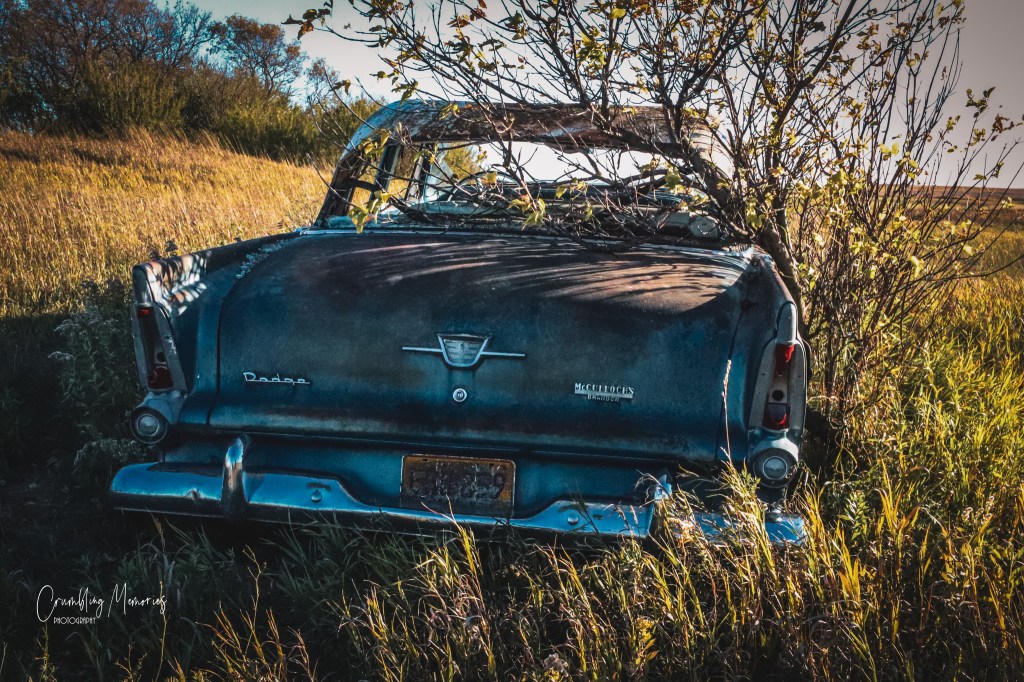
Last Fall I attended at this old car lot that has been on my list to shoot for some time. I had no idea how many cars were there and didn’t give myself nearly as much time.
I called ahead to confirm with the landowner that it was okay for me to come. He charged me $20 to wander around his property and take whatever photos I wanted.
Given that I had another engagement to attend to, I did not get around the entire property but do plan on heading there again with Christian. The old cars don’t really interest him so I was happy when he asked if we could come along with me when I went back.
So in order to get all the photos I liked posted, I’ll do a handful every now and then and get them done, hopefully before we go again and I get to finish what I didn’t the first time.
I don’t know a whole lot about cars but there were some really interesting vehicles on this lot. And the organization. Wow.
While I wandered the first part of the yard, I had the property guard dog with me. He was a little hearing impaired Jack Russell named Ketch. He quickly got bored of me and my continous stopping so he ditched me.
The weather was just right the day I went. It was slightly overcast and cool. The leaves were turning but hadn’t completely fallen. Parts of the lot were wet but not enough to get your shoes dirty or make it unmanagable.
The other night while hunting for houses, we came across this old house from many moons ago. Easily shot from the road, we stopped for a couple shots to add to our list of houses photographed. I wish I had kept better stats since the start of this hobby.
This is the house where I stepped on the board suspended over a hole. I was content on the road. I had been here many years ago and had investigated inside during that visit.
The sun was starting to set which was giving off that golden hour glow which I love.
I have a new system for keeping track of houses I want to shoot and houses I have shot. Its a work in progress and it appears to be a lot simpiler than the big old binder that Christian teases me about. I will hold on to the binder because when I search for the history, I do use the original page to record notes and the name of the blog post, date and contact information for permission.
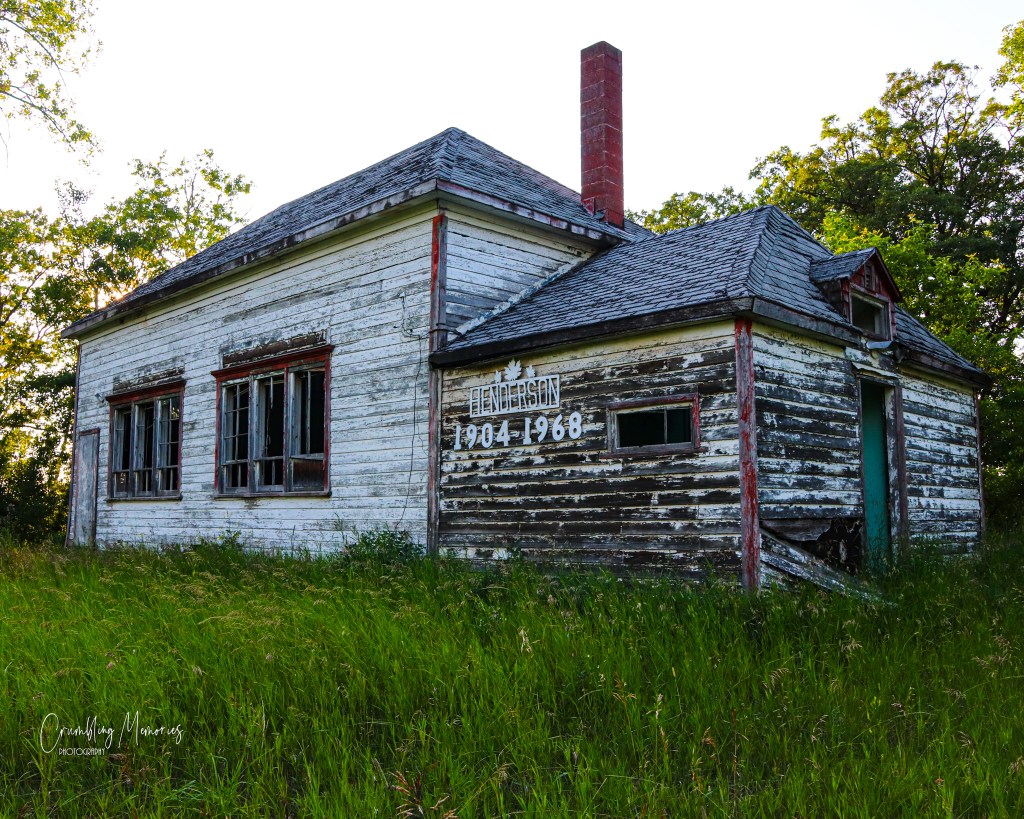
Its been some time since I’ve checked on this school and because we were in the area, we figured why not. It is not maintained like it was when I first visited.
And I do beleive that the school had far more windows intact when I was there last.
So if you are unfamiliar with the history, here is a quick recap. Built in 1904 this school operated until 1968 when it joined the current school division in the munincipality.
During the 1940s, the building was used for services of the Bannerman Church of Christ. It is my understanding, from a person who grew up and still farms in this area, that a local ladies group owned the school building for a while and held meetings here. Then the RM bought it back and has remained unused since then.
I had to go inside because I remember the inside of the school being in relatively good condition. The school desk and piano remains. And over the years, vistors have written on the chalkboard.
While school is out for summer for most, this place was pretty busy. Upon our arrival, a few birds took off out the windows. And, something was scurrying around in the ceiling. Given that we were blocking the main exit and the ceiling isn’t exactly stable, we left.
I’ll go back again in a few years and see how its making out.





























 CRUMBLING MEMORIES