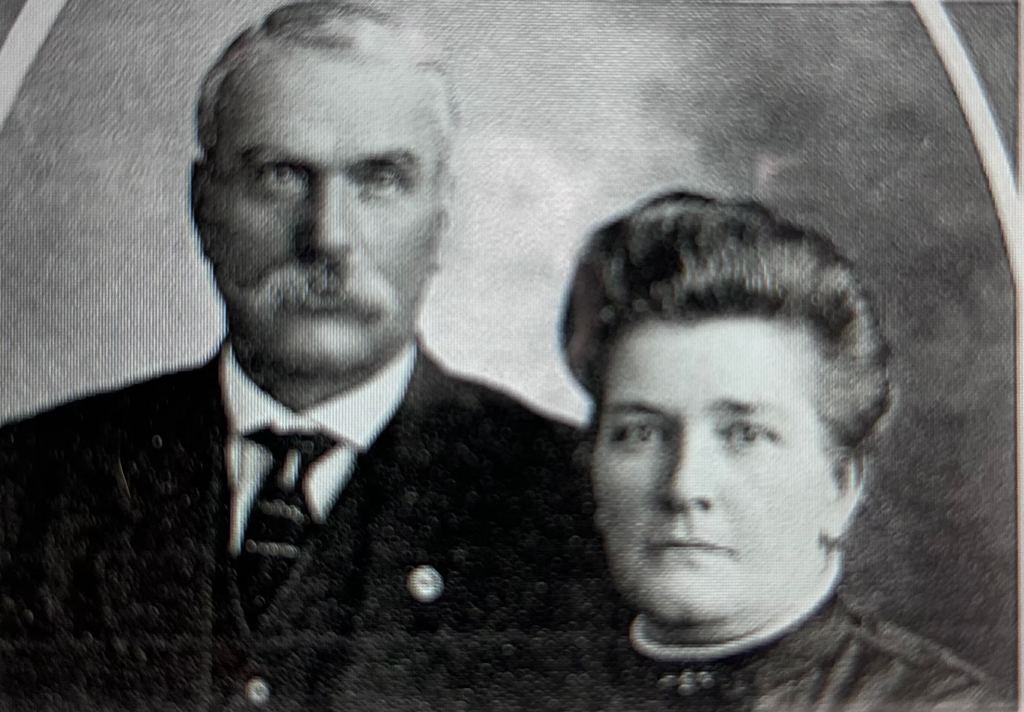
Herman & Albertina from Frankfurt, Germany came to the USA in 1880 and later decided to settle in Canada. Albertina’s family also immigrated to the area at the same time.
In 1890 they moved to this land although record books don’t list them owning this land until 1900.
The couple raised 12 children on this land. I do not know if they built this home or if it came after they left.
In 1929 Albertina passed away and Herman left the property and moved to the nearby town.
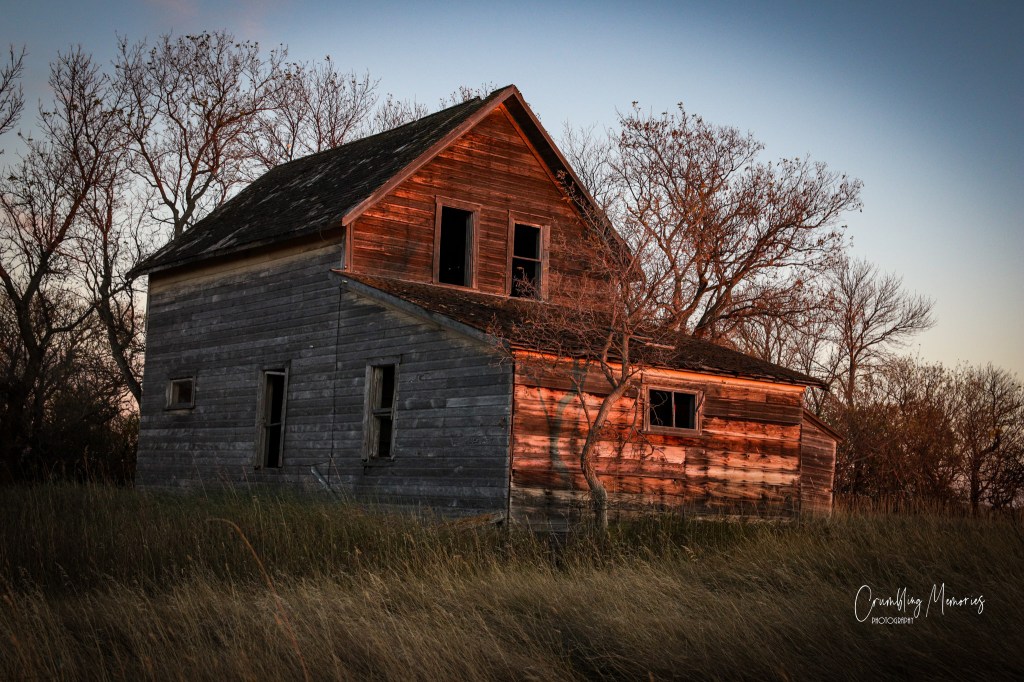
We arrived at this home at what I would call the golden hour. It was a beautiful evening and this property was a perfect way to wrap up a day of bando hunting. Of course I was with my favourite hunting sidekick.
I can only imagine that the family took in many beautiful sunsets from this property. I tried to get a shot of the sun coming through a front, second story window of this house. However, I am too short and couldn’t get a decent one. So, I settled for this instead.
Its been a while. And to make matters worse, I shot this house in 2023! I need to get it together.
That being said, let’s start with a house that I can’t tell you a whole lot about, mainly because the archives are sparse and the details are shrouded in mystery. The first family I could find any history about was the third owner of the land, who purchased the estate in the early 1900s.
Born in Northern Ireland in 1893, he spent his early years surrounded by the lush green hills and rich culture of his homeland. In 1912, seeking new opportunities, he moved to Canada, where he initially farmed for a local landowner, experiencing the challenges and rewards of rural life in a foreign land. However, in 1915, with a strong sense of duty and patriotism, he enlisted to serve in the war, joining the Field Ambulance Militia, where he played a crucial role in providing medical support to soldiers in France amidst the chaos of battle. After several grueling years of service, he returned to his home area in 1923, bringing with him not only memories of his experiences but also a renewed perspective on life. It was during his time overseas that he met Beatrice, whom he married soon after settling back in Canada, eager to start a new chapter together.
DK and Beatrice raised two daughters, both of whom were born in this home, and retired from farming in 1949, after many years of hard work and dedication to their land. The home was filled with laughter and love, as the family created cherished memories together, celebrating milestones such as birthdays and holidays in the warmth of their rural setting. Their daughters grew up immersed in the values of hard work, perseverance, and the importance of family, which were instilled in them by their parents through countless lessons learned on the farm. As their farming days came to an end, DK and Beatrice looked forward to new adventures in retirement, reflecting on a life well-lived while maintaining connections with their community and the land they had nurtured for so long.
On this day we had a little friend out with us. The neighbouring farm dog joined us on our walk out to the house. Honestly, given my fear of dogs, I was more concerned about the bull that was watching us from across the pasture! We survived.
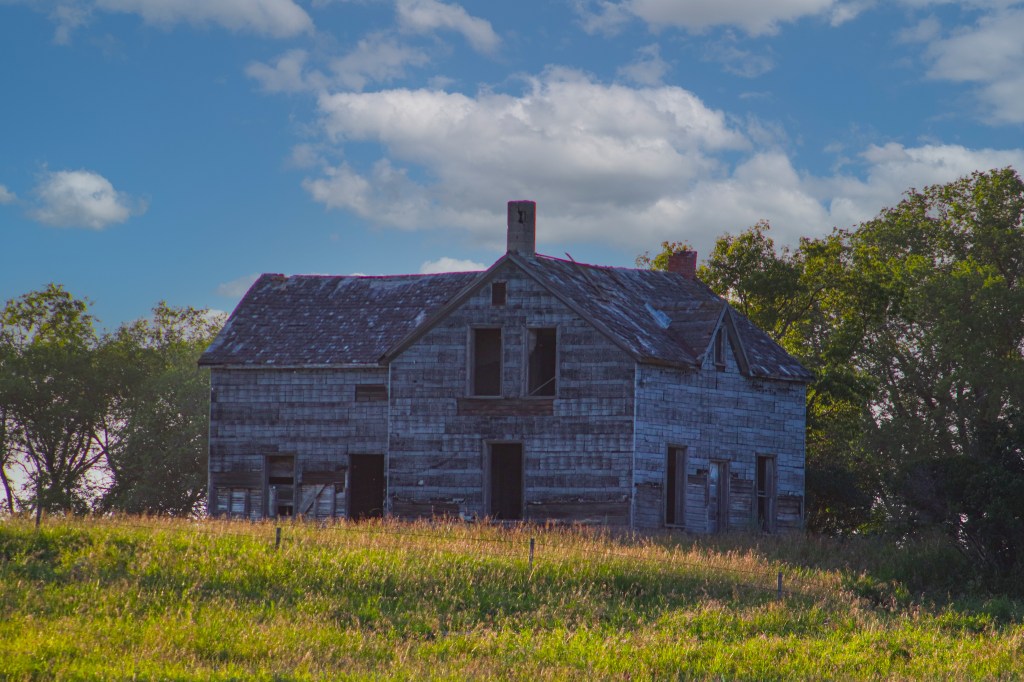
Leaving a roadside stop, we came across this house tucked away in the trees. Taken across the field with my unsteady hand and 300mm I managed to get an okay photo.
I wasn’t too terribly disappointed when I got home and noticed the poor quailty of the shot and made the discovery that there was little to no info on this homestead.
A young couple moved to this property around 1918 and here they raised 5 sons and 1 daughter. They dubbed the property the Graves Estate after the original homesteader who claimed this land in 1882.
I’d be lying if I said I wasn’t disappointed when my search of this old place came up empty handed.
I thought I hit the jackpot when I started looking for history on this one. Yet it turns out that what I found contradicted itself. So, I’m going to consider this one another one that left me empty handed.
But, it was not all for nothing. While trying to make sense of the stories, I found another old abandonded house that I have put on my to do list this coming summer.
I don’t recall how many photos I took, I should count.
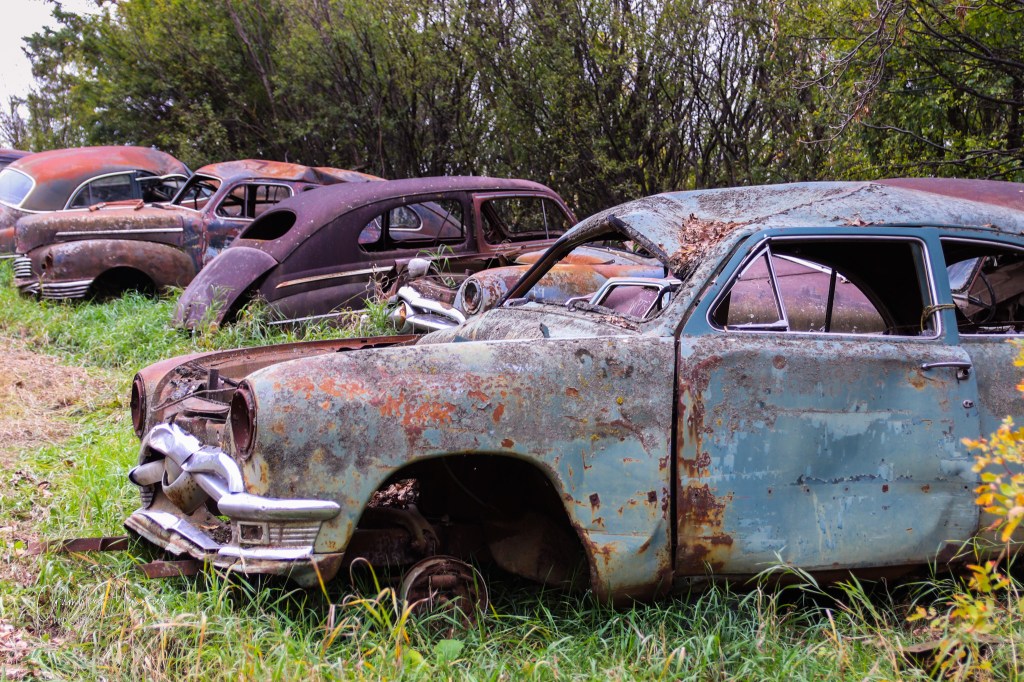
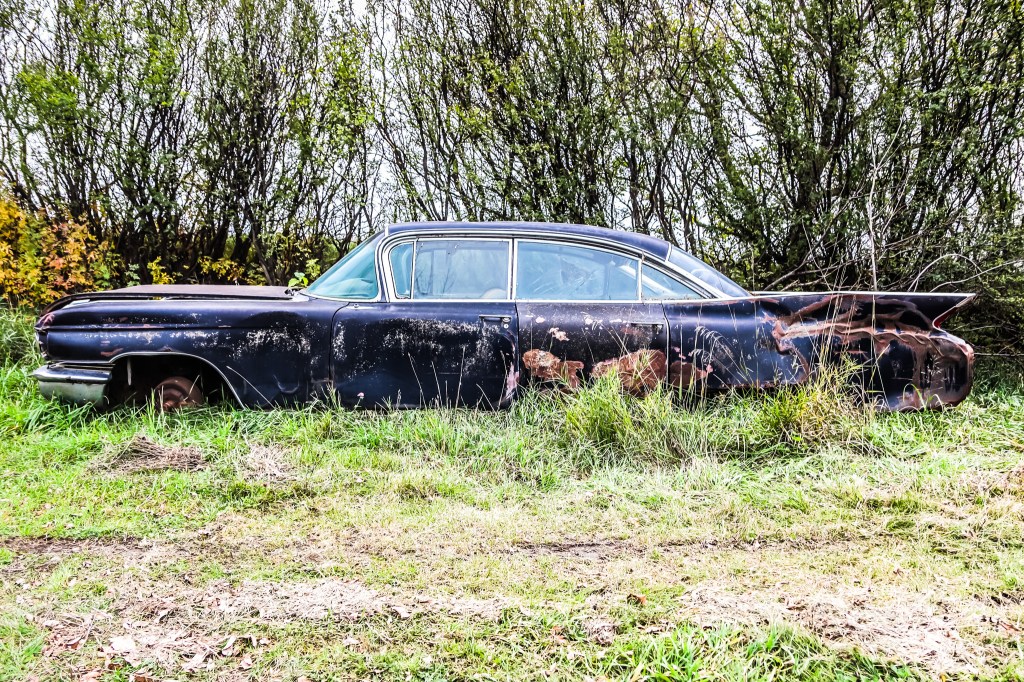
Years ago I remember stopping at an old car lot in Saskatchewan along the number one highway. Not nearly as many cars and most were somewhat intact. And I do not recall seeing an area with parts like this lot.
I love this old car and what is was used for.
Imagine firefighters hauling ass down the highway in this?
This one reminds me of one of those old ice cream trucks. They would circle around the residential streets on the nice evenings in the summer.
T. W. arrived in Canada from Arthur, Ontario in 1885. He settled on this property and in 1907 married Jennie. Together they had 10 children, all of 1 which was born on this farm. And sadly, two of those children there stillborn.
In 1942 T. W. sold the farm to his nephew and he and his bride moved to town. He passed away in 1951 at the young age of 74.
Not a great photo given that it was taken from the road with my 300mm but you can’t pass up shot of an old, abandoned house.
John, originally from England, came to Canada as a young boy. First settling in Cannington, Ontario and then moving west to Southwestern, Manitoba.
In 1882 John married Elizabeth and settled on another homestead. There they raised two boys, Sidney and William. As a young man Sidney purchased a 1/4 section of this same parcel of land and raised two sons of his own.
When Sidney’s son Cecil got married and needed a place of his own to farm and raise a family, he bought the southwest section of this land, close to his parents and started a family of his own.
Now this house has been in my to shoot binder for some time but Christian then discovered this old car behind the house and as much as I love old abandoned houses, when you add an old car to the mix, it makes it WAY better.
This was one of many locations we shot on this particular afternoon and thankfully since Christian had already been here, he was gracious enough to come back with me and take a few more shots of his own.
I did not post a photograph but this is another one of those old brick houses where the brick is now starting to fall off. I am going to assume that when the roof goes, the water leaks down between the wood structure and the brick which then causes the brick to fall off. There are a few of these red brick houses in the area and recall that there was a family that owned a company that made these bricks.
Richard Wilson moved with his father, step-mother, siblings and step-siblings to the Marringhurst Plains in the RM of Argyle. Richard’s parents were originally from York, England where theiy married but then moved to Ontario where Richard and his sister were born. Richard chose this property to homestead on. He then married his wife Annie in 1863 and together they would raise a family of 8 on this homestead.
The first house on the property was a log home built by Richard upon his arrival to the Marringhurst Plains. At that time he also erected buildings for his livestock. In 1909, the Wilson’s built this “stately” two-storey, red brick home to replace the original log farmhouse.
In 1898 at the tender age of 34 years, Annie died leaving Richard with many children to raise. Richard married Annie’s sister, Louisa and together they had 3 more children.
The children grew up and went off to operate their own farms and raise their own families and by 1970 the home stood empty.
The home has been restored to its original grandeur and renamed the Marringhurst House. The home now operates as a turn of the century farm house museum and is open upon request for tours.
The other night while hunting for houses, we came across this old house from many moons ago. Easily shot from the road, we stopped for a couple shots to add to our list of houses photographed. I wish I had kept better stats since the start of this hobby.
This is the house where I stepped on the board suspended over a hole. I was content on the road. I had been here many years ago and had investigated inside during that visit.
The sun was starting to set which was giving off that golden hour glow which I love.
I have a new system for keeping track of houses I want to shoot and houses I have shot. Its a work in progress and it appears to be a lot simpiler than the big old binder that Christian teases me about. I will hold on to the binder because when I search for the history, I do use the original page to record notes and the name of the blog post, date and contact information for permission.
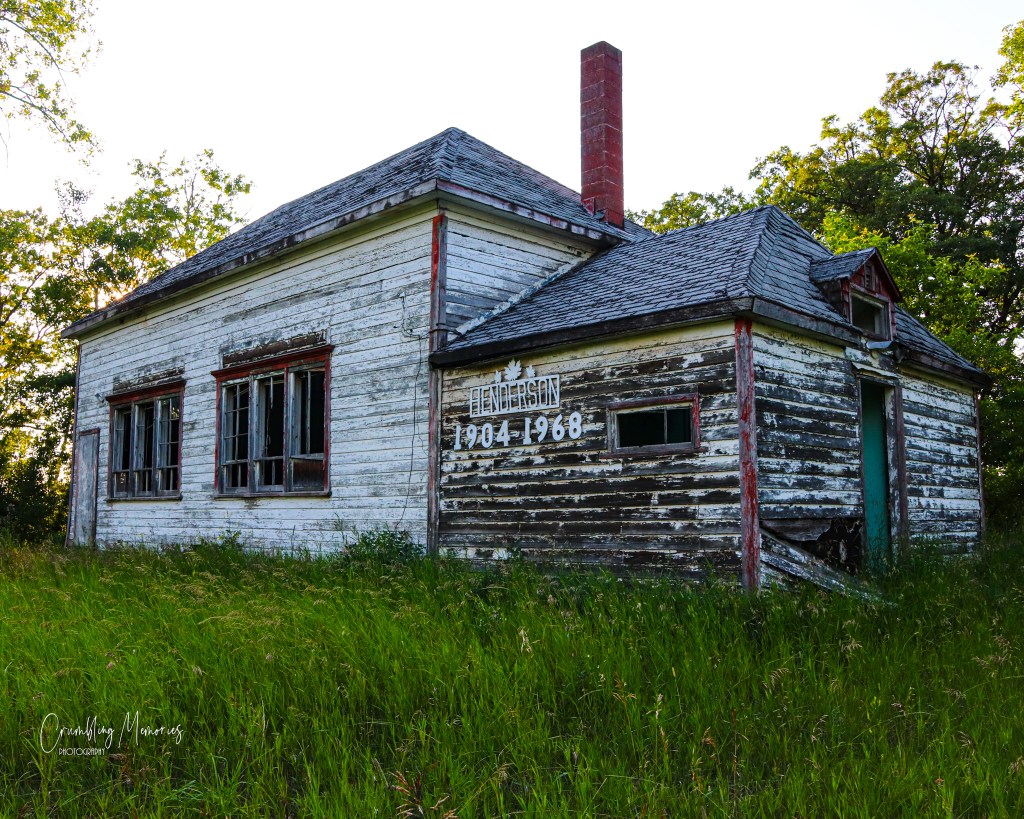
Its been some time since I’ve checked on this school and because we were in the area, we figured why not. It is not maintained like it was when I first visited.
And I do beleive that the school had far more windows intact when I was there last.
So if you are unfamiliar with the history, here is a quick recap. Built in 1904 this school operated until 1968 when it joined the current school division in the munincipality.
During the 1940s, the building was used for services of the Bannerman Church of Christ. It is my understanding, from a person who grew up and still farms in this area, that a local ladies group owned the school building for a while and held meetings here. Then the RM bought it back and has remained unused since then.
I had to go inside because I remember the inside of the school being in relatively good condition. The school desk and piano remains. And over the years, vistors have written on the chalkboard.
While school is out for summer for most, this place was pretty busy. Upon our arrival, a few birds took off out the windows. And, something was scurrying around in the ceiling. Given that we were blocking the main exit and the ceiling isn’t exactly stable, we left.
I’ll go back again in a few years and see how its making out.
I thought I’d take a drive a few weeks back and check on an old house that is starting to feel its age and neglect.
The first time I was at this house (I’ve gone many times) she had a bit of a lean but she was standing up pretty straight considering. I seriously contemplated going inside but didn’t because I could see just about everything from the windows.
Over the years I have considered taking grad photos at this house but I never have. Maybe I will take the 2025 grads over here for a few shots and see what I get. Or maybe this house will be gone by then.
I’ll keep checking in periodically to see how she is making out.
Over the last few weeks I have spent some time going through my “to photograph” binder. This binder is what I’ve been told is old school and have been teased about numerous times. If you reading this, you know who you are!!!
Anyways, I finally got out after searching maps and satelittes and I have, suprisingly, found three houses in locations I thought may have bando on them. And all three were close by. So I spoke to my bando buddy and he said, yes, go, I think you’ve got something there. I did.
Now I can’t find any history on this small house so I’m just going to just post the photos I took with my iPhone. I do beleive that one of the families that owned this land built this small home and lived in it during the farming season and then moved back to their home in the Fall. It would make sense as it is quite small.
After retreating back to my vehicle, I pulled off 6 woodticks! That time of year is here and I supposed 6 is far better than the 50 some I picked off on another excursion where I just stopped counting. Good thing they don’t freak me out.
On my way out I did notice that there was a lot of moose droppings in the area around the house, I was watching fro them on my way back to the car but didn’t see any. I would assume that they are all safely tucked away awaiting for the arrival of ilittle ones.
My first find was far more exciting. Stay tuned and I’ll post that when I have a chance.
Mr., whose parents emigrated from the Island of Islay in the Herides was born and education near Collingwood, Ontario on May 26, 1874, came to Manitoba in 1902. A teacher at one of the schools in the Melita area, Mr. bought a half section of land, had it broken and built a home and with time, improved it. In 1910 he married Edith and on that farm they raised a family of four girls.
As time went on, Mr. added to his land holdings. I don’t know if Mr. and Edith built and lived in this particular house or if the next landowners did but this is the home that still stands on this section of land.
When Mr. was elected to the Manitoba Legislature he had acquired one thousand, one hundred and twenty acres. Mr. served as a school trustee, secretary-treasurer of Albert Rural Credit Society, counsellor and Reeve before entering politics.
There were a couple dozen cows on this land. This cow in particular was quite intriqued with me, standing up against its fence. I’m sure it thought I stopped to take its picture. Photogetic cow if I say so myself.
The next landowners came to this section of land when they married. Mr. was born on this land but in a different 1/4 section. They lived here for 15 years.
Long before the first registered homesteader came to this property, many indigenous people lived off this land. Many studies have been conducted and many different artifacts from different periods of time have been recovered in different layers of the land here but there is still not a lot know about the very first settlers, the Blackduck people who are recorded to have lived on this land between A.D. 700 and A.D. 1300.
What we do know is that Mr. William Thomas Brockinton, a graduate of Oxford University in England, and his wife and two children who were 5 and 3 years old left England and William’s job as an auditor for The Birmington Railway and arrived in Woodstock, Ontario in the fall of 1881 with zero farming experience.
They remained in Woodstock that first winter and met a group of young men who were on their way to Manitoba. The men picked their homesteads from a Homestead Map and headed to Brandon in the Spring of 1882. Brandon was a far as they could travel by train as that was where the track ended at that time. The group organized their supplies and William bought himself what was said to be the best team of oxen ever seen. The cart was loaded with lumber which would build the Brockinton’s house. Mrs. drove a pony, hitched to a buggy with the children inside and a cow attached behind. Remember, the Brockinton’s had zero farm experience and it is said they relied heavily on the young men they travelled to Manitoba with.
On their first night, the cow got loose and William spent a good part of the night trying to get it back. This resulted in William missing the ferry at Plum Creek. The young men were not happy as they had already gotten their supplies across and were annoyed that William was likely going to delay things trying to get his oxen and load of lumber across the creek. This didn’t stop William. He came down the bank, oxen pulling his lumber and entered the water. It wasn’t long before the oxen were completely submerged underwater for about 10 feet or so. The force of the load was so heavy that the oxen were able to get their footing on the bottom of the creek and carry on across the creek bottom and up the other side of the bank. It is said that all the while, William stood on the top of the load, smoking his pipe like this was a normal thing.
That first winter, the Brockinton’s lived in their small, cold, wood house. The young men decided to head back to Woodstock for the winter leaving William all alone to figure out his first winter on the prairies. A Manitoba winter was not something William and his family was used to. In February, the family started to get short on food so William set out for food and nearly froze to death on his way back with a bag of potatoes which were also frozen by the time he barely made it back to his family.
During the second summer in Manitoba, William acquired a second homestead on the river flats where there was plenty of wood. That first winter William built a soddy to live in. William now spent his time between his two homesteads and in 1895 he built this beautiful stone home which still stands today.
After moving to Manitoba, the Brockinton family had two more children. As there were no schools nearby, William home schooled his children until a school was built nearby in 1901.
William was an exceptional violinist and was more than willing to teach anyone who was willing to learn.
Mr. and Mrs. Brockinton continued to live on their farm until their deaths. Mrs. Brockinton died in November of 1924 and Mr. Brockinton died in September of 1933 at 83 years of age.
It is said that William continued to purchase land in the area and at one point paid $4.80 an acre. I cannot tell you exactly where this couple retired.
This land is also recognized as a Manitoba Grassland Birding Trail.
This old homestead is recognized as a National Historical Site. One day I hope to find out more about the Blackduck People who inhabited this land many, many moons ago.
Of course, this is one of those ones where I cannot find anything for the first recorded landowner of this property. Recorded to have acquired the land in 1885 and sell the next year, clearly nothing was done with this land and they carried on.
Then in 1898, WGM from Otter Lake, Quebec decided to homestead here. Born on August 6, 1874 he married Mary who was born in Scotland in 1884 and immigrated to the Virden area with her parents as a girl. We visited this house on August 9th.
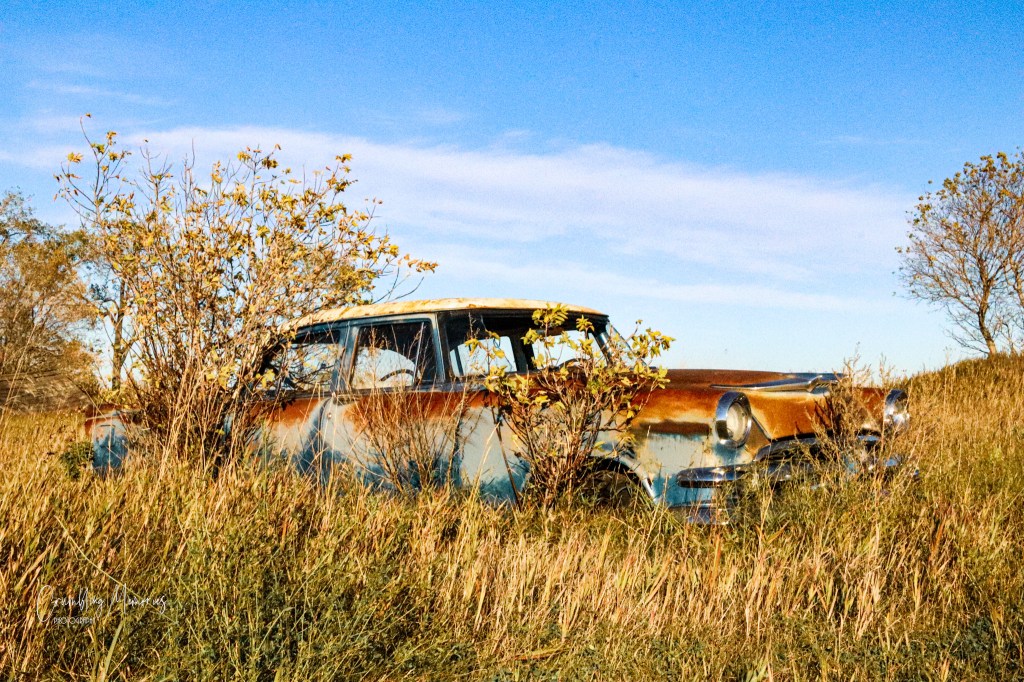
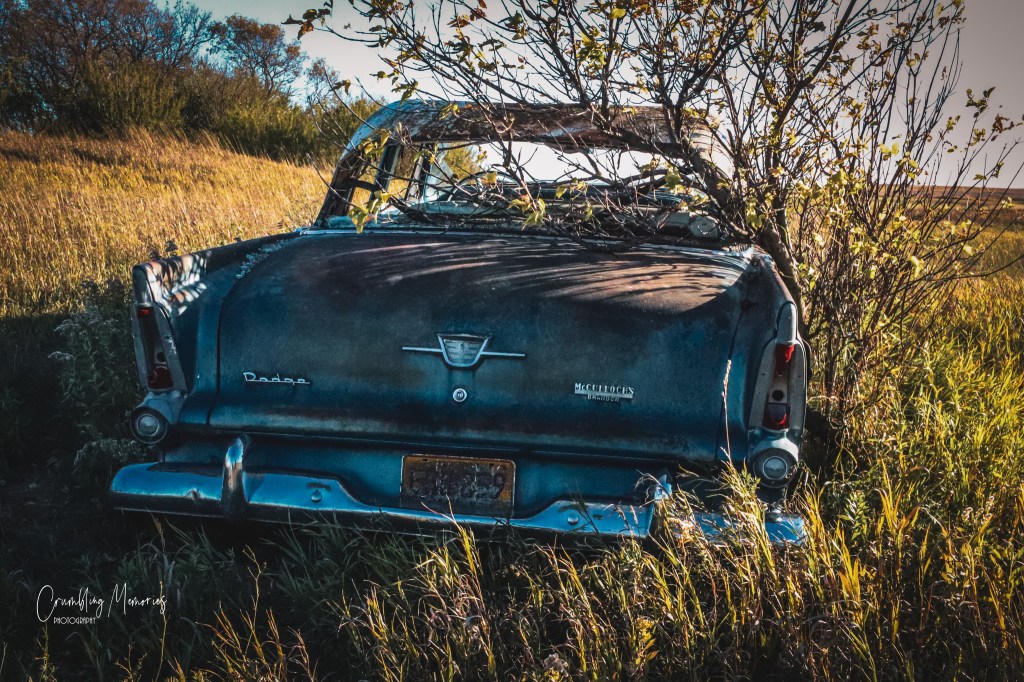
Christian told me about this house with an old car in front. This got me pretty excited until I realized that the car wasn’t really that old but was old looking to him. I appreciate he knows what I like though. He’s a great bando seeking friend.
Mr. & Mrs. were married in 1904 and together they had 4 children. Their youngest was only 8 years old when Mrs. passed away in 1922. Mr. lived until 1958.
In approximately 1947 this homestead changed ownership. The yard was surrounded by fruit trees and our fellow explorers identified them as plums.
This house has been on my radar for a very long time. The day we finally went to see it, which was the first time for both Christian and I, my anxiety was through the roof. In my mind I was thinking of reasons why we shouldn’t go. Long walk in, getting stuck, tall grass, uncovered well. All ridiculous.
More often than not, we go to a house because we’ve seen it photographed by someone else and decide we must see it too. More often than not, I know nothing about the house, that always comes afterwards. While I knew a couple things, what I found out after was a story of a man who changed farming in the early 1900’s. Those practices carried on into today’s time. I had no idea when I started to dig into it how significant this man would be to this area and to Manitoba.
There is a lot of history here and I’m not sure where to start or how much to write about so lets start with the house in its prime.
When I look at this photo its very hard for me to picture the house like this given the state it is in now. To get to this property, which is located about 1/4 mile off the municipal road, we drove up a long drive, ruts visible and large maple trees which enclose the laneway. I can imagine that this was a beautiful drive in its time. Likely not so good in a Manitoba winter but I would imagine these trees would be a pretty good shelterbelt.
Until 1954 the CPR had a line which was ran to the Rocanville Substation. I do not know if station still exists today and if it is, what it is called or if it is operational and for what. I do know that this railway is what makes this landowner and this house as popular as it is.
James William Scallion born February 14, 1847 in Wexford, Ireland immigrated to Canada and in particular Thorold, Upper Canada which is known today as Hamilton, Ontario. Arriving in Canada with his parents, brother and two sisters at the age of 10, James did all his schooling there and later became a teacher at the Toronto Normal School for a few years. Then himself and his brother Thomas, ran a store in Thorold. It is said that they became intrigued by the possibilities in Western Canada and in 1882 moved to Stonewall, Manitoba. The foll0wing year they headed to the Virden area and purchased 640 of land and chose this spot as the homestead.
Dubbed “The Grange”, the brothers built the house and granary from field stone found on the land. One of the first homesteaders in the area, the brothers built a lavish field stone home which even had electricity in the house and the barn. In a short time they upgraded their acreage to 960 and included livestock to their farm. This required the brothers to hire two farmhands.
The granary which is in great shape was above standard for its time. Not only did they have electricity but it held 12,000 bushels and had electricity to run the machinery to help load and unload the grain. That railway I was telling you about, was within 500 yards of this granary and because of this the Scallion brothers were able to load their grain onto the passing boxcars, therefore eliminating the commercial elevator in the area. This put more money into the pockets of the Scallions and not the elevators and railways.
Back to the family. I really wasn’t sure what I was expecting when I got here. For a while I just stood here and looked around. In the NE section there were combines going. It was peaceful and the sky was amazing but starting to set so I knew I didn’t have a lot of time because I did not have my tripod with me. Behind me were multiple bee hives but of course they were not at all interested in what I was doing.
It is said that after the death of their parents in Ontario, James’ two sisters Hannah and Catherine joined their two brothers in approximately 1887. The four of them lived unmarried and happy in this house. Said to be known for their hospitality, the Scallions had plenty of visitors to their farm. People wanted to see how they prospered.
James Scallion was known as a successful farmer in the area but he should be better known as the man who pursued and was successful in assuring that the farmers who worked hard for their crops got a fair price for their grain. James believed that all farmers should be able to ship their grain directly to the market and not be undercut by the middle man. James believed that farmers should be able to sell their grain to whomever they wanted be it in Canada or the United States.
In 1903 James formed the Virden Grain Growers’ Association and then travelled around the province to encourage other communities to do the same. James told them that the money they received for their grain should go to them and not to the grain dealers and railway promoters. James was named the President of the VGGA but stepped down within the year due to health issues.
MGGA chapters formed all over the province. In an unprecedented move, in 1912 James also allowed women to be associate members and in 1914 women were recognized as full voting members.
James was also a founding member of the Grain Grower Grain Company which later became the United Grain Growers. It was later one of the biggest grain companies in Canada with hundreds of elevators in prairie towns whose profits were shared by its members. James was a very successful man with a big history in this province. He had many more accomplishments in his life.
1n 1918 after dealing with years of illness, James and his sister travelled to California. Upon their returned they settled into a house in Virden where he lived until James passed away on April 24, 1926. Upon James retirement from farming he sold the farm to a young man from Scotland who then sold the farm to a member of the family that currently owns the land. That man died at the farm in 1948 in a farming accident.
The railway was removed in 1954.
James improved the lives of many farmers, ensuring that they, like himself were paid fairly for their hard work. In one final contribution James donated $10,000 (said to be valued into today’s currency at more than $140,000) toward Virden town development and $5,000 towards the Virden Hospital.
Believe it or not, it is said that James is barely remembered in the Virden area.
Mr. arrived in Manitoba from Ontario in 1881 and was one of the earliest pioneers in this area. He was set to acquire the SW corner of this section but settled on the SE corner instead. He later purchased more land. The home became a halfway house for travelers in the area where they were sure to find rest, a cup of tea, a bite to eat and a place to sleep if need be.
Mr. & Mrs. were devout members of the Protestant Church. They raised 4 boys and one girl on this farmstead until Mr. passed at the age of 68 in 1915. Mrs. passed away in 1925 at the age of 83 years old. After Mr.’s passing, Mrs. went on to live with one of her sons.
After the death of Mr. one of the sons returned to the homestead and took over. The family had always owned a steam threshing outfit which serviced the areas. It was a huge operation and farmers waited weeks for the service. The operation took the help of several employees and so the new housewife was very busy feeding the men who helped her husband run the threshing machines.
This barn was built in 1916. Many dances were held in the loft and in particular, a masquerade dance was had when the barn was new. The new homesteaders were very active in their community, very hospitable and loved company. They had their 25th wedding anniversary in this barn and the wedding dance of their daughter when she married.
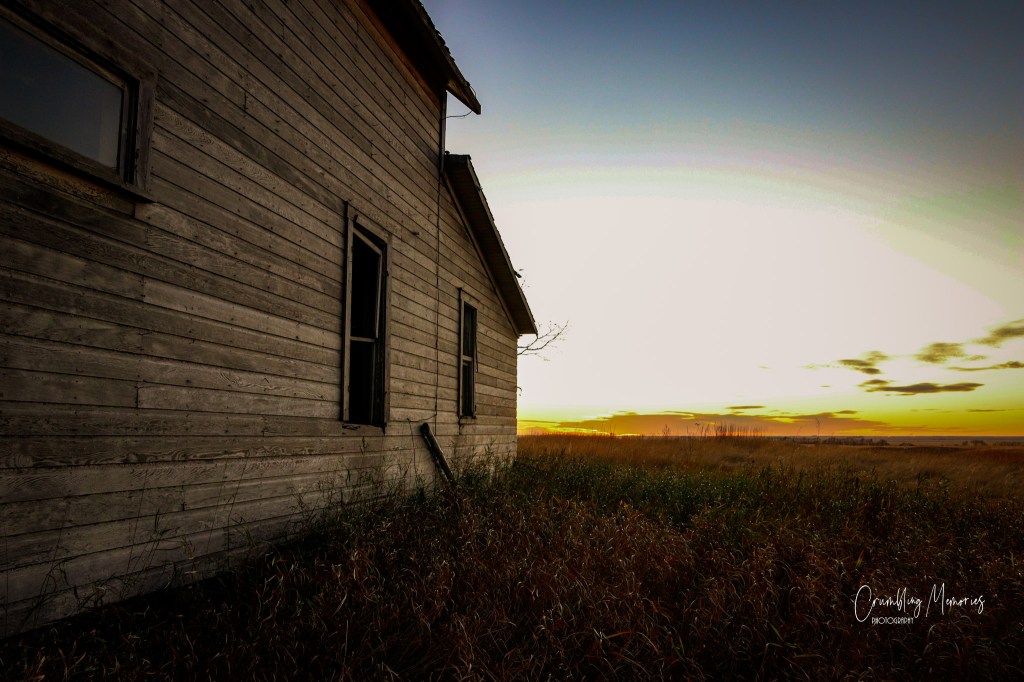
We visited this house as the sun was setting. We had to walk in, fast, because we were running out of light and I didn’t have my tripod with me. This property has been on my list for a very long time as there was a car parked near a small barn by the house and it make for some very cool photos.
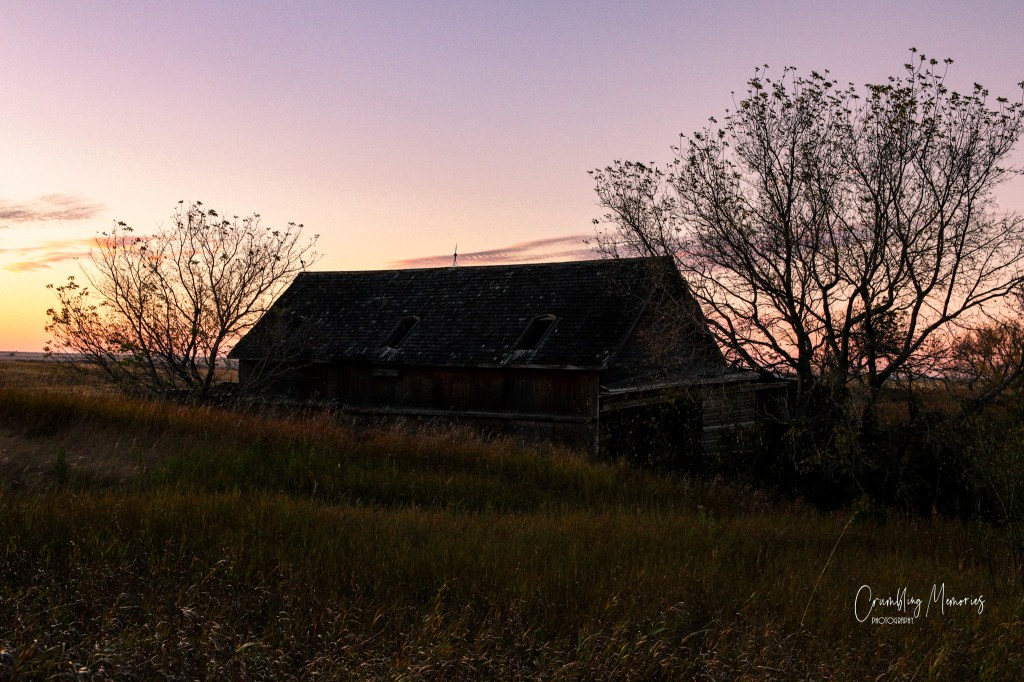
As luck would have it, the car is gone. I would have taken a photo of the car and the house from right around this location. This is what happens when you procrastinate. Regardless, the sunset on my way out of the property did not disappoint and so it wasn’t a total loss.
When I first saw this house posted online by another bando hunter, I immediately put it on my list to see. Back in May, a fellow bando hunter and I went there. One thing I did notice was the two lightning rods that were once attached to the house are now gone and the swinging door has one again closed itself, or maybe it had help.
Mr., born in England, immigrated to the United States and then ended up here in 1894. Upon his arrival he purchased this section of land. He met his wife when he got to Manitoba and they married in Brandon. From this union 3 girls were born. In 1902 he sold the farm to his brother-in-law and moved to town and purchased shares within the local flour mill and worked for many years in the community.
The history of the brother-in-law’s family is far more in depth but doesn’t really confirm anything about this house. Their earliest recorded history is 1196. In 1756 the family changed the spelling of their name, which really wasn’t that uncommon back then. The family are said to be the equivalent of English Feudal Lords and were the Lords of Duersen and Lissel in the Province of Brabant which is in the Netherlands. The earliest record of an ancestor coming to America was 1630. The earliest record on one coming to Canada was 1756 when they immigrated to Ontario. It is said that one of the children, at a young age, was lost in the woods and never found.
Now this is where it gets tricky. This family farmed on the NW corner of this section which would explain how this family is connected and how the original landowner met and married his wife. When they moved from the land to town to operate the flour mill, he sold the land to his brother-in-law. It is recorded that a farm on this land burnt down in 1916 when the family was away in Ontario. They lost everything in that fire.
I cannot confirm if this is a rebuild of the original home or if the house that burnt down was on another quarter of this section. Regardless this is quite the house. Unfortunately, it was not easy to photograph from the front given the tree line. And honestly, I didn’t even look at it from the back.
This is a neat old house which I thought would have been quite fancy for its time with its porch and upstairs deck. It certainly wasn’t your typical style home. The floors were caving in so we just peeked through the windows but inside there was plenty of old things to see.
It definitely goes up there on one of the neatest houses I’ve been to.
TJB was born in 1872 to Empire Loyalist parents in DeCewsville, Ontario. TJB moved to Canada in 1892 in what was referred to as a “harvest excursion”.
What is an Empire Loyalist? Due to the American Revolution, approximately 8,000 Brits came to Canada and migrated to an area in Southern Ontario. Those people were among the first white settlers of the province and were instrumental to creating the Province of Upper Canada 1791.
Christian and I were on our way home for the day after an almost 11 hour day hunt and shoot. We had just finished up and the well groomed yard when he remembered this place which had some old cars which he knows I also enjoy photographing. It was getting pretty dark so we weren’t sure what we were going to get. Again, I wasn’t sure what I was going to get in this lighting and I also underestimate what I can do. That am I’m not much of a risk taker because don’t want to miss a shot.
In 1894 TJB married Emma in Deloraine. Emma was the first woman to live in Medora. The first home they built was where the Medora Service parking lot is now and they lived there until 1903.
TJB played for the local baseball team and was a goalie for a football team. He was the secretary for the Sunday School and the Literary Society. As well, he was a member of the Orange Lodge. The Orange Lodge is a group of Protestants who were committed to the protection of the principals of the Protestant Reformation and the Glorious Revolution of 1698 which enshrined civil and religious liberty for all. The Orange Lodge has existed in Canada since at least 1812.
Emma was a very involved in working with the church and was a life-member of the Women’s Institute. Emma was also a well known dress-maker.
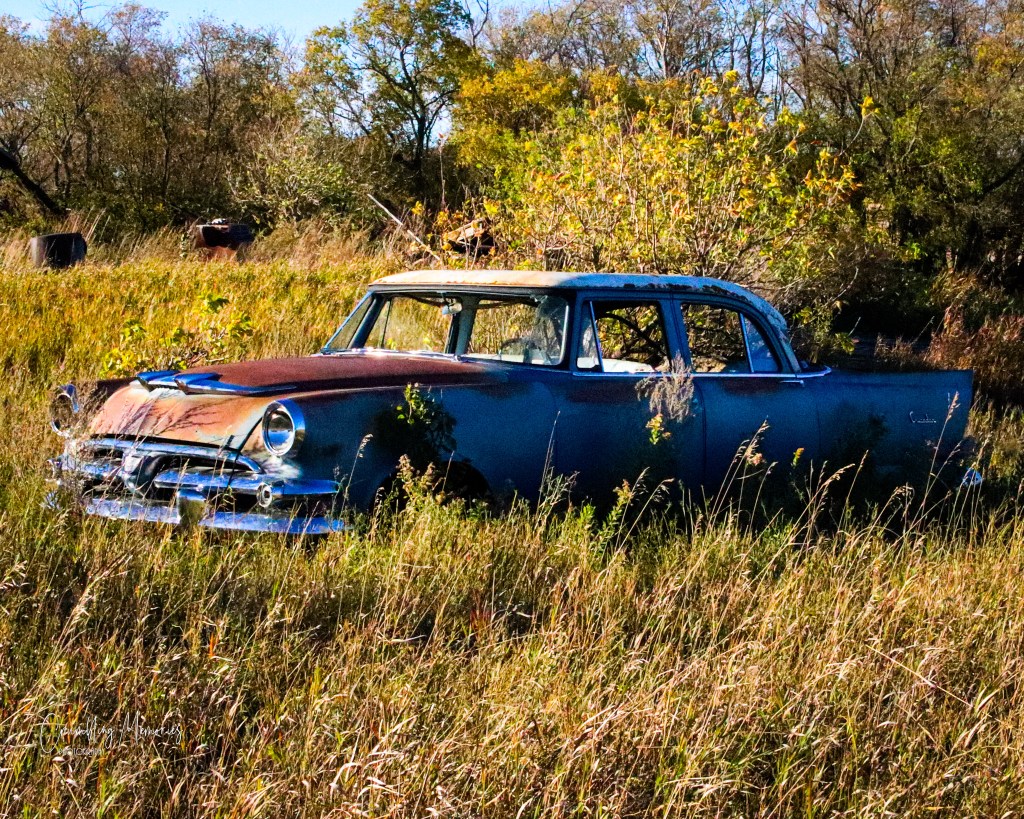
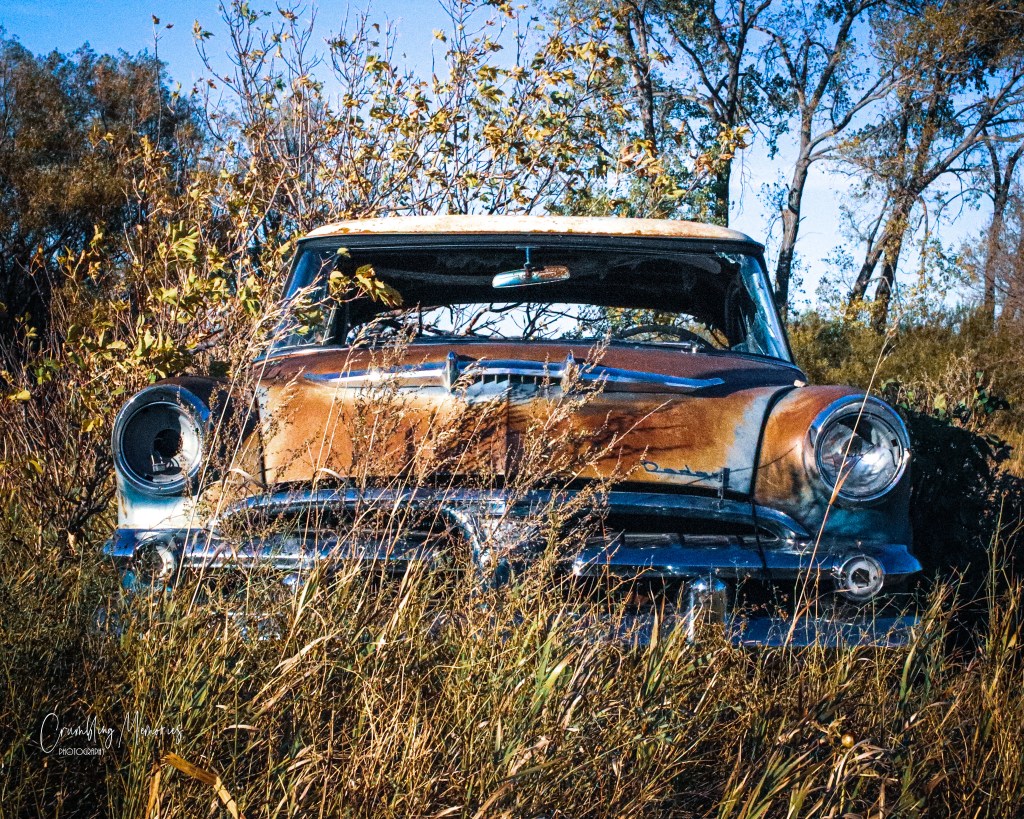
From what I have read or found about this property, I can’t tell you anything about these old trucks nor can I link them to this family.
During my old car photo shoot, Christian was wandering around the house so I thought I had better get over there and take some photos before it was way too dark.
Here is where I get a confused by what history I have found. It says that TJB built the house in 1903 which is now owned by another farmer in the area. “This old house was moved to the farm.” So is this the house that was built on the service lot in Medora and moved here or was the house built on the service lot sold to the other farmer and he moved it to his own farm? Regardless, she is a big old beauty.
TJB and Emma raised 5 children on the homestead. Their oldest son George who was born in 1897 later left this property to his only son when he retired and moved to Medora in 1974.
TJB passed away on June 8, 1930 and Emma passed away on August 14, 1962.
The furthest I can go back on this property is 1922 when this property was bought by Jack & his wife. Married in 1908 the couple lived six miles south of Medora where they raised four children. In 1922 they moved to this property but I cannot confirm whether or not they built this house or if it was there when they bought the land.
Jack was born in Shropshire, England on February 5, 1879. He came to Canada in April, 1906 and met and fell in love with his wife. She was born in Montgomershire, Wales and also immigrated to Canada in 1906. Jack passed away in 1962 and his wife in 1965. Their only son took over this land.
Born in January 1913, C.S. received all of his school in the area. Fond of sports, he was active in hockey, curling and baseball. He farmed his parents land until he sold same in the Spring of 1969 when his nephew took it over.
A few years later, C.S’s nephew’s Grandson took over the land and I believe he still owns it today.
After a day of wood ticks, this stop was a blessing. The ride in was easy and the grass all around the house was cut. It was a nice change for the day. The dreary, cloudless, grey sky we had shot all day wrapped up with this beautiful sunset. This house had been on my to-do list for a long time and I’m happy that I finally got to it.

























 CRUMBLING MEMORIES