CYPRIPEDIOIDEAE

One of our most interesting wildflowers is the lady’s slipper – a variety of the wild orchid family – which is named for its shoe-shaped blossoms. There are six distinct species of lady’s slippers in Manitoba, as well as a couple of recently discovered hybrids. They range from quite common varieties, to fairly rare ones, with one variety classed as endangered. Some begin blooming in late May but most flower in June or early July.

The most common variety is the yellow lady’s slipper, of which there are two subvarieties – northern small and large yellow – though casual observers may not notice the difference. The size of the pouch and the stripes on it vary, as does the flower’s fragrance. The yellow lady’s slipper grows in a wide variety of habitat – meadows, forests, black spruce and tamarack bogs, as well as in disturbed areas such as roadside ditches. They may grow as single plants about 20 to 40 cm tall or, if the environment is suitable, may develop into large clumps.

So now that you know about lady slippers, here is the meaning of this post. On the way to Dauphin a few weeks ago, I was driving along and it was starting to rain. All along the park I had noticed yellow flowers in the ditch and was surprised at how many dandelions there were. Of course I was more focused on trying to spot a moose or a bear on the side of the road. They were actually lady slippers.

My Grandfather searched for them when I was a kid and could spot them a mile away, like a blueberry or a mushroom. To this day I can identify them without a flower if we are in the bush.
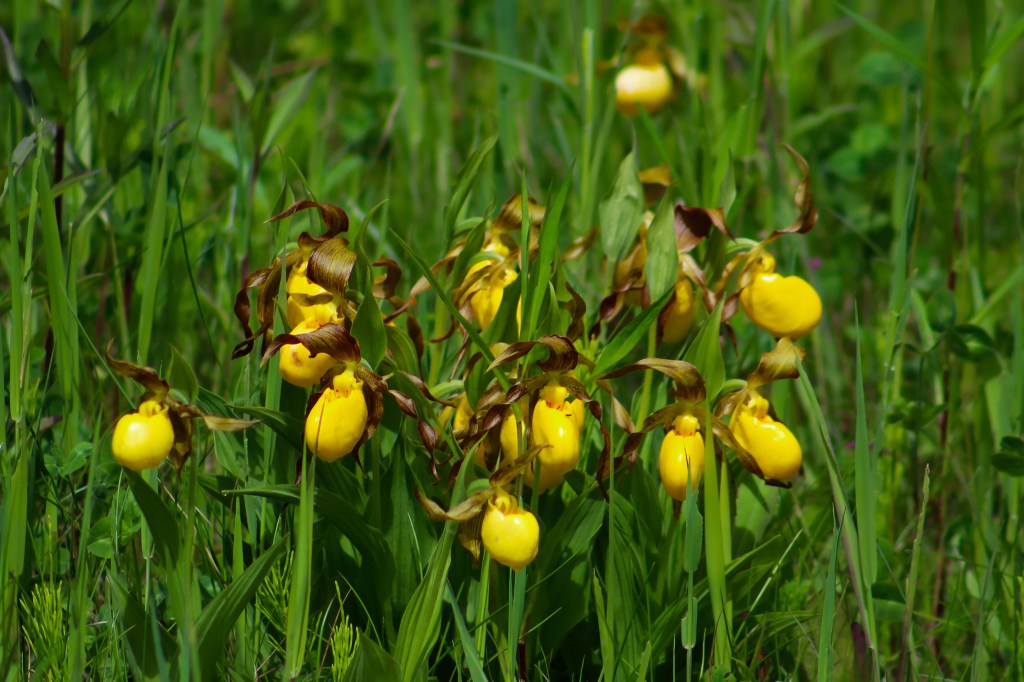
As a kid my Grandfather told me that the pink ones were rare and when I suggested that a few weeks ago on a Facebook post, I got my schooled in lady slippers. Turns out they aren’t rare and it appears these pretty little flowers are growing in abundance in our province.

BILLY’S PLACE

One night last winter on my way home from exploring an abandoned town, I couldn’t help but notice the sunset.  I was really close to a location that I thought would make a great photo.  A spot that I have driven by many, many times.  I wanted to get a photograph of this machinery up on the hill.

brogden house 9 email

I couldn’t get a decent shot so I turned around to head home and found this!

barn email

I took a couple shots from the road and wrote down the location to investigate and find landowner information for.

house by barn email

A couple weeks ago I was speaking to a gentleman about another property and asked about this one and he gave me the information I needed.  I thought I better get out there before the grass gets to long.

brogden house 10 email

Unfortunately, I cannot confirm who lived here first (and any info I do have I cannot confirm with any written history that I have access to) nor can I confirm who built what buildings, when.

As you can see from this new photo, the caragana or peashrub have taken over and the bees were buzzing around like crazy.

brogden house 3 email

Bill was born on a farm south of Cartwright on July 11, 1916.  He never married but was said to be a dedicated family man who was always there for those in need.

IMG_9644

Bill, an enthusiast with the Heritage Village in his community and served on the committee for many years.   Bill purchased this land in 1944 and proudly displayed the advertisement for the Heritage Park on his property where everyone that went by it could see it.

brogden house 4 email


Bill began farming as a young boy with his father and his love for farming kept him busy until he was in his 70’s.  When he wasn’t farming, Bill sang with the United Church choir and served on their committee for many years.

brogden house 6 email

After a trek through the farm yard I headed out to the pasture and up the hill.  I cam alone some old wagon wheels and then almost tripped on a piece of wire in the grass.  I also picked up a lot of hitchhikers on my journey.

brogden house 5 email

Being alone I also started to think about skunks, badgers and of course, well holes.  I am a chicken shit.  Not sure that exploring is really for me, lol.

brogden house 8 email

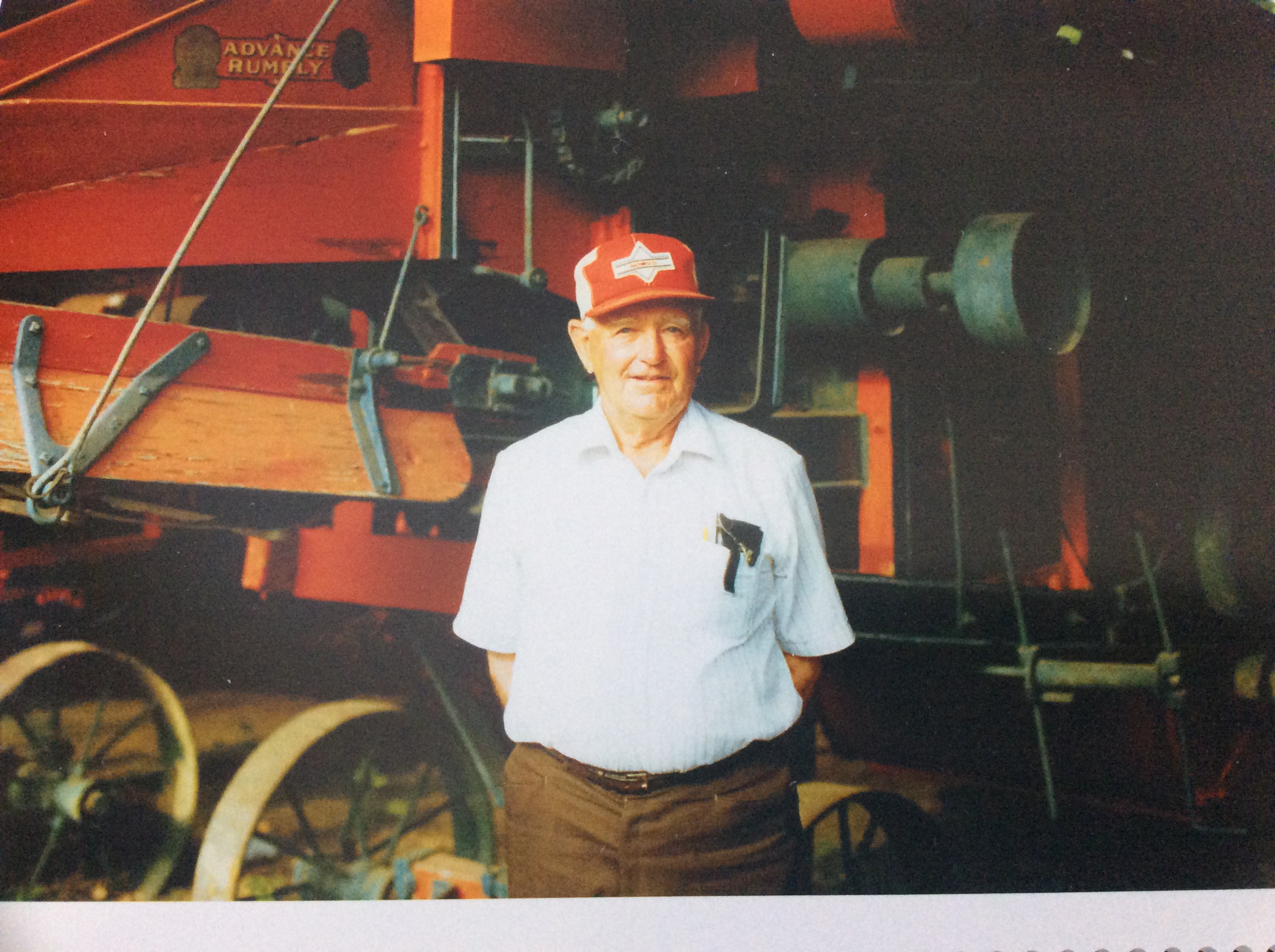
I have passed by Bill’s old threshing machine (or separator) and Cockshutt tractor many, many times.  I never did notice this little machine way up on the hill until I walked closer to it.

brogden house 7 email

I do not know anything about tractors except that this is what they call McCormick Deering or a Cockshutt tractor.  I believe this one is approximately built in 1924.  At least that’s what a quick search on Google tells me.

On my way back to my car I again started to think about all the critters and as I was going through the ditch I found two lady slippers, all alone.  Of course I searched for more but I couldn’t find any.

ladyslippers-2 email