THE LAIDLAWS and THE QUEEN’S OWN CAMERON’S

The first recorded landowner for this property is listed in 1891. I can find no history for that family or the 3 families after them which allegedly lived and farmed on this section of land before Mr. Laidlaw settled here. I can also tell you that the current residents are not so welcoming. While I only saw one who decided to photo bomb my roadside stop, there is two vultures who now reside at this house.
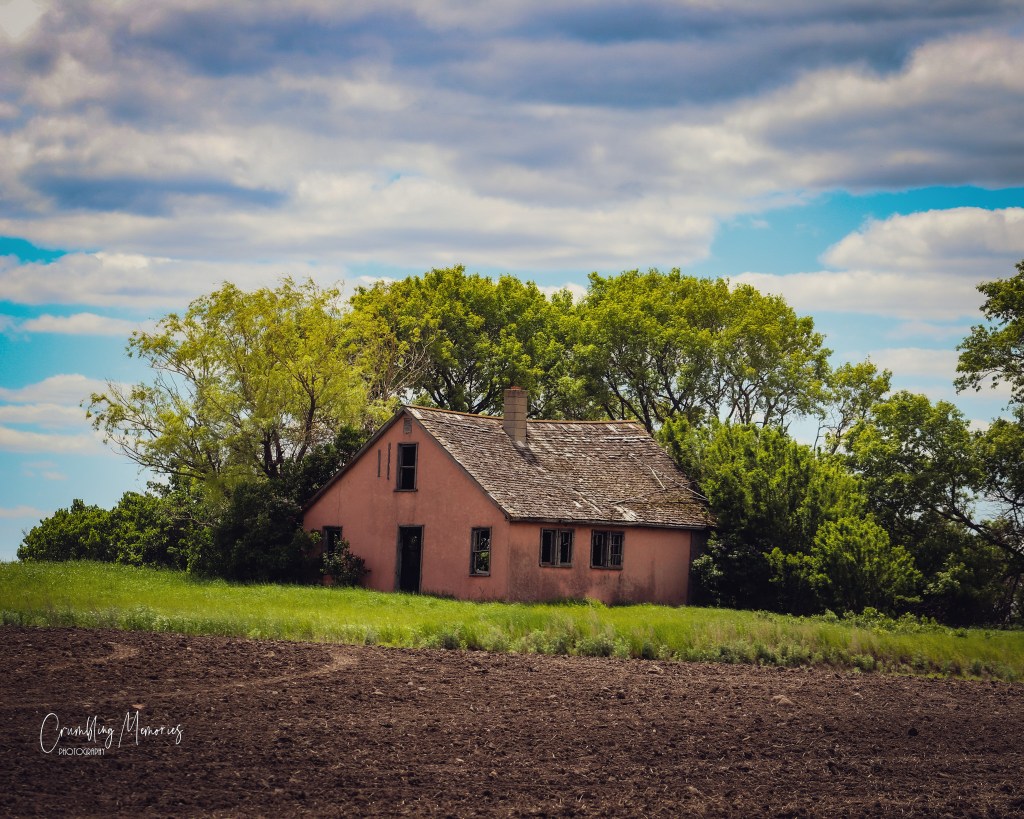
I can tell you about Walter though. Walter came to Canada when he was 28 years old. He left Scotland by steamship in 1904 and landed in Halifax. He carried on to Brandon and from wagon headed to Newdale, Manitoba where he worked for a few months. He worked for a few years firing a steam engine for a local man and then was a stooker for other farmers in the area. Walter and his wife settled here sometime around 1918.

In 1918 Walter married Jeanne from Switzerland. Jeanne immigrated from Switzerland to the Cartwright area and ran the millner shop. Two years later she married and the couple went on to raise 5 children of their own. All but one of their children served in the miltary except the eldest who as a child was kicked in the forehead but a horse. The boy was stitched up at the kitchen table but as a result of the accident, the injury left him with muscle damage to his eye which caused his eye to turn inward. Because of this, he was unable to serve like his siblings so he farmed with his Dad. It is said that the injury to his eye didn’t prevent him from being an excellent shot during hunting season.
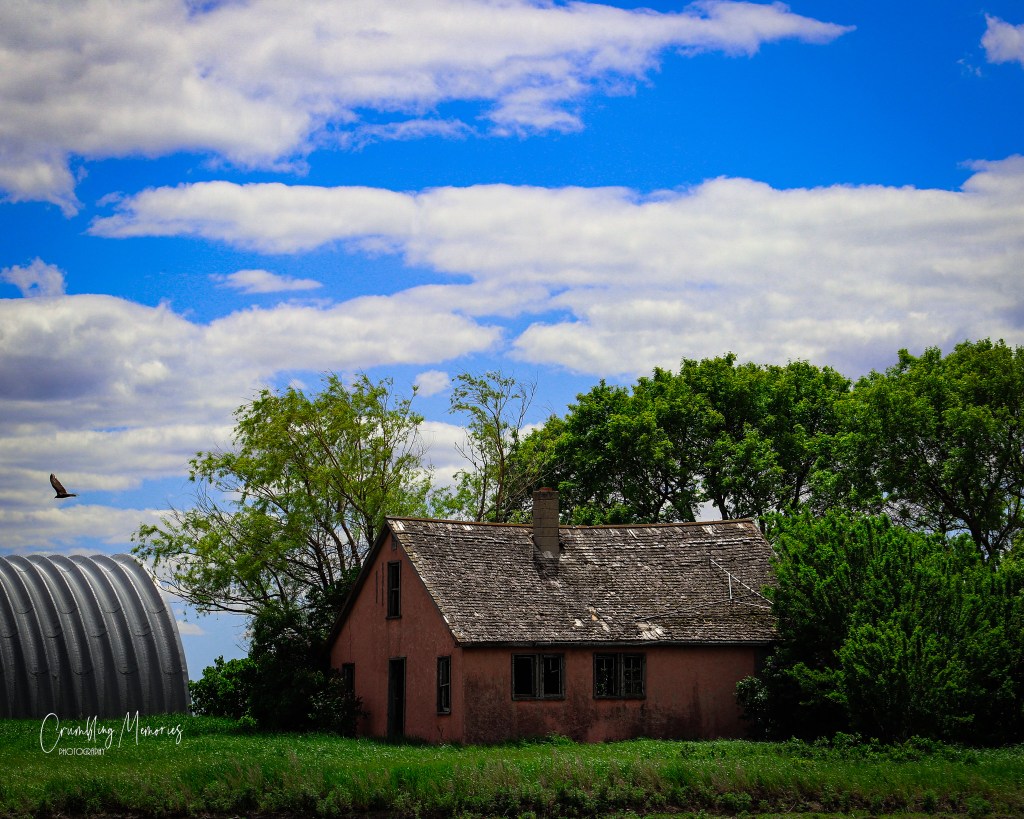
In January, 1946, upon his return from serving with the Queen’s Own Cameron’s, in France, Belgium and Holland, the second eldest son, Herman, returned to the area and started farming his parents land. Herman later married but did not have children of his own. Herman passed away at the age of 82 years.

What is the Queen’s Own Cameron’s? Well I had to google it. Given that the family was of Scottish decent, it makes perfect sense as to why and how Herman ended up serving with them. Winnipeg has always had a strong Scottish tradition so after years of intense pressure from the local Scottish community, the government finally authorized the raising of a highland regiment in Winnipeg. Gazetted in 1910, the Queen’s Own Cameron Highlanders of Canada are the oldest highland regiment in Western Canada.

I love the color of this house! These were roadside shots so I don’t know how well the inside is holding up but one day I would love to get a closer look.

TRUSTEE TURNBULL

John Turnbull was the first recorded landowner of this section in the RM of Roblin and was the first trustee of the Badger Creek School District.

The third recorded owner of this land was born in Quebec. He attended McGill Law School and also served as King’s Council in the Sherbrooke Court.

In 1895 he married and started a family with his wife, Luna. They had 5 children. In 1914 when the war broke out, Albert was a Lieutenant Colonel. He joined the forces in the regular army and became a Major. Albert and his eldest son, who was 17 at the time, voluntereed for overseas service and were sent to England with the 117th Eastern Township Battalion. Albert returned to Canada but his eldest son was sent to Germany in 1917.

When the eldest son returned to Canada from Germany, the family decided to go west and in particular, the Cartwright area. Albert arrived in the area and found land and then returned to Quebec to purchase a herd of jersey cattle. John and Albert set back out west to their new home by railway, with the jersey cows. Albert and Luna’s oldest daughter remained in Quebec. Luna and the younger children made the 4 day trip by railcar and arrived on December 30, 1919. Upon their arrival the families new neighbours had a hot meal prepared for them.

During my search of this family I came a cross this photograph of Albert and Luna with one of their jersey cows.

In 1921 50% of the herd developed TB. After thorough cleaning of the barns, Albert went back to Quebec and purchased more jersey cattle. He showed the animals in Brandon and Killarney. These cows which caught a lot of attention at the Killarney and Brandon Fairs.

In 1925 Albert and Luna went back to Quebec where Albert continued to practice law until he passed away in 1932 following an appendectomy. Luna passed away in 1946 after she fell and broke her hip and was recovering in hospital.

John, the oldest son, took over the farm when his parents moved back to Quebec. The family gave up the farm in 1933. He bought a farm North of Winnipeg for a short time but headed back home to Quebec.

I have no idea if it was the Turnbull family that built this house or the second landowners, the Taylors from whom Albert and Luna puchased this land from.

After John left the farm, his sister and her husband moved to the land and raised a family on this homestead. Then their son took it over but moved to Virden and later Pilot Mound.

HOMESTEAD #3136

Referred to as Homestead #3136, A.J.W was born on September 28, 1840 near Picton, Prince Edward County, Ontario. A.J.W graduated from a military school and later became a Captain of the 16th Battalion during the Fenian Raids. When he wasn’t serving he was a woodworker who specialized in making cases for organs and pianos.

It is said that A.J.W married his wife in Ontario in 1863 or 1864.

A.J.W and his wife raised four sons in Ontario and then decided to move to Manitoba through Emerson. They settled first in Rapid City.

In 1885 after snowshoeing to the area, he found this property. A.J.W moved his family to the land and there, they wintered, in a tent, on the property. The following summer, this house was built.

A.J.W passed away in 1909. His wife died in 1933.

While we were able to get right up to this home, I didn’t go inside or even look inside.

This house for me will always be known as the Coyote House. While making our trek down the road, along the field line, there was a dead coyote.

HARTLEPOOL, ENGLAND

George was born in Hartlepool, England in 1837. On December 9th, 1859, he married Isabella and together they raised seven children.

In 1880 they arrived in Barrie, Ontario with the Hunt family. They stayed there for 6 years where they worked at a saw mill.

On April 1, 1886 the entire family moved to Manitoba. They considered stopping in the Red River Valley but worried about clearing all the trees and stopped for a short time in the Hernfield District before settling on this property.

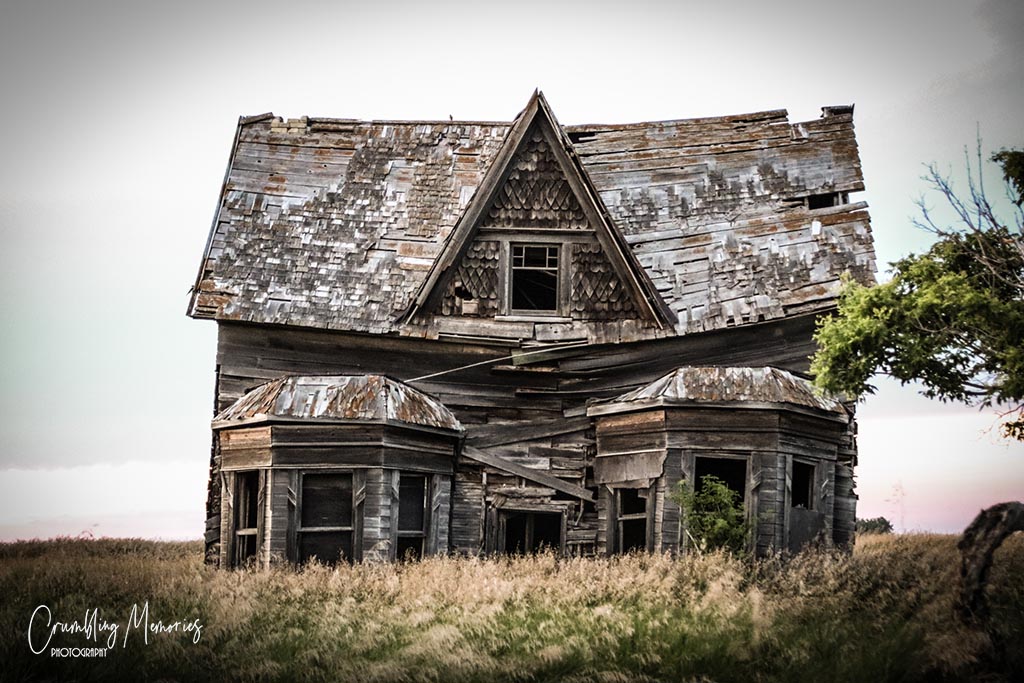
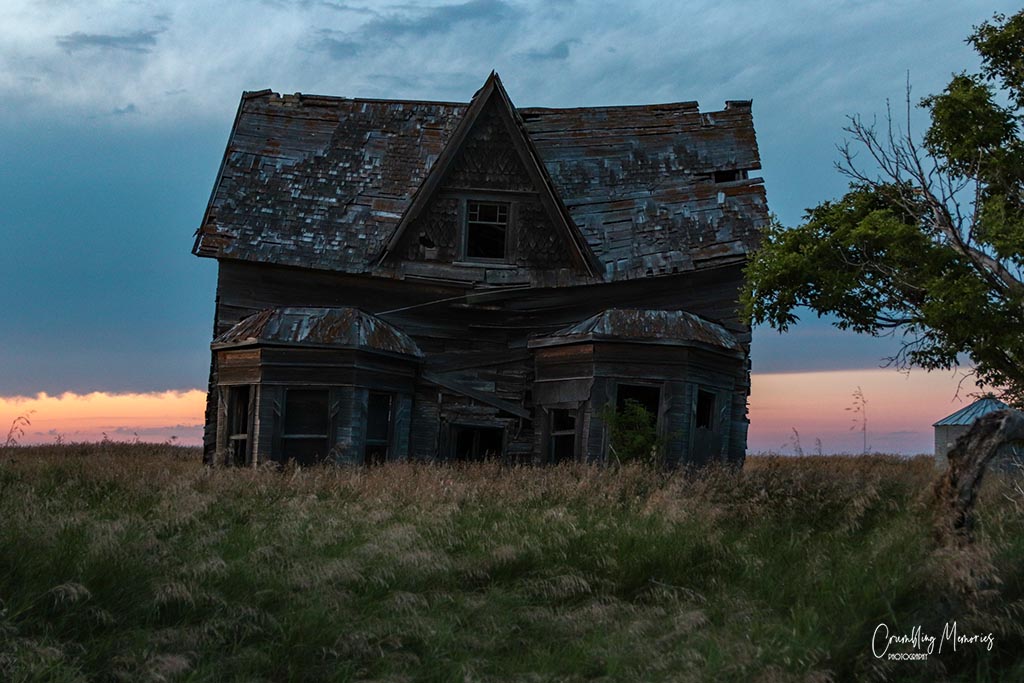
This photograph! Its a total fluke. It was close to dark when we arrived, as you will see from the other photos I post. I had been struggling with camera settings all evening but got this. Cade would like me to blow up and frame this for the living room. Not really my thing, to have my own art on display but I do really like this photo. Cade tells me that its one of his favourites that I have done. I am pleased that this turned out because I actually got a good idea of what this beautiful house looked like. This is by no means close to where I live but I do plan on going back.

Anyways, back to the history. Upon arrival to this area, the family needed to set up a homestead. There were few trees in the area but lots of uncultivated prairie grass. The family set up tents and got to work building a sod house, sod barn and even a sod grainary. I do not know when this house was built. But when they built it, they built it well. There is no shelter belt around the home and stands out in the wide open prairie.

Farmers in this area were said to make a week long round-trip trek to Brandon to sell their grain. They welcomed the arrival of the train to nearby districts which shortened their trip to sell their crops.

The entire family homesteaded in this area. George passed away from cancer in 1894 and Isabella died on February, 1909.

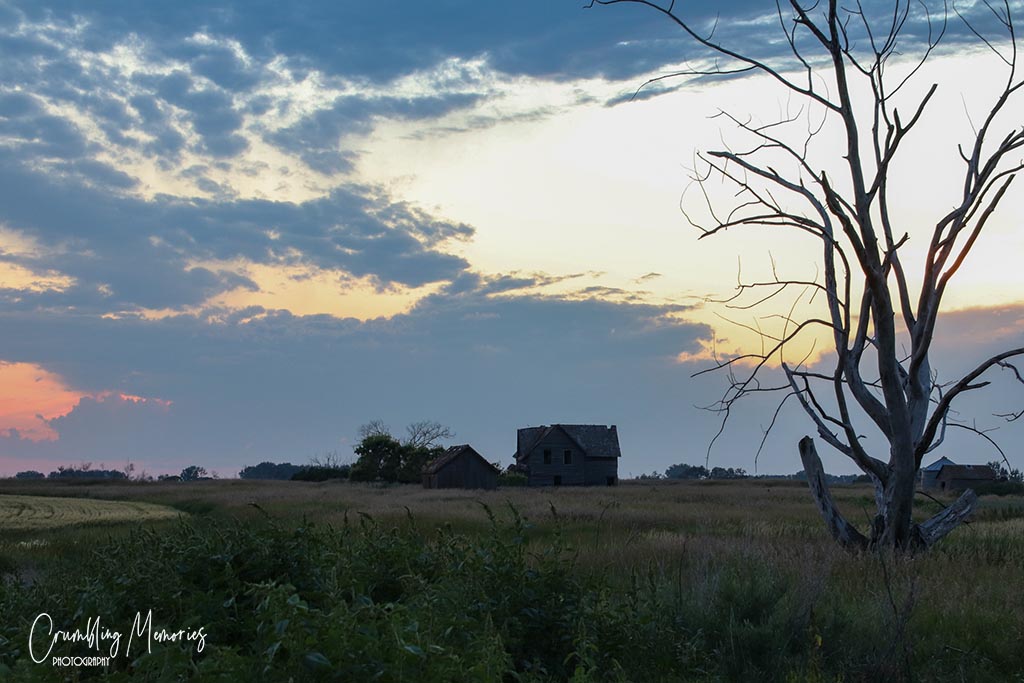
My companion on this trip was adamant that we get to this house and another to capture the sunset. We stood here for awhile as the sun quickly faded below the horizon. The sky changed quickly from the time we left Prohibition Church, made a pit stop at another house and then made our way into this one. Even for the 10 or so minutes that we stood in front of this house, it changed a lot.

I have to admit, I did not enjoy my walk into this property. Lots of badger holes, grass up to my waist in some areas. My exploring buddy led the way, which I am grateful for.

This is near the start of our walk in. I thought I’d like to stay along with field but that didn’t work for us getting back out. God I hate tall grass. I hate when I cannot see where my feet are landing.

I do believe that this is one of the oldest histories that I have found. When I was able to connect a family to this property I was really excited. From the map I am convinced that the other side of this house is just a amazing as this side and I have every intention of making the trek back to see it.

LOG HOUSE

JFA, born in Ontario in 1850 followed his father to Clearwater, Manitoba in 1881. The following year he came to this property with his wife. Here they raised a family of 8.

It is said that JFA was the first settler to build a home in this township and range. He built a home of logs for his large family.

The homestead remained in the family and eventually, JFA’s grandson took over the farm where he lived with his wife. BA lived here with his wife Mary but they never had a family of their own.

I wonder if this is the original structure, refinished or if this is a new build all together. There was a garage on this site not far from the house with an old Ford truck parked in front of it. Not far off the drive was an old combine up against some trees. The grass was very tall and think and I wasn’t going to chance it.

I think this is a pretty big house for its time. I would love to see the inside. I would love to see what it looked like in its glory.

JAMES FRASER?

When I photographed this house, I never expected to find anything interesting about it. In fact, I wasn’t even going to look but I thought what the heck. Well, the first registered homesteader was James Fraser! Of course I instantly thought of Outlander. James Fraser was recorded in the history books as taking ownership in 1895. Of course, I could find nothing about him. The second owner, purchased in 1901 was from Ivernesshire, Scotland!!

Albert and Ada married in 1903 and this was their land. Together they had 5 children. History says that Albert came to Manitoba in 1889 and worked for the local implement dealer. He became quite successful and retired in 1892. Upon his retirement Albert and Ada bought a fruit farm in Victoria, B.C.

After a few years in B.C. Albert heard of the hard times on the prairies of Manitoba and decided to head back and and “get his farms on a paying basis”. Things were going well until the 30’s and many of their groups were deemed worthless. On top of that, Albert sustained an injury wherein he was gored by one of his bull from his large herd of Hereford cattle. Albert was very proud of his herd but the injury would lead to his death. Albert lived a couple months after his injury but his lungs were so badly crushed that he eventually developed pneumonia and passed away in April, 1932.

Three years later Albert’s land produced good crops from the rains the prairies were receiving. One of Albert’s sons went on to work at the elevator in Elva.

Upon our arrival at this property, we weren’t sure what we were going to see. It was a long walk up the drive and I kind of had a feeling there would not be much to see. There were a gazillion grasshoppers along our route and these were the only two photos I took. I’m happy we stopped and I’m happy that I took the time to find a little bit of history on this place.

DUBLIN CASTLE

While photographing my neighbors house, my eagle eyed husband spotted another on the same section of land. Within a short visit and a tad bit of history about the house, we headed out through a field, over the tracks to this home that is now pasture land.

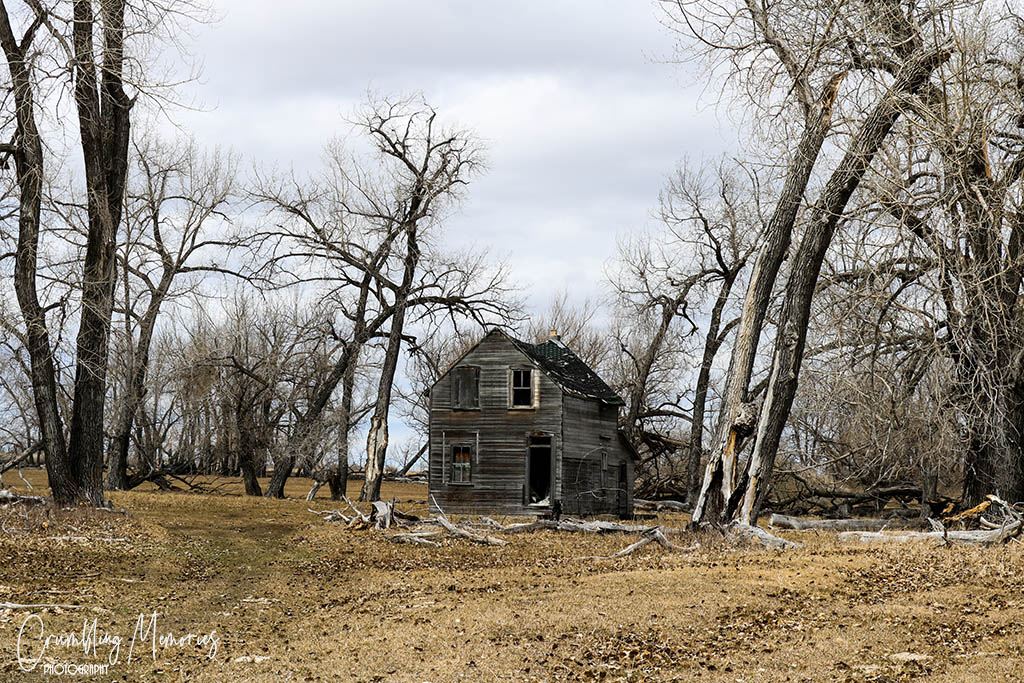
There were tons of photo ops on this property given an abundance of dead wood. I headed straight toward the house while Cade and Makenna wandered around.

This half section of land was owned by the brother of my neighbors now house. William received this land as a young man but within a few years of farming here, in 1919 to be exact, he moved to British Columbia. Over time the property was inherited to his brother.

We were told by the landowner that a good trail was made to the house through a field/swampy area and over the train tracks to the gate. She had recently been removing boards from the home and taking them back to their current home for projects.

The house was by no means safe to enter. The plaster on the inside walls is giving away and there are heaps and heaps of it everywhere. You may also notice the way the house is leaning inwards. It will eventually give in and collapse into the basement.

Mrs. told us that many, many years ago, the ancestors of her husband hauled this house to this location by horse. The home got stuck and the men had to hire the help of more horses to finally bring this home to its final resting spot.

I have to admit that this exploring trip was likely one of my favorite so far. Our intention was to head to our neighbors house, then head down to the remains of a stone church and then head home. We didn’t get to the church but off the top of my head I photographed at least 8 or 9 houses that day and got just as many leads for future exploring and shooting adventures.