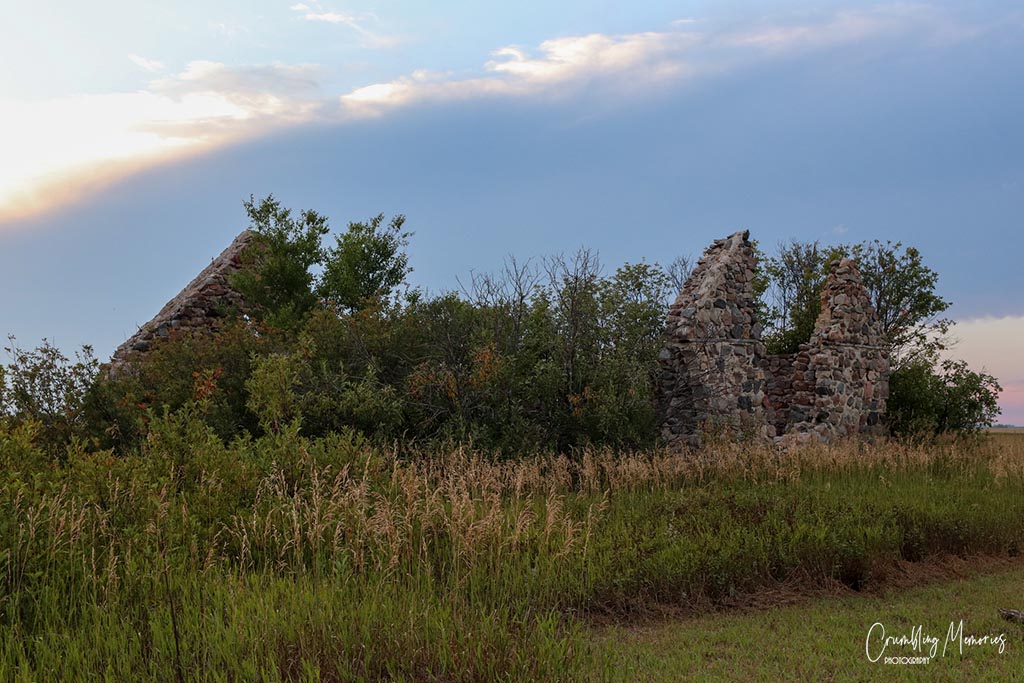
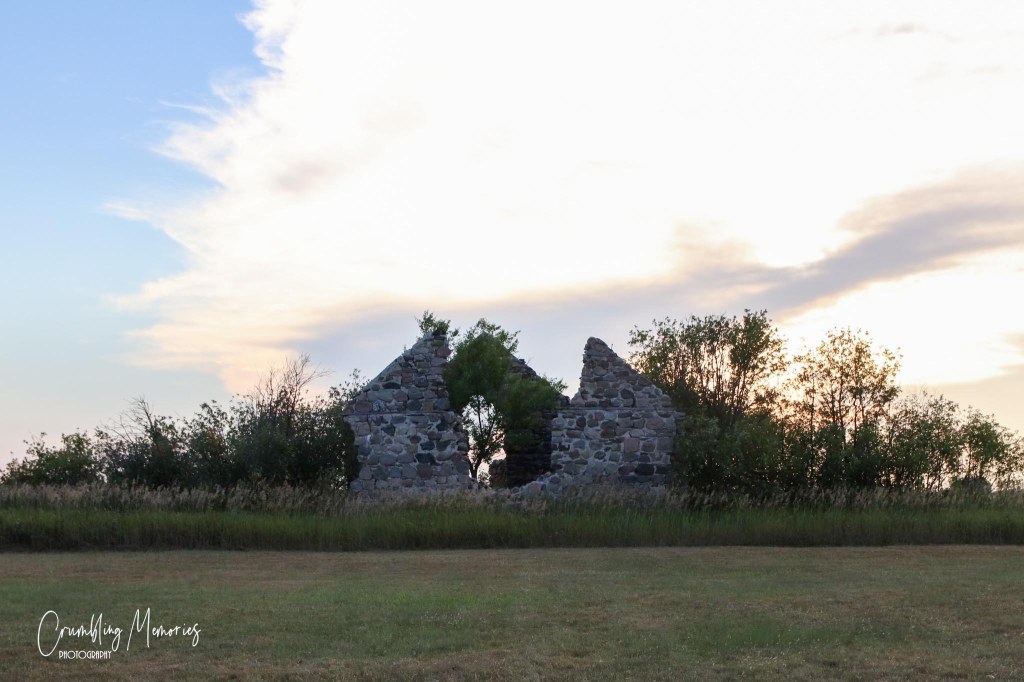
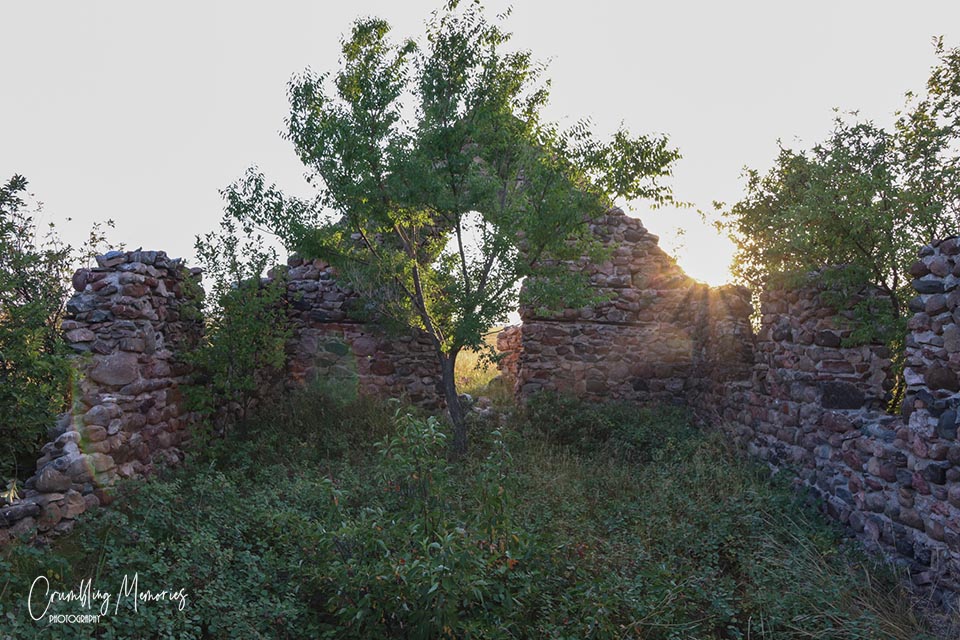
BROCKINTON STONE HOUSE & THE BLACKDUCK PEOPLE

Long before the first registered homesteader came to this property, many indigenous people lived off this land. Many studies have been conducted and many different artifacts from different periods of time have been recovered in different layers of the land here but there is still not a lot know about the very first settlers, the Blackduck people who are recorded to have lived on this land between A.D. 700 and A.D. 1300.

What we do know is that Mr. William Thomas Brockinton, a graduate of Oxford University in England, and his wife and two children who were 5 and 3 years old left England and William’s job as an auditor for The Birmington Railway and arrived in Woodstock, Ontario in the fall of 1881 with zero farming experience.

They remained in Woodstock that first winter and met a group of young men who were on their way to Manitoba. The men picked their homesteads from a Homestead Map and headed to Brandon in the Spring of 1882. Brandon was a far as they could travel by train as that was where the track ended at that time. The group organized their supplies and William bought himself what was said to be the best team of oxen ever seen. The cart was loaded with lumber which would build the Brockinton’s house. Mrs. drove a pony, hitched to a buggy with the children inside and a cow attached behind. Remember, the Brockinton’s had zero farm experience and it is said they relied heavily on the young men they travelled to Manitoba with.
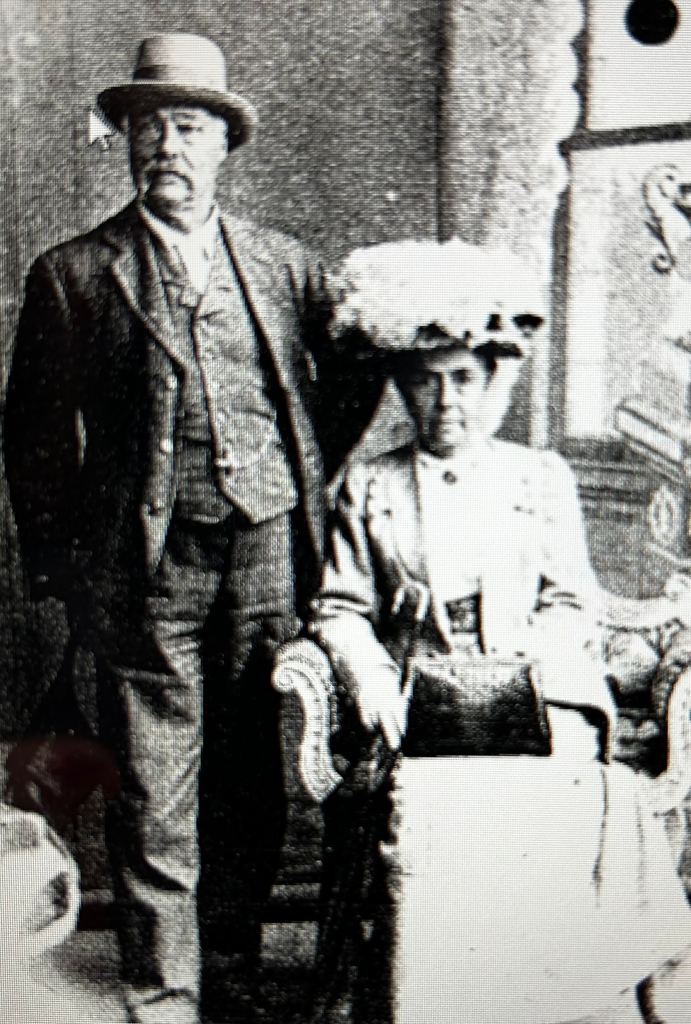

On their first night, the cow got loose and William spent a good part of the night trying to get it back. This resulted in William missing the ferry at Plum Creek. The young men were not happy as they had already gotten their supplies across and were annoyed that William was likely going to delay things trying to get his oxen and load of lumber across the creek. This didn’t stop William. He came down the bank, oxen pulling his lumber and entered the water. It wasn’t long before the oxen were completely submerged underwater for about 10 feet or so. The force of the load was so heavy that the oxen were able to get their footing on the bottom of the creek and carry on across the creek bottom and up the other side of the bank. It is said that all the while, William stood on the top of the load, smoking his pipe like this was a normal thing.


That first winter, the Brockinton’s lived in their small, cold, wood house. The young men decided to head back to Woodstock for the winter leaving William all alone to figure out his first winter on the prairies. A Manitoba winter was not something William and his family was used to. In February, the family started to get short on food so William set out for food and nearly froze to death on his way back with a bag of potatoes which were also frozen by the time he barely made it back to his family.

During the second summer in Manitoba, William acquired a second homestead on the river flats where there was plenty of wood. That first winter William built a soddy to live in. William now spent his time between his two homesteads and in 1895 he built this beautiful stone home which still stands today.
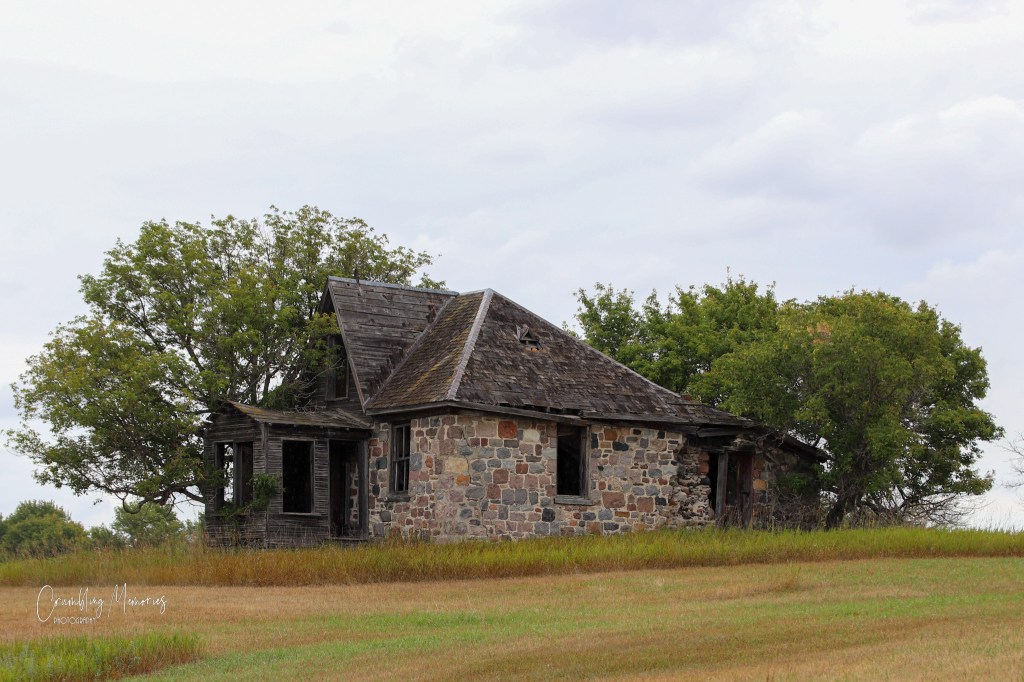
After moving to Manitoba, the Brockinton family had two more children. As there were no schools nearby, William home schooled his children until a school was built nearby in 1901.

William was an exceptional violinist and was more than willing to teach anyone who was willing to learn.

Mr. and Mrs. Brockinton continued to live on their farm until their deaths. Mrs. Brockinton died in November of 1924 and Mr. Brockinton died in September of 1933 at 83 years of age.

It is said that William continued to purchase land in the area and at one point paid $4.80 an acre. I cannot tell you exactly where this couple retired.

This land is also recognized as a Manitoba Grassland Birding Trail.

This old homestead is recognized as a National Historical Site. One day I hope to find out more about the Blackduck People who inhabited this land many, many moons ago.
BEHIND THE SCENES – SEALS

In case you didn’t know, the Assiniboine Park Zoo offers a Behind the Scenes program during the summer months. Off the top of my head, you can see seals, polar bears, snow leopards and tigers.

For around $100.00 (this includes an hour BTS and your zoo admission) you can choose to learn more about some of the animals at the zoo. On July 15th, Colton took me to see the seals, which is one of his favorite animals.

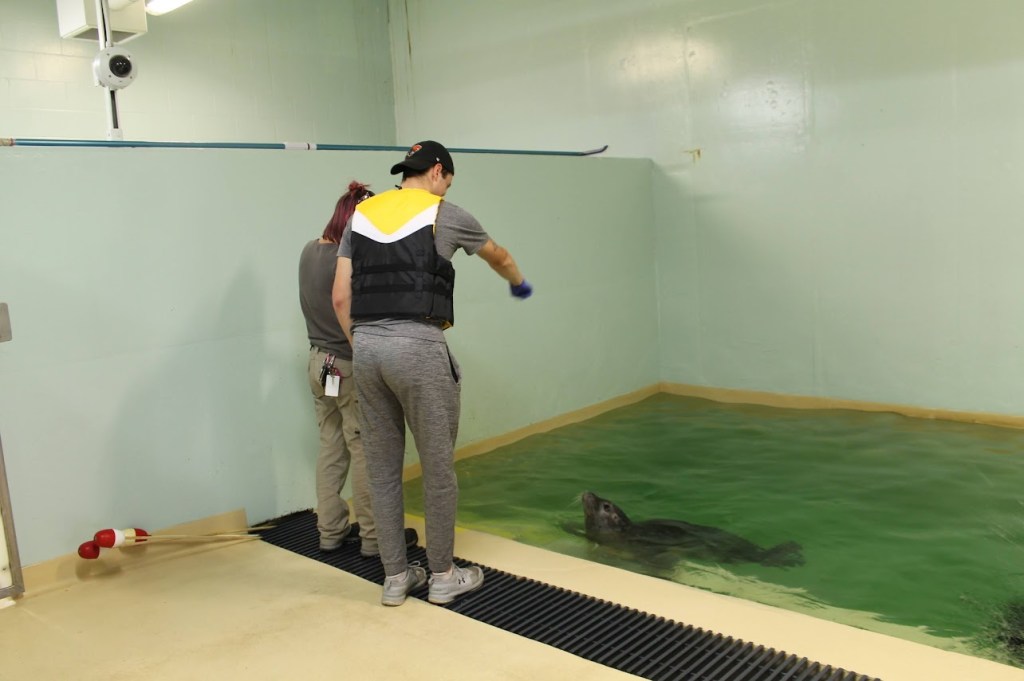
We entered into the usually unauthorized door at the Journey to Churchill Building and went upstairs to the area where the zoo employees train, feed and treat the seals. Inside this building, two male seals were waiting for us. This is Emil. His co-performer who we didn’t get a photo with is Gabbers. He is what they consider a dwarf seal because he didn’t develop properly. His flippers are smaller than they should be AND he didn’t develop a mouth full of teeth.

During our hour we asked the seals to perform some tasks for us which included touching his nose to the target, rolling over and splashing us. All with hand signals. We even got to feed them.

When it came to my turn to have Emil roll over, he wouldn’t. After a handful of tries, he finally did and then I got to feed him a fish for his efforts.

During our time inside, the seals did come out of the water and came right up to our feet. We were advised before the event began that if a seal did approach us, we were not permitted to touch it although they may touch us. That didn’t happen.

We were permitted to take photos but only when the trainers okayed it. We didn’t really need to though because one of the zoo employees was taking photos the entire time and then emailed them to us for free. She did a great job and was sure to make sure she got a shot of everyone.

We then moved outside to the top of the Journey to Churchill seal exhibit. This is where you see them swimming around before you go out the sliding doors and just outside the doors. Up there we got to meet Neptune who is considered to be the leader of the 7 male seals at the zoo. I will add that all of these seals are there because they were either injured (Neptune only has one eye) or were unable to care for themselves in the wild and would have otherwise died. 5 of the zoos seals are from British Columbia and two are from Germany.

I have to add that when we got outside, one of the bears was very curious about us being up there. This bear was identified as Willow.

At this point I could have turned my attention to the bears but I knew that I was going to be back here in a few days for the polar bear BTS. So we talked some more about the seal program, whether the zoo would take in anymore seals, which the ladies said they didn’t want to as they felt that the 7 was a good number. It is their opinion that at this time every seal was getting what they needed and there is currently harmony in the tank.

Willow was not giving up though. She kept getting closer and close to us to see what we were doing.

This is a great program. We were told a lot about the zoo, its seal program and we were able to ask a lot of questions. There wasn’t a question that they weren’t able to answer. I highly recommend it and, all of the proceeds go back to the animal program you attend.

SWINGING DOOR

When I first saw this house posted online by another bando hunter, I immediately put it on my list to see. Back in May, a fellow bando hunter and I went there. One thing I did notice was the two lightning rods that were once attached to the house are now gone and the swinging door has one again closed itself, or maybe it had help.

Mr., born in England, immigrated to the United States and then ended up here in 1894. Upon his arrival he purchased this section of land. He met his wife when he got to Manitoba and they married in Brandon. From this union 3 girls were born. In 1902 he sold the farm to his brother-in-law and moved to town and purchased shares within the local flour mill and worked for many years in the community.

The history of the brother-in-law’s family is far more in depth but doesn’t really confirm anything about this house. Their earliest recorded history is 1196. In 1756 the family changed the spelling of their name, which really wasn’t that uncommon back then. The family are said to be the equivalent of English Feudal Lords and were the Lords of Duersen and Lissel in the Province of Brabant which is in the Netherlands. The earliest record of an ancestor coming to America was 1630. The earliest record on one coming to Canada was 1756 when they immigrated to Ontario. It is said that one of the children, at a young age, was lost in the woods and never found.

Now this is where it gets tricky. This family farmed on the NW corner of this section which would explain how this family is connected and how the original landowner met and married his wife. When they moved from the land to town to operate the flour mill, he sold the land to his brother-in-law. It is recorded that a farm on this land burnt down in 1916 when the family was away in Ontario. They lost everything in that fire.

I cannot confirm if this is a rebuild of the original home or if the house that burnt down was on another quarter of this section. Regardless this is quite the house. Unfortunately, it was not easy to photograph from the front given the tree line. And honestly, I didn’t even look at it from the back.

This is a neat old house which I thought would have been quite fancy for its time with its porch and upstairs deck. It certainly wasn’t your typical style home. The floors were caving in so we just peeked through the windows but inside there was plenty of old things to see.

It definitely goes up there on one of the neatest houses I’ve been to.

CROFTHEAD FARMS – 1881

This sign is one of the coolest things I’ve seen given that it actually states when the homestead came to be. I have removed some of the information from this sign which gives away its location. I love that this sign confirms when this homestead came to be.

John & Mary, both born in Scotland in 1847 and 1845 immigrated to Ayr, Ontario in 1868 where they lived for 9 years. In 1877 they made their way to Manitoba by Red River cart and arrived in Portage la Prairie, Manitoba where they remained for 4 years.

In 1880 Mr. filed for this homestead and was one of the homesteaders in this district. That summer he built a soddy and the following year he moved his family here. Mr. & Mrs. raised 9 children on this land. For several years that soddy was a stop-over or half-way house for other farmers moving grained from Deloraine to Brandon. It was here that they would replenish their supplies and rest.

This house was built in 1885 and was last recorded to be owned by Mr. & Mrs. grandson, W. Jack.

Mr. & Mrs. retired to Victoria, B.C. in 1912.

All 9 of their children attended Millerway School which was built in 1884.

The couple had a happy life together and celebrated their golden wedding anniversary in 1919 (50 years) and their diamond wedding anniversary in 1929 (60 years).

Mr. passed away in March of 1931.

Mrs. passed away in August, 1935.

The best thing about a bando house hunt is when I find old cars there.

THE WILLOW ROW FARM

The original homesteaders of this property came to this land at the turn of the 19th century. The first official recording that they were the landowners is dated 1901. Owned originally by one of the brothers of this family, the first brother to own this land, William, turned the sod making it ready for farming and construction of a forever home.

In 1904 William sold the land to his brother James who lived here until he retired. At that time he son, namesake of his uncle and his dad, took over.

This property has a long drive and is beautifully treed. This is also the spot where Christian and I got most of our wood ticks that day. I’m sure that we picked off at least 50 at the end of this driveway before we got back in the vehicle.

In 1920 this land was sold Mr. Taylor but then repurchased it. James later sold the land again, this time moving to a different district to farm, but again bought the land back. It does not state why the land was sold but it does say it was purchased back due to adverse conditions.

James and his wife Bessie raised three children, mostly on this homestead. In 1930 they retired from active farming and moved to the closest town. Mr. died in September, 1953 and Mrs. not long after in April, 1954.

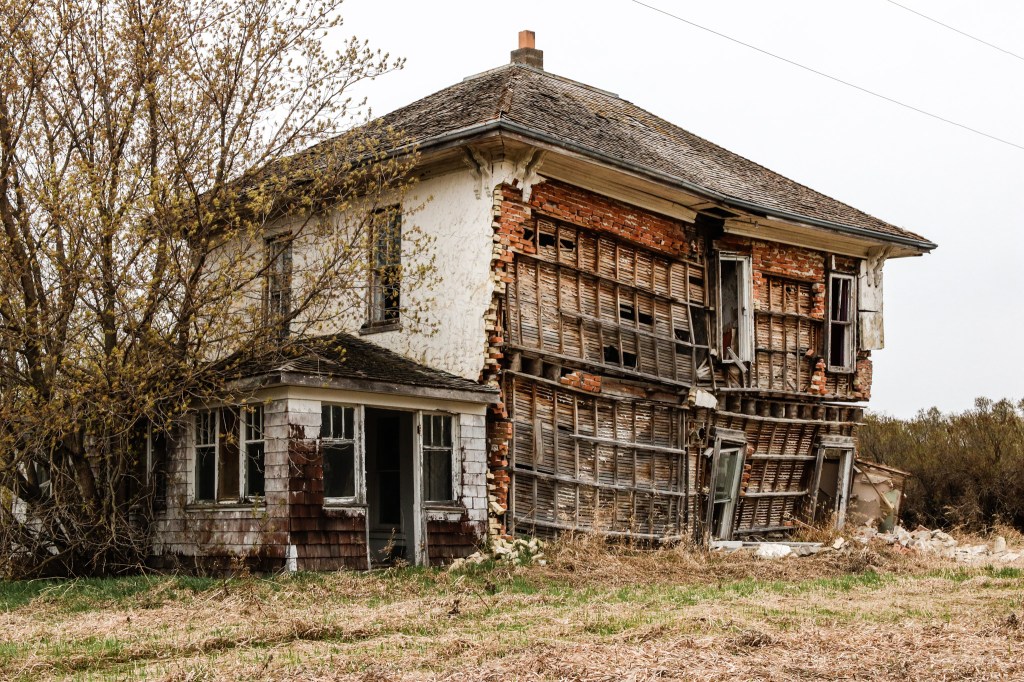
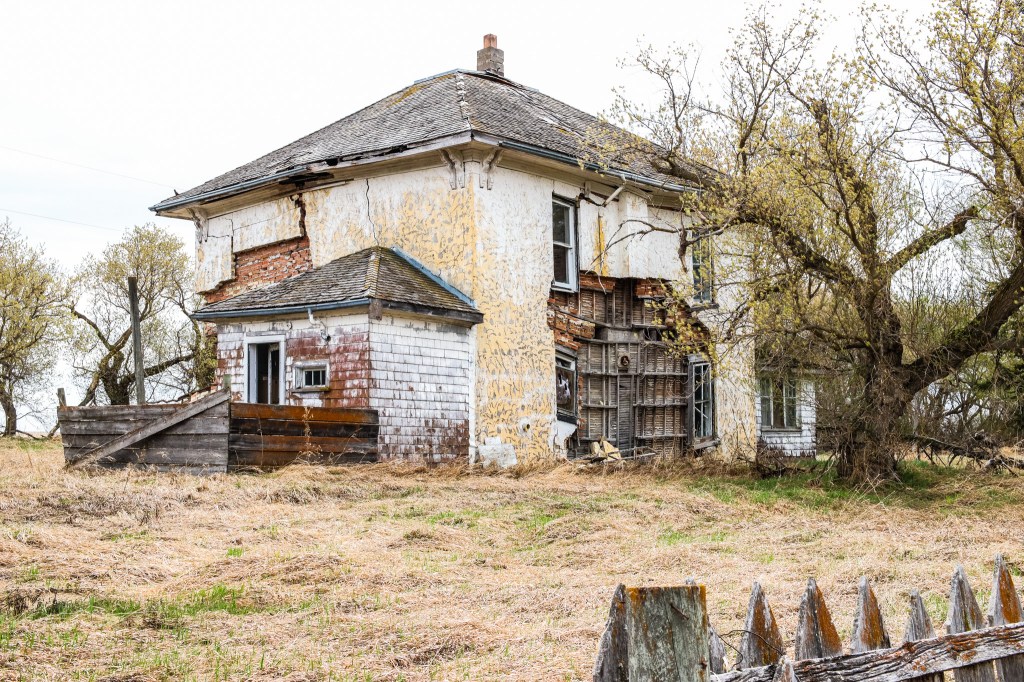
This was not the first house we went to on this day that was suffering from the same sort of decay. I am going to make the assumption that at one time, these were brick homes. In an effort to modernize them, stucco was applied over the brick. With time, the roof began to leak and the water ran between the two layers causing this deterioration to happen.

Inside the house we could see the remains of furniture and a bookshelf with puzzles and games.

IT WAS ONCE THE MITCHELL’S

Back to that day when Christian and I went out, one of the first houses we stopped at on our venture was this one.

Visible from the road, this was an easy stop. After fiddling around with my camera for a bit we got ourselves on the other side of the trees.

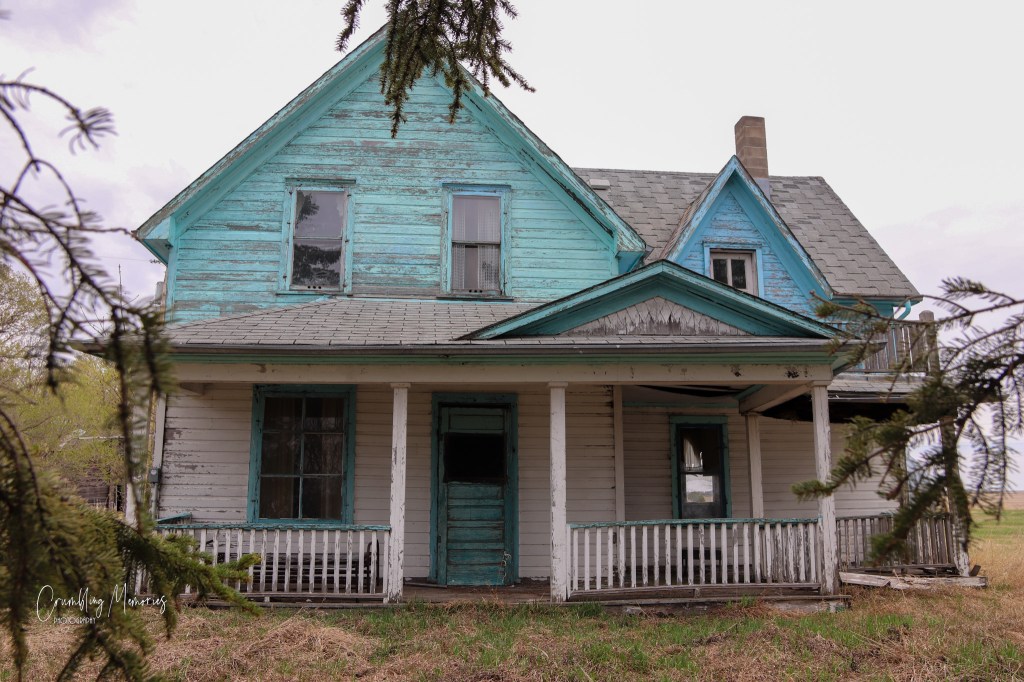
This big old two story house with the missing door upstairs wouldn’t want to be something I came across at night time. I wasn’t at all freaked out here but with the dead trees in the front, I could see how one would be.

The history I found on this homestead is not of the original homesteaders. That is of course somewhat disappointing to me but its better than nothing. That being said, here we go. The second homesteader of this land immigrated to Canada in 1903. Born in 1881 in Country Cork, Ireland, he moved to the area and married in 1908. Having worked for many farmers in the area and renting land to farm, he moved from the land he originally lived on and in 1921 eventually moved to Neepawa. In 1927, Mrs. passed away and he came back to the area.

In April, 1928 to be exact, the family moved back to Elgin, Manitoba but he again rented land. It wasn’t until 1942 that him and his children moved to this homestead.

Mr. retired from farming in 1951 at the age of 70 and moved to Brandon where he lived until he passed away in 1964. Mr. and his wife raised 6 children on various farms in the area as well as in Neepawa. Upon Mr.’s retirement, his youngest son and his wife took over this farm and raised their family here.

MISUMENA VATIA 

Last week I was out with a student taking her graduation photos. We were making our rounds and stopped at an old church. Well, the upkeep at the church isn’t what it used to be but we got her up there on the step and took a couple photos.

There was a nice rose bush by the door and she decided that she would like to lie down on the step with the bush beside her. So we started cleaning off the step and she looked at one of the big roses and inside was this BIG whitish/pink spider.

Of course our first reaction is to gross out and then flick it away. I wanted to try and get a couple of photos of the spider too because I had never seen one like it before and then proceed with the photography shoot. So we did that.

Tonight I posted these photos on Instagram and my nephew commented that he had seen these spiders before out at the cottage and wondered what they were so, I searched it.

This is the goldenrod crab spider or the flower spider. They are called crab spiders because of their unique ability to walk sideways as well as forwards and backwards. They have the ability to change between these colors based on their surroundings through the molting process or depending on the color of flower they are eating from. on that color.

These spiders do not spin webs but they do use silk to catch their prey. Once the female lays her eggs and the eggs hatch, the female dies.

NOT ONE BUT TWO

The first recorded landowner recorded for this section of land is 1889 but there is no family history. So, I don’t know who built this house. Regardless, she’s a beauty.

In 1906 Mr. quit his job at the chair factory in Orangeville, Ontario to move to the area. He boarded a freight train with the machinery, furniture and household effects of the Anderson Family. Upon his arrival to the area he was hired as a farm hand on another farm. In 1911 he rented this land from the previous landowner.

In January, 1912 he married Helen, the daughter of the family whom he traveled with to the area with their belongings. They bought the land and lived there until 1954.

When they left the land they retired to Melita. During his active years Mr. was on the school board in the area and was a counsellor for 13 years. Their youngest son took over the farm and raised his family here.

Before marrying Mr., Helen was a school teacher at Brown’s School from 1909 to 1911. She began teaching at 16 years of age.

While walking up to this property we discovered that the Souris River runs through it. The water was full of ducks and small birds. In the distance I could hear an owl taunting me but I could not spot it.

There were two houses on this property . This newer house must have been what the family moved into when the original farm house was no longer livable. I love that the house was preserved to some extent.

Mr. & Helen raised 9 children on this farm, 4 boys and 5 girls. Mr. passed away in 1963 and the history that I found for this family was written on May 26, 1982 by Helen who was in her 90th year. I visited this house on May 13, 2023.

At the time that Helen wrote her family’s history, there were 25 grandchildren, 30 great-grandchildren and 5 great-great-grandchildren.

Then the 30’s rolled around and the family faced the depression, the dust bowl and the grasshoppers. At the time the family had a car, a piano and a telephone. Mr. sat down with his family and said something had to go. Helen said that the telephone had to stay, in case of an emergency. The children all wanted to piano for entertainment. So, Mr. put the car up on blocks and parked it. The family relied on a Bennett Buggy for transportation.
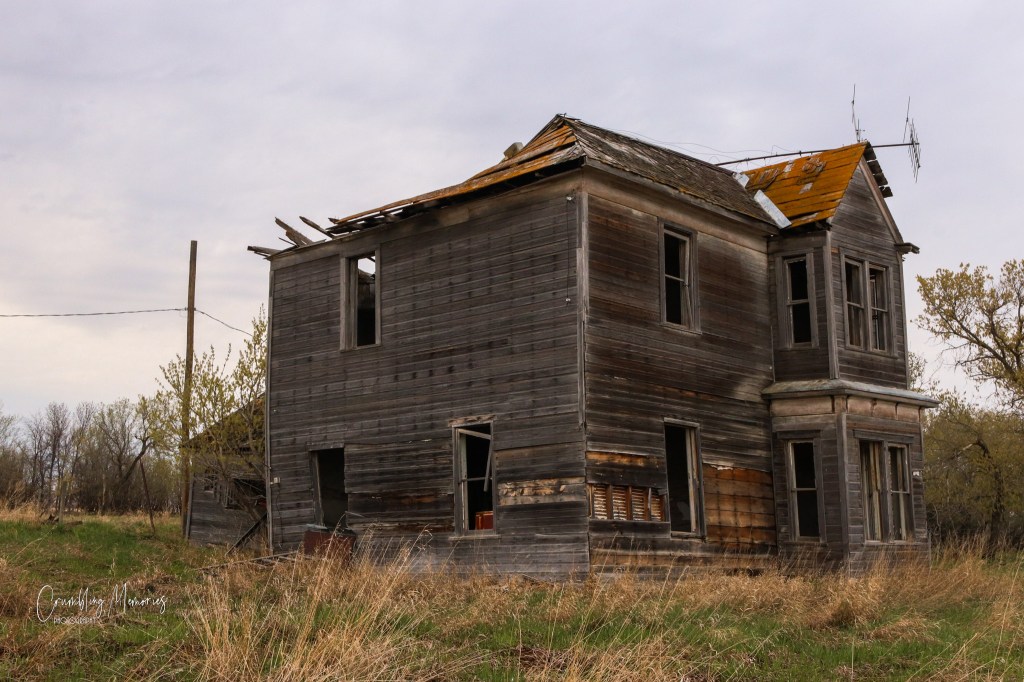
I did find this one strange piece of equipment in the yard. I took a photo of it with the hopes that my husband could identify what it might be but he wasn’t sure.

Now I’m wondering if the old car is somewhere on this property. Maybe the owl was trying to lure me further into the yard in the tall grass and treed area so I would see it!

EMPIRE LOYALISTS

TJB was born in 1872 to Empire Loyalist parents in DeCewsville, Ontario. TJB moved to Canada in 1892 in what was referred to as a “harvest excursion”.

What is an Empire Loyalist? Due to the American Revolution, approximately 8,000 Brits came to Canada and migrated to an area in Southern Ontario. Those people were among the first white settlers of the province and were instrumental to creating the Province of Upper Canada 1791.

Christian and I were on our way home for the day after an almost 11 hour day hunt and shoot. We had just finished up and the well groomed yard when he remembered this place which had some old cars which he knows I also enjoy photographing. It was getting pretty dark so we weren’t sure what we were going to get. Again, I wasn’t sure what I was going to get in this lighting and I also underestimate what I can do. That am I’m not much of a risk taker because don’t want to miss a shot.

In 1894 TJB married Emma in Deloraine. Emma was the first woman to live in Medora. The first home they built was where the Medora Service parking lot is now and they lived there until 1903.

TJB played for the local baseball team and was a goalie for a football team. He was the secretary for the Sunday School and the Literary Society. As well, he was a member of the Orange Lodge. The Orange Lodge is a group of Protestants who were committed to the protection of the principals of the Protestant Reformation and the Glorious Revolution of 1698 which enshrined civil and religious liberty for all. The Orange Lodge has existed in Canada since at least 1812.

Emma was a very involved in working with the church and was a life-member of the Women’s Institute. Emma was also a well known dress-maker.

From what I have read or found about this property, I can’t tell you anything about these old trucks nor can I link them to this family.

During my old car photo shoot, Christian was wandering around the house so I thought I had better get over there and take some photos before it was way too dark.

Here is where I get a confused by what history I have found. It says that TJB built the house in 1903 which is now owned by another farmer in the area. “This old house was moved to the farm.” So is this the house that was built on the service lot in Medora and moved here or was the house built on the service lot sold to the other farmer and he moved it to his own farm? Regardless, she is a big old beauty.

TJB and Emma raised 5 children on the homestead. Their oldest son George who was born in 1897 later left this property to his only son when he retired and moved to Medora in 1974.

TJB passed away on June 8, 1930 and Emma passed away on August 14, 1962.

AURORA IN SOUTHERN MANITOBA

Many moons ago, I remember that Northern Lights were something that you only saw when you headed North of the city. And the darker it was outside, the better they were. I do remember going to the cabin and see them, occasionally. I remember that when you were able to see them, it was a big deal because you didn’t get to see them very often. Not from the city anyways.

So what are Northern Lights? Well, they are electrically charged particles that have entered the Earth’s upper atmosphere at a very high rate of speed. They are said to be more common in the winter. That being said, are we seeing them more now because of all the smoke in the air?

Anyways, on the night of May 19th Colton came into the house after I had already snuggled in for the night to watch The Handmaid’s Tale. He said “you might want to grab your camera and come outside.” He showed me his phone. He said, I just got this photo of the Northern Lights at the end of the driveway with my phone.

Well, I got out of bed, grabbed my camera and went out to the driveway and that is not what I saw. I could see them faintly but nothing like Colton had captured. This is what Cade & I used to see when we lived up in Waywaysecappo. I haven’t seen them like Colton’s picture since we lived up there. I remember driving up highway 16 coming home from somewhere and watching them dancing in the sky while Cade drove. It was mesmerizing. I haven’t seen them do that since. Nor have I seen the colors I’ve been seeing lately on Facebook and Instagram. And maybe I’m seeing them more because I follow those pages more closely now but who knows.

Anyways, Colton agreed to drive me further North up highway 18 to see if they got better as we got out of town. I also envisioned an abandoned house that I like worked into my photo. No luck. At this point I decided my best bet was to message my friend Christian who in my opinion is a Northern Lights photography expert. He said, go home, set up your camera and try again later. They are there, there is no cloud cover. You just aren’t seeing them to the naked eye and you need to trust your camera. So I did.

Well, you can definitely see them but nothing like Colton’s photo. I must say though, I was excited to see all those stars. This also confirmed that there was in fact no cloud cover. So as per Christian’s suggestion, I went to bed but set my alarm for 2:30 a.m. to try again.

Okay, not to shabby. Again, stars galore. I must try to do more night photography this summer. I’m positive I say this every summer and never get out to do it. Now, in my defense, milky way season is over.

So, I’ll be watching my new Aurora Forecast app with the hopes I’ll get a shot.

JACK & DIANE – WELL, NOT QUITE

The furthest I can go back on this property is 1922 when this property was bought by Jack & his wife. Married in 1908 the couple lived six miles south of Medora where they raised four children. In 1922 they moved to this property but I cannot confirm whether or not they built this house or if it was there when they bought the land.

Jack was born in Shropshire, England on February 5, 1879. He came to Canada in April, 1906 and met and fell in love with his wife. She was born in Montgomershire, Wales and also immigrated to Canada in 1906. Jack passed away in 1962 and his wife in 1965. Their only son took over this land.

Born in January 1913, C.S. received all of his school in the area. Fond of sports, he was active in hockey, curling and baseball. He farmed his parents land until he sold same in the Spring of 1969 when his nephew took it over.

A few years later, C.S’s nephew’s Grandson took over the land and I believe he still owns it today.

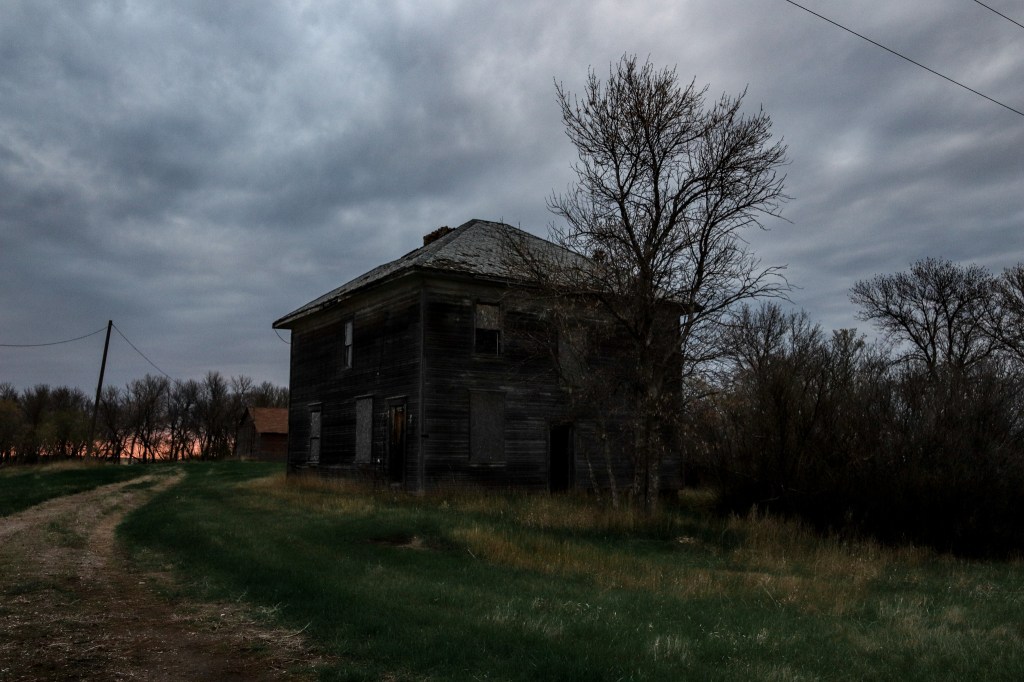
After a day of wood ticks, this stop was a blessing. The ride in was easy and the grass all around the house was cut. It was a nice change for the day. The dreary, cloudless, grey sky we had shot all day wrapped up with this beautiful sunset. This house had been on my to-do list for a long time and I’m happy that I finally got to it.

RED BARN

Located just off the road heading into Deloraine, MB, I have passed this barn many times over the years while going to hockey.

On this particular day, the kids and I were headed there for baseball and I was itching to take a photograph of anything. And this is what I did.

HOMESTEAD #3136

Referred to as Homestead #3136, A.J.W was born on September 28, 1840 near Picton, Prince Edward County, Ontario. A.J.W graduated from a military school and later became a Captain of the 16th Battalion during the Fenian Raids. When he wasn’t serving he was a woodworker who specialized in making cases for organs and pianos.

It is said that A.J.W married his wife in Ontario in 1863 or 1864.

A.J.W and his wife raised four sons in Ontario and then decided to move to Manitoba through Emerson. They settled first in Rapid City.

In 1885 after snowshoeing to the area, he found this property. A.J.W moved his family to the land and there, they wintered, in a tent, on the property. The following summer, this house was built.

A.J.W passed away in 1909. His wife died in 1933.

While we were able to get right up to this home, I didn’t go inside or even look inside.

This house for me will always be known as the Coyote House. While making our trek down the road, along the field line, there was a dead coyote.

JAMES FRASER?

When I photographed this house, I never expected to find anything interesting about it. In fact, I wasn’t even going to look but I thought what the heck. Well, the first registered homesteader was James Fraser! Of course I instantly thought of Outlander. James Fraser was recorded in the history books as taking ownership in 1895. Of course, I could find nothing about him. The second owner, purchased in 1901 was from Ivernesshire, Scotland!!

Albert and Ada married in 1903 and this was their land. Together they had 5 children. History says that Albert came to Manitoba in 1889 and worked for the local implement dealer. He became quite successful and retired in 1892. Upon his retirement Albert and Ada bought a fruit farm in Victoria, B.C.

After a few years in B.C. Albert heard of the hard times on the prairies of Manitoba and decided to head back and and “get his farms on a paying basis”. Things were going well until the 30’s and many of their groups were deemed worthless. On top of that, Albert sustained an injury wherein he was gored by one of his bull from his large herd of Hereford cattle. Albert was very proud of his herd but the injury would lead to his death. Albert lived a couple months after his injury but his lungs were so badly crushed that he eventually developed pneumonia and passed away in April, 1932.

Three years later Albert’s land produced good crops from the rains the prairies were receiving. One of Albert’s sons went on to work at the elevator in Elva.

Upon our arrival at this property, we weren’t sure what we were going to see. It was a long walk up the drive and I kind of had a feeling there would not be much to see. There were a gazillion grasshoppers along our route and these were the only two photos I took. I’m happy we stopped and I’m happy that I took the time to find a little bit of history on this place.

BOOTLEGGER’S CHURCH – COPLEY ANGLICAN CHURCH

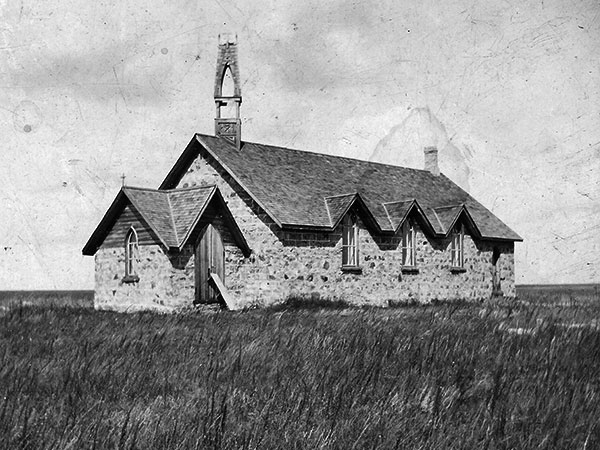
This stone church, formerly known as St. George’s Anglican Church was fifty-six feet long, twenty wide and twenty tall is located approximately 5 miles from the Saskatchewan border and 2 miles from North Dakota. The organization and fundraising efforts to build this church were headed by Goddard Gale and construction of same began in 1890 by Mr. William Cornwallis. Two years later in September 4th, 1892 the church was consecrated by Bishop Robert Machray.

Goddard Gale was an artist from London and the son of a well-known barrister and a cricket player. Goddard is also rumored to be the first “white man” to set eyes on Lake Louise. Mr. Gale was a surveyor and engineer for the Canadian Pacific Railway and a staunch Anglican. When he took up residence is what was once known as Butterfield, he became a community leader and a council member for the RM of Arthur. Arthur is what this area of the province was before it was split into three smaller municipalities. In 2015 it was then reunified into one large RM known now as Two Borders.

When Mr. Gale started fundraising for the church on this 4.6 acres of land, stones were gathered as he wrote letters back home to his friends where he told them this would be the first Anglican church west of the Souris River.

As settlement started dwindling, church attendance also waned. In June, 1913 the church was deconsecrated. Some of the contents of the church were taken to a new building in Pierson but the organ and photos were taken to Eunola School.

Locals from the area told stories about Prohibition and how given the location close to the American border and the very isolated location of the now vacant church, it became an attractive hideout to bootleggers. I certainly didn’t get any Al Capone vibes while here.

Upon our arrival at the church, the sun was blaring, there were no clouds in the sky. I was a tad bit disappointed. Back at the start of Covid, Cade, Makenna and I drove out this way with the intention of visiting this location. We ended up heading North after a stop in Elva and I didn’t think I would ever make my way down here again. Yesterday a fellow bando hunter took me down here to do some touring. I’m glad he did. And I’m glad the sunset improved. Within fifteen or so minutes after our arrival, the infamous “golden hour” revealed itself.

After years of abandonment and vandalism, in 1932 the windows and doors of the church were boarded up in an effort to save the building. Inside the structure are obvious signs of a fire. I would have loved to have seen this place before Mother Nature and vandalism took hold.

In 1967 it was recorded that the building was still intact.

Driving around this area, there are very few cars and people. In the late 19th and 20th centuries, it is said that the government did all they could to entice people to this area. It is said that people from Britain and Northern Europe were heavily recruited. During the recruiting process no one took into consideration the climate these people would endure here on the wide open prairies nor did they consider if farming on this land would prove successful before they made their way to Canada from abroad.

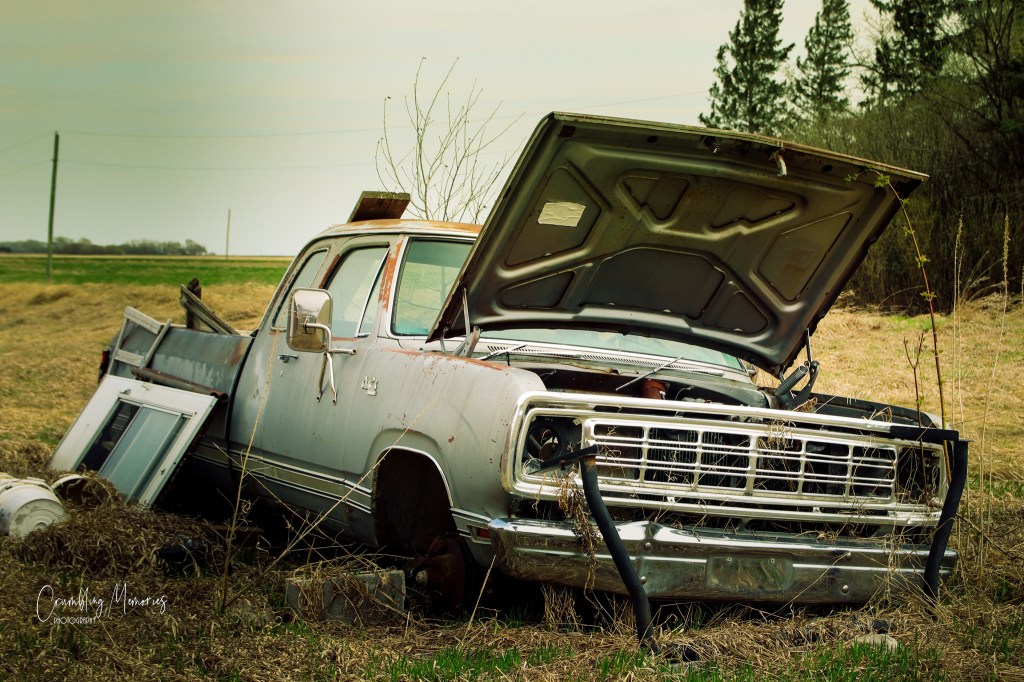
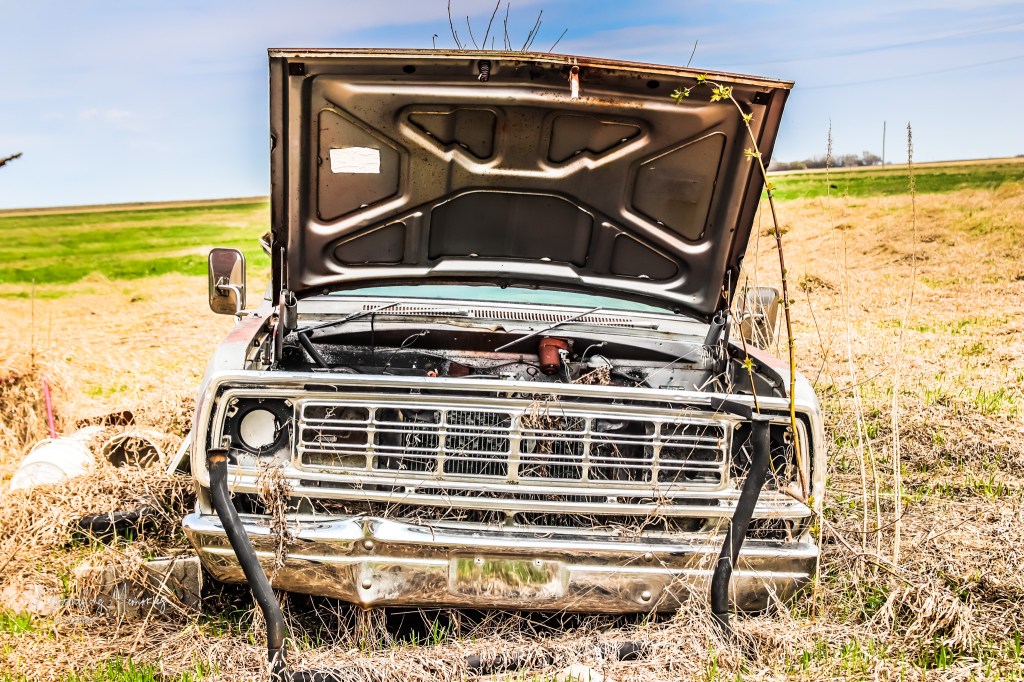
And then there is this old truck. I will admit, at first I was a bit more excited about this old truck than I was the old church. What role this old truck plays to this historical site is beyond anyone’s knowledge. I googled it, but not to thoroughly, so I’m just going to pretend that a bootlegger parked his truck here to hide out in the church and then had to escape by foot and never came back for it. Its perfect right where it is and has been subject to many photographs in its time, as this old field stone church as its backdrop.

HUMMINGBIRDS

We don’t typically feed the birds at our place because of the cats. I have also put out a hummingbird feeder in the front though as the cats don’t really hang out there and well, I highly doubt they’d catch one.

As a kid my first encounter with hummingbirds came when my grandparents bought their cottage at Lester Beach. My Grandfather hung a feeder outside the kitchen window and for the longest time everyone would gather around to watch them. In no time he added more feeders to keep up with them. I remember my Grandmother making syrup every Friday when we arrived.

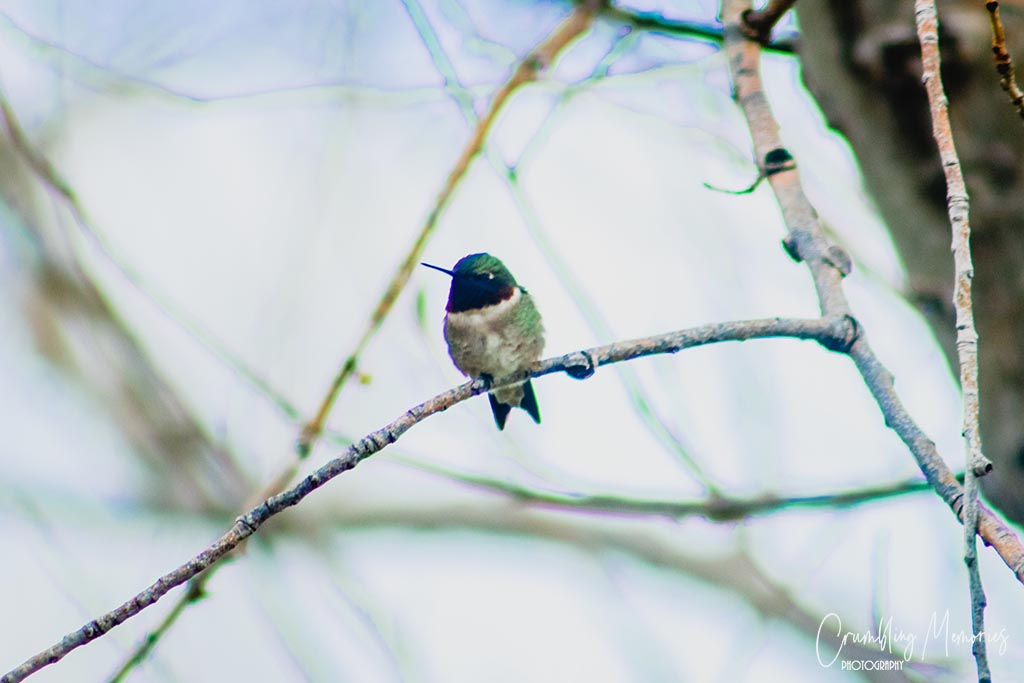
In the past we’ve had some fancy feeders for the birds but I find that they are hard to clean and you have to do it often to get rid of that black mold that grows on the inside so this year I just bought a feeder from the dollar store. I typically chuck them out at the end of the summer. Anyways, we’ve had a lot of action at the feeder between the hummingbirds and the orioles.

This was earlier in the Spring as the birds started to arrive. This bird spent a lot of time resting in the tree between drinks. He also had to wait his turn as the oriole tried to find a way to drink out of the feeder as well. There was also the odd oriole fight over oranges.

ORIOLES

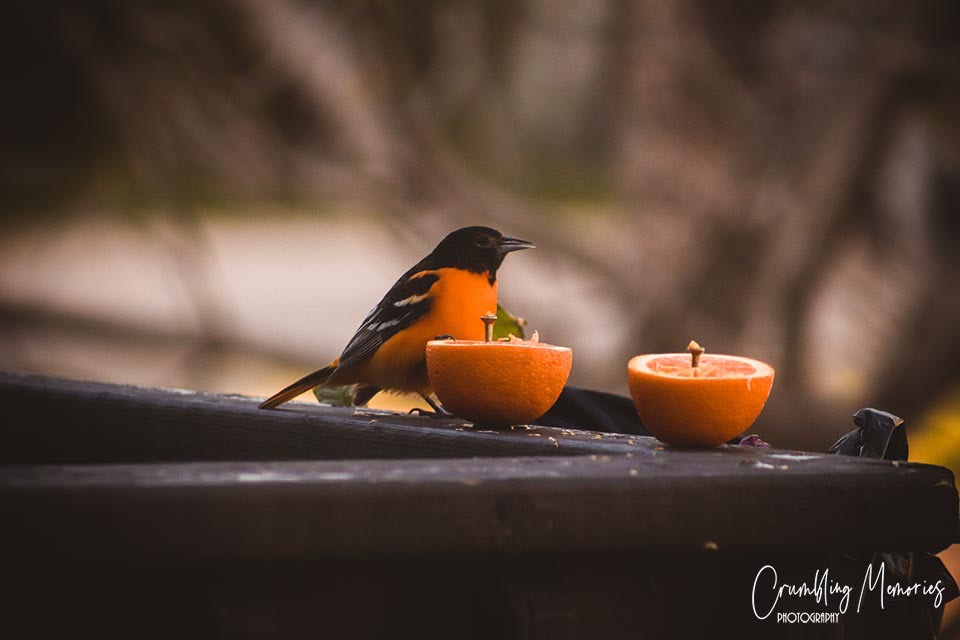
Every year we have hummingbirds. One of the first years we were here we had orioles but they didn’t stay for long as I couldn’t find an oriole friendly feeder and I didn’t take the time to research what else they could eat. Somewhere I have a photo of the oriole hanging upside down off the feeder.

Well this year they are back! Lots of them. Instead of the grape jelly we went with oranges. Well they can eat one a day!

This photo was taken through our living room window.

JOHN & LENA, CARL & RETA AND SO ON

John, from Beauharnois Country, Quebec and Lena from Emerson, Manitoba married in Killarney on December 29, 1899 and raised 10 children together on this land which John acquired in 1898. John earned an income to support his family by farming and running a hardware store in Neelin. He was also a carpenter. Lena was known to be a stern mother who instilled good values and principals. John passed away in 1937 and Lena in 1973.

In November of 1923, newly married Reta & Carl made their home on this land where they lived and raised their family. In 1966 the semi-retired to Killarney. The frugal couple raised two children on this homestead. Reta & Carl were the second family to own this homestead.

Carl & Reta, determined to make a living and “owe no man nothing”, worked from dusk till dawn to make a living and raise their children. It is said that Reta would do the work of a man and did things such as driving fence posts with a maul as heavy as herself. She broke horses, milked cows and raised chickens. She would support her family by trading milk, butter, chicken and eggs for food. If her grocery bill was more than she had in cash or trade, Reta would put the unneeded items away until next time. Reta & John would not hold a charge account. They prospered and made a good life for themselves and their children.

Upon Carl and Reta’s retirement, their son Glenn stayed on the farm and raised Aberdeen Angus cattle. He then raised four children on his own on this farm with his wife whom he married in June of 1955.

In 1982 Glenn and his wife purchased a family restaurant in Killarney while living on the home farm which he purchased from his parents in 1974.

This is a beautiful homestead. The house and outbuildings are very nicely treed in and its not far from your basic needs like food and gas. The homestead is no longer owned by one of the two original families.

BEING STRONG DOESN’T MEAN YOU WILL NEVER FALL DOWN

Back in June, 2018 (yes, 2018) I went out to this house. It was one of the first I got permission to photograph and I have gone back a few times since.

Back to that 2018 thing. I cannot believe that I have been doing this since 2018. Wow!

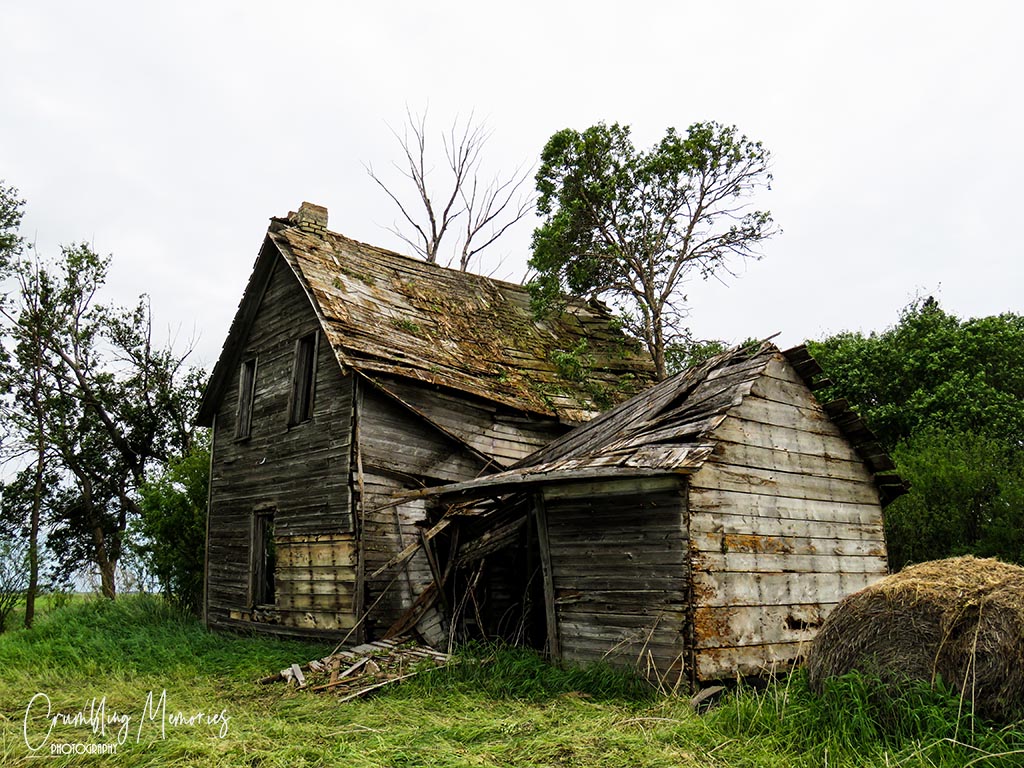
Anyways, here it is back then. The floor was giving out, the roof was caving in and the stairway was a mess. I did not step inside the home but I could get up to the windows and doors and see inside.

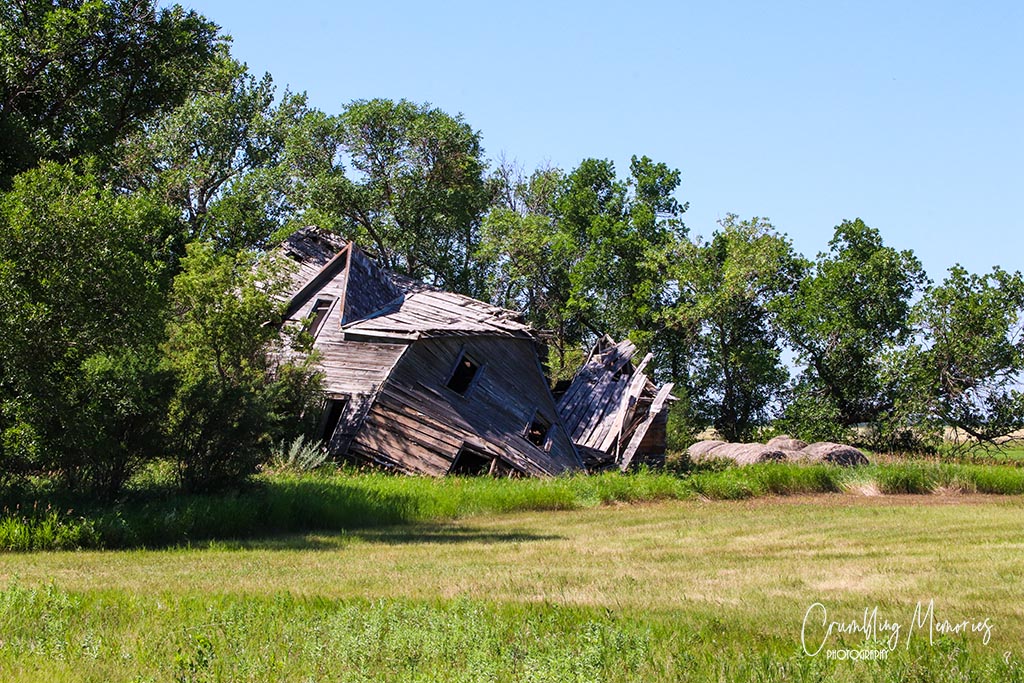
Today I went back. Mother Nature has had her way with this place.