
The original owner of this land, born in 1846, left his large, poor, religious family in Lac Megantic, Quebec at the age of 12 years old with only .90 in his pocket and the clothes on his back. He had intentions of making big money. He took on whatever jobs he could find and for many years was part of a railway construction gang as a cook in Winnipeg.
In 1881 himself and another landowner, whose old property we have visited, headed to the land titles office in Winnipeg to purchase land in the R.M. of Prairie Lakes. They reached their farms over 100 years ago with a team of horses, a plow to break land and food supplies. Working as a cook gave him a good idea of what food supplies would best suit them. They stocked up on cured salted pork, flour, sugar, coffee and tea.
On his 30th year he arrived at his property. He started breaking land by hand and built a small house. It was hard work but he was able to break land. He also purchased a sow that had 12 little pigs. He sold the extra meat for money. He also purchased a cow and calf for milk and meat and 6 laying chickens.
He never married and when he got older and the work got to be to much he asked his brother to help him.
In 1887 a minister arrived in the area and had the idea to build a small chapel on the land. The downstairs served as the living quarters, the upstairs as a chapel and a small corner on the main level served as the post office. Eventually the church was moved to Dunrae, MB. They also started building a blacksmith shop and a general store. The building of the new railway through Dunrae stopped construction and the small church was moved. The first St. Felix Cemetery remained on the property.
He died in 1915 at the age of 69.
The property shows no signs of this history any longer, except the St. Felix Cemetery in the middle of the 1/4 section.
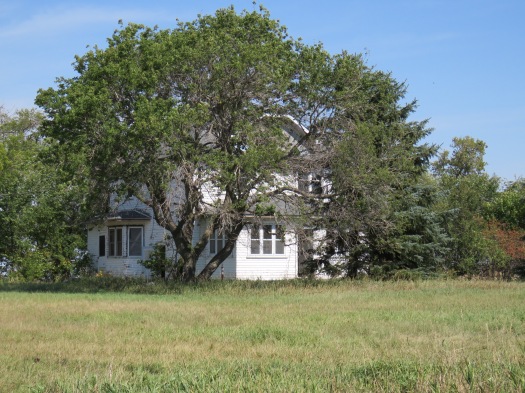
This is the present home on the land.
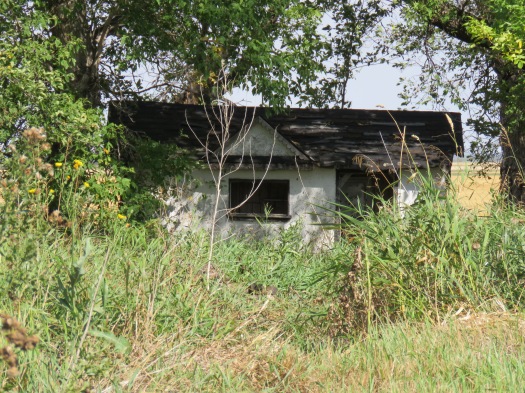
On the property was this neat little play house. You could see in the distance that someone has used it as target practice. That day I wasn’t brave enough to venture through the long grass for a closer look.
There were a couple of old buildings on the land which maybe could have been part of the original land owners.
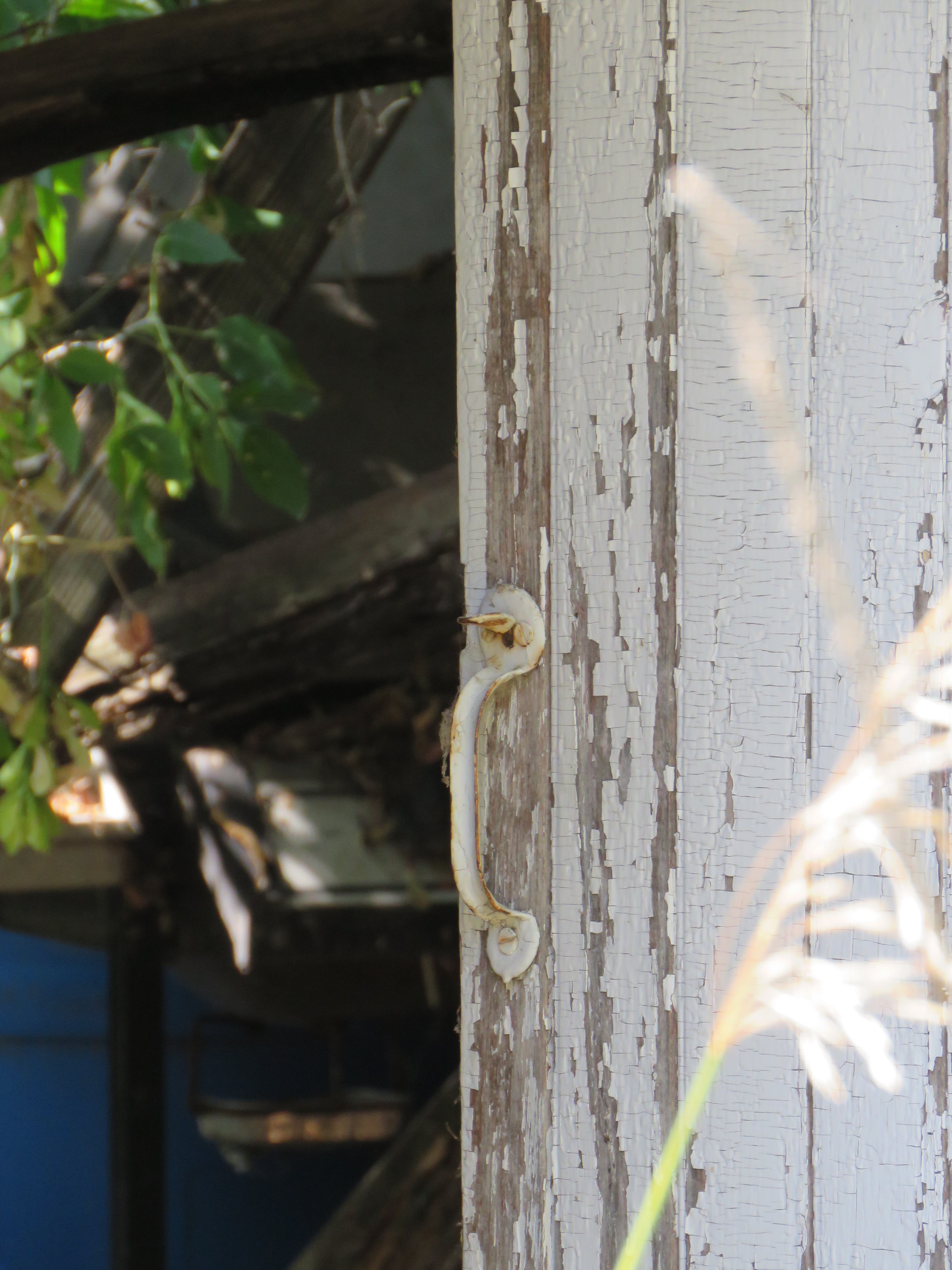
Maybe one of these old buildings were built all those years ago.
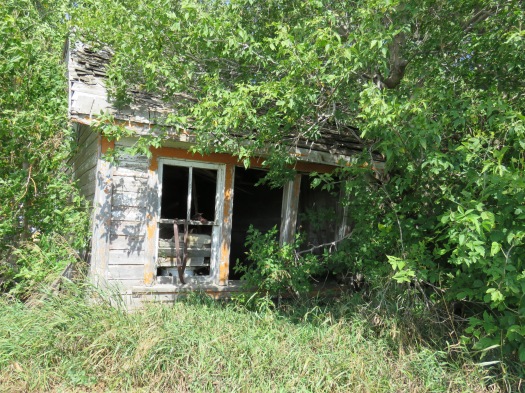


 CRUMBLING MEMORIES