IRISHMEN

Originating from Northern Ireland, this family traveled to Manitoba in 1899 from the Strathroy-London area in Ontario.  With them were 6 of their 8 children.  The family arrived in Deloraine and purchased land.

Baskier

Two years later, they purchased this piece of land as well.  Over the years, their older children made their way to Manitoba.  Their son decided to move to Montana and later to California.  Their daughter, her husband and their children settled into the area.

baskier house laneway email

Mr died 10 years after arriving in Manitoba.  In 1911 Mrs. transferred ownership of this piece of land over to their youngest son Albert.

IMG-4051

Albert was born in Ontario and traveled with his family to Manitoba in 1899.  He married Lillian in December, 1909 after she came to Manitoba to visit another family.  After their marriage in December, the couple headed to Ontario and returned to Manitoba in the Spring of 1910 and homesteaded on this land.

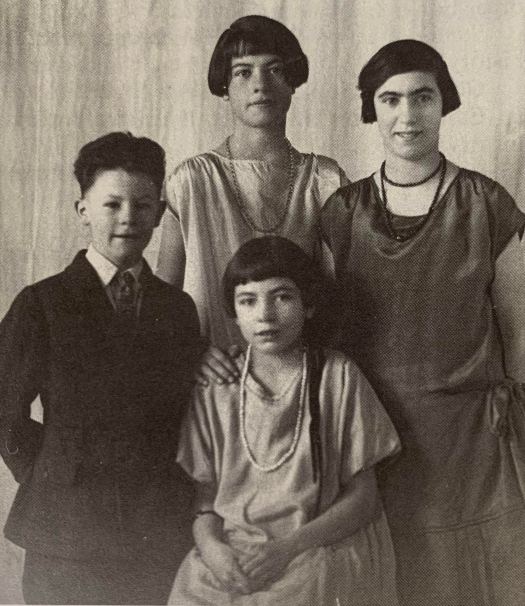
Baskier girls

Together they had 4 children.   Albert and Lillian were active in their community.  Albert was the secretary-treasurer of the nearby school and Lillian was a member of the Ladies Aid.  Their home was always open to friends and neighbors.  In 1942 they retired from the family farm.  Lillian passed away in 1951 and Albert in 1955.

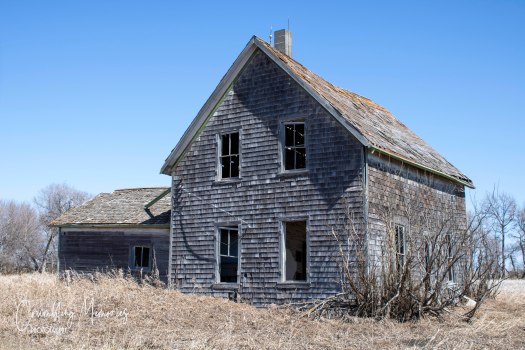
house looking east email

Jack worked for other farmers in the area but eventually took over the farm from his father, Albert.  He married Rita in 1942.  Tragedy struck the young couple the following year when their gasoline iron exploded, burning them both very badly.  Rita died shortly after.  Jack went on to meet his second wife, a widow, whom had two daughters.  Together they had 2 children of their own.

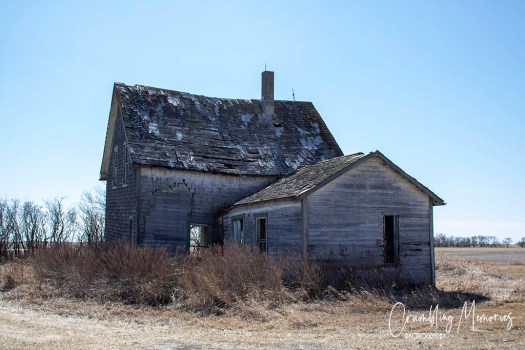
house looking south email

Albert’s mother passed away in 1920 at 79 years of age.  At the writing of the family history, Jack was still alive.  This was a beautiful piece of land.  The lane way was treed on both sides and the property had a well established tree line on the north property line.  There were many remnants of old buildings.  The only thing left were the foot plates of where they once stood.

HIDDEN BEAUTY

This beautiful home was built in the early 1900’s.

mansion from book

Mr. M. came to Manitoba in 1899 and married Bella in 1890.  Both were from Ontario. Together they had 4 children but sadly lost one girl at just 3 years of age.

side of house email

My photograph above was taken before I seen the photograph of the family and house from the Municipality history book.  A fellow abandoned seeker, Lee, who also photographed the house just days before me, took a shot at the same angle.  The house is a magnificent sight and I was determined not to miss a thing.

east side of house

I was told by the present land owner that when he purchased the home more than 20 years ago, the home was in excellent condition.  Over the years people have attended the home and stripped the brick of the front of the house, removed wood trim from the inside and broke the windows.

interior

If you note the door on the second floor, from the other side of the house I could see the staircase that leads up there.  All of the wood banisters have been removed as has most of the wood trim around the doors and windows.  The lack of glass in the windows has caused extensive damage to the inside of the home and there are now large holes in the floor.  The owner asked me not to go inside the house so I only peered through the windows.

feed barn email

There were many outbuildings on the property and a long stream flowed through the property.  The views from the home would have been spectacular at any time of the year.

walking up email

Mr. died in 1938 at the age of 77, 15 years after he lost his wife.  At that time, his youngest son, whom never married, took over the farm.  I am told that he lived in his own home across the road.  A friend asked his mother about the home and the family. She grew up in the small town near the home and she can remember them.  She remembers the son, a bachelor who wore a black top hat and smoked a pipe.

Years later when his sister lost her husband, he took her and her children in and eventually they moved back into this big, brick house.  When he retired in 1967 his nephew took over the family farm.


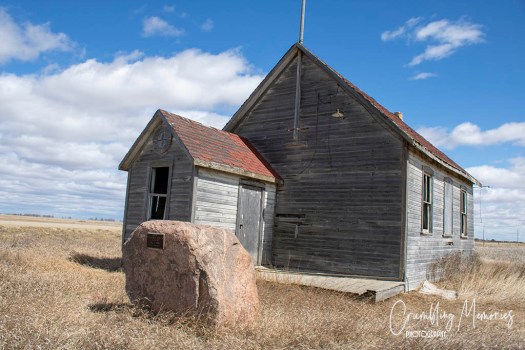
PENINSULA SCHOOL No.: 907

After a ratepayers meeting in 1901 and the assurance to two East Coast landowners that their land would only be used for a school, the sum of $700 was raised to build Peninsula School.  Miss Anges Moore, with a second class professional certificate was hired for the year for an annual salary of $420.  She resigned within one month.

peninsula school 1 email

The school was heated with coal and wood.  In 1927 the school was equipped with flat bowl coal oil lamps and then in 1950, oil burners were installed.  The school had a well stocked library with two sets of encylopedia, the World Book and Book of Knowledge, and wall maps.   The students were active in sports and 4H as well as community centered activities such as Christmas Concerts, picnics and dances.  It even hosted a funeral.

peninsula school 2 email

In 1934-35, it was reported that teachers at Peninsula School were paid $30 per month plus board.  The family boarding the teacher would receive a $15 per month credit to be applied to their taxes.

peninsula school 3 email

The school closed in 1960.

GHOST TOWN

This little ghost town has been on my must see list for some time.  Being stuck in the house for 3 weeks, Friday was the perfect day to get out and see something different.
sidewalk email
Gordon Phillips, a Mechanical Engineer and notable resident of Lauder, wrote in his book “The Rise and Fall of a Prairie Town”:  The town of Lauder did not come into being until after the arrival of the railroad in 1891. The first settlers however came into the district eight to ten years earlier. The first one to settle into the area was  Mr. W. J. Higgins.
The first post office for the district as established in the home of W. J. Higgins in 1884 and was known as the Melgund post office. Before that, people got their mail from Brandon or Souris by anyone who happened to make a trip there. It closed in 1889 but there were post offices in Hartney and again Lauder, after the railroad was built.   The first school was built and opened on July 11, 1884. It was named the Rose School, later renamed Melgund School. There were multiple schools built in the years to follow.
There are conflicting reports on the naming of the town. One report says that it was to be called Bradford and another that it was to be called Rochester. In any event, the C.P.R. named it Lauder after the Venerable Archdeacon John Strutt Lauder, Rector of Christ Church in Ottawa.
In March, 2019 June Timms reported as follows:  Lauder was very well established for many years, but it slowly began to dwindle as the farm population grew smaller as well as transportation evolved. There two factors are the main factors as to why many prairie towns became nearly extinct to this day.   To this day the Lauder Community Inn is the hub of the community for the Lauder area.  It serves all ages in a variety of different ways. It provides a Postal Outlet for the community which is well used and includes mail services for Maple Grove Colony close by and, with the increase in online shopping, has become an important means of receiving parcels.  We are able to use the “Inn” to hold meetings, Sunday School, crafting events, exercising, “leave a book, take a book” and enjoying recreational time. It houses a piano, pool table, meeting room, and coffee shop/convenience store. We are also able to enjoy the fellowship of lunches together a few times per week.
Though the population of the town of Lauder has dwindled to only four people, six people at certain seasons, the surrounding community continues to thrive. We have an enviable array of age groups, from young families, to senior residents, who have chosen to remain in the community.
The community also has a community hall, and a United Church that are still active and viable. We are proud to say that we are still able to operate a Sunday School which has about ten members currently. The hall is used for funerals, or funeral lunches and many other rentals over the course of the year.
Coming into the town, this was the first home we came across.  I have seen many photos posted from this town but I had no idea that this was right there, in this little place, surrounded by other things. And where others live. Like, Snowflake, Manitoba, except there is more here than there.
cat house for email

The resident of this house was out sunning himself in the grass when we pulled up. When I got out of the car he took off so fast that he didn’t even touch one of the steps going into the house.  He was a large, tabby cat. The kids figured they were going to lure him outside and rescue him!

international email

I’ve seen photos of this truck and house many times but it was what was behind it that really caught my attention.

studebaker for email

A Studebaker.  What an incredible old truck.  Possibly 1948 to 1953.  I was told today that its likely a 1950’s.  The old vehicles don’t typically get me too excited but these two old trucks were in excellent condition.  So nice to see.  When I posted same on Facebook, one lady even replied giving the name of the owner of this truck.  So cool.

studebaker from side email

 A short drive down the street revealed more abandoned homes but also a couple of occupied residences.  My son wasn’t happy about me getting out and taking photos but I assured him that the people that live in this town are probably pretty used to people coming in and taking photos of the old houses.  And I had no intentions of taking photos of homes or properties of the homes that are lived in.

house 3 email

I’ve seen this house posted numerous times.  I would imagine it was very elegant in its time.  Its very treed in at the front and I wasn’t prepared to tresspass.

house 2 email

This nice brick house was right across the street.  There were several old homes in this town and I could have photographed several more but only stopped for the ones that really caught my attention.

house 4 Ramsay email

I wasn’t going to stop for this house but did when I noticed the sign above the door.  The home of G. Ramsay.  Of course the first thing I thought of was Hell’s Kitchen.

If your interested in this kind of stuff, I really do suggest you make the trip.  I do hesitate to post the location of this town but I know that most people know where it is anyways. I just hope that everyone respects peoples property and belongings.



TOURING

This afternoon Colton was feeling a little couped up and asked if I had any house hunting I wanted to do.  I can always house hunt!  So we headed out down a road that I wanted to check out.  About 15 minutes into the drive, we came upon this.

house on road 19 email

This was shot from the road with my long lens.  As I likely won’t see permission to investigate further, I can’t give a history on the land.  I also don’t have the proper resource materials at home and won’t be able to retrieve them until who knows when with the closure of our local library.

THE MOVE FROM HOWICK

On June 8, 1881 this family left their 50 acre farm in Ontario and headed to Manitoba with a cow, calf, wagon, a small amount of oats and a few small articles.  Arriving in Portage la Prairie by rail, the family waited there for two days before making their way west.  At that time they bought a Red River cart and a team of oxen.

buildings for email

Upon arrival to the designated spot to choose a homestead, all the decent farming land was spoken for.  While having pancakes with another farmer, the man advised Mr. of land in another range.  The next morning he set out and this land was his.  Newly acquiring the property, the necessary arrangments needed to be finalized so he set out the next day to walk to Deloraine.  The walked seemed to take forever with nothing or no one in sight.  He finally came upon some aboriginals and spent the night with them, breaking bread.  They next morning they finished the trek together.  He then set back to Portage la Prairie for his wife and 3 children as well as their trunks, bedding, a churn for water and 7 fowl.  Mrs. and the 3 kids slept in the covered wagon at night during the week long trek to their land.  Upon their arrival they set up a tent at another farm while Mr. broke the land.

barn for email

Mrs. was handy when it came to bread making and baked many a loaf for the bachelors.  At the time flour was $1.00 for a 100 pound sack.  She also tended to the ill and was a huge help to other pioneer women.

In 1882 the family sowed five acres to wheat and broke more to oats.  The crop was cut by cradle and was made to bands out of wheat ties sheave and stacked.  The following year, two men came along with a threshing machine they had just purchased in Brandon.  They cut the families crop for $25.00 and the families oxen were used to haul the machine to its final destination.  Mr. sold his wheat in Brandon, a trip that would take him 3 days  to make.

cradle-scythe

In the winter of 1884 the wife and 3 of the children came down with diphteria.  One of the children passed away as well as a female neighbor.  The family traveled to Brandon for medical attention.  That same winter, Mr. suffered from snow blindness but Mrs. poulticed his eyes with tea leaves until they were better.

barn & shed for email

The men traveled to 8 to 9 miles for wood.  They always took the cattle with them to allow them a good drink in the nearby river.

back of shed for email

The family built their first home in 1899 with logs from the Turtle Mountains.  During their life they had 9 children, two of which died very young.  Mrs. passed away in 1932 at the age of 80 years and Mr. passed in 1937 at the age of 96.  Mr. was the son of Samuel, a descendent of Ireland to traveled to Canada by ship.  James obituary stated he was  practical farmer and a first class manager which resulted in him being a great success in his farming operation.  He was a great friend and was made an honorary member of the Manitoba Grand Orange Lodge.  At the time of his passing, he was the oldest Orangeman in the Province.

Their son Samuel who never married took on the family farm and upon his death gave it to his nephew Harvey.


THE DONLEY’S

Oh, this has been a tough one to wrap my head around but, I promised myself that I would not go out and photograph more properties until I dealt with the ones I had already taken, so….

Born in 1853, Mr. came to Manitoba as a young man from Ontario and purchased this land in 1881 for both surface and mineral rights.  In 1892 he purchased the SW 1/4 with surface rights only.

This photo was taken back in December during the Christmas break.  Looking at this photo now, I am actually impressed with the quality given that it was taken from the road, with the 600mm lens, hand held.  I must have had steady hands that day!

bos email 1

His wife Susan arrived in Canada in 1882.  She lived with her brothers around the Brandon area and then headed down towards Souris to live with another.  Soon thereafter she met Mr. and they married in 1884.

As a couple they went through all the trials of an early pioneer family.  They lost their home to fire in the early 1900’s and were forced to live with neighbors until their home was rebuilt.  In 1906 their lost their 19 year old daughter to Brain Fever.  Conditions that may now be described as brain fever include encephalitis, meningitis, cerebritis or scarlet fever.

bos email 5


Mr. accepted a position as the secretary-treasurer for the RM.  He was also a police magistrate and would act as an arbiter and then Judge.  Often, infuriated citizens would enter his office only to leave as his friend.  Mr. was said to be a a wise man.  He was part of a committee who pledged to build the local community hall.  On top of that, he was also the secretary treasurer for the local school.

A staunch Conservative, Mr. suffered a stroke while at the polling stations in 1923 and later developed pneumonia.  He died on June 29th.  Mrs. went to live with her son until her death in 1947.

bos email 3

I cannot confirm when this house was built, if this family ever lived in it or if it was the second owners of this land that built the home.

On the day I visited this property for the second time, it was windy and cold and I walked through sometimes knee high snow to get a better shot of this house.

I’m not sure that I won’t go back there again for yet another look.

REVISITING AN OLD FAVE

Back in February, on a beautiful sunny and mild day, I went out.  Just my camera and I.  It was just what I needed.  On my way home I thought I’d check for another place when I decided to check out an old favourite of mine, in the winter.

unrau house visit two for email

This house was one of the very first contacts I made and I often think I’d like a re-do of the first shots that I took because of the growth I’ve made in my photography.  I may have to put it back on my to-do list.

unrau house shot two email

JOHN & ANNIE

James was born in Ireland in 1828.  In 1848 he immigrated to Ontario where he met Elizabeth.  They married in 1850.  Elizabeth is said to be the sister of Walt Disney’s Grandfather.  James and Elizabeth moved to Manitoba in 1889.    James was a wheelwright and Elizabeth wove carpets.  Together they had 10 children.

Their son John married Annie and together they had 6 children.  In 1902 they built their second home on this land, this stone home.  Before the family moved in, Annie painted the kitchen with a high gloss white enamel oil paint.  She died a few days later of lead poisoning.  This was a devastating loss to the family.  For many years their oldest daughther stepped in to help her father raise the younger children with the help of her aunt from Ontario.  In 1908 John remarried.

IMG_2458 side view for email

In 1918 John and his second wife retired to the nearby town and John’s son Cliff took over the farm and the old stone home.  John helped Cliff on the farm and two years after his retirement, John was killed in a binder accident.

IMG_2458 exposure adjusted-2 email

In 1939 Cliff sold the farm and moved to Brandon where he worked as a carpenter and operated the Four Star Theatre at Rivers, Manitoba.  Cliff died at 62 years of age.

This beautiful field stone home still stands tall and was occupied up until a few years ago.  Rumor has it that the large home is very expensive to heat and decided to move.

GRAHAM HOMESTEAD

James, born in 1841 in Mitchell, Ontario migrated to Manitoba on June 8th, 1881.  When leaving Ontario, he sold 50 acres of land. He had 9 children with his wife Jane.  When they arrived in Portage la Prairie, he purchased a team of oxen and a Red River cart.  He left his family in Portage.

Upon his arrival at Palmer’s Landing he was given a list of homesteads.  Because he was out of food he went back to the crossing with some other people and they advised him of homesteads of where his land is still farmed to this day.  Upon his arrival he needed to walk to Deloraine to make entry for the land.   His hired man stayed behind to break the land.

They homesteaded on this piece of land that I found while wandering. James passed in 1937 and his wife Jane in 1932.  Their son Samuel took over the farm until 1945 when him and his wife retired to Brandon.

Graham barn 2 for email

I thought the red barn and blue skies looked sharp together along this field of corn that seemed to go on forever so I stopped for a couple roadside shots.  Digging around for a little more history, I was thrilled to find some information on the barn.

In the winter of 1884 three of his children and his wife had diptheria when they lost one little girl.

corn field boissevain email

Samuel’s nephew took over the farm in 1946 and his son now farms the land.

When Jack & Jane moved to Manitoba, they first lived in a tent and then a soddy.  The original home is no longer on the property.  What remains is the barn, built in 1898 consisting of a 8 foot high field stone foundation.  The logs were dragged to the farm from the Turtle Mountains.

The family hauled their firewood from the Souris River, 8 or 9 miles away.

Graham barn for email

While the photography is therapeutic for me, I can’t tell you how much I love being able to come home and find a history on something that caught my attention.  Imagining his trek to this piece of land and breaking this land by hand to earn a living to feed his family.  Love the history.

MARGARET CONCRETE ARCH BRIDGE

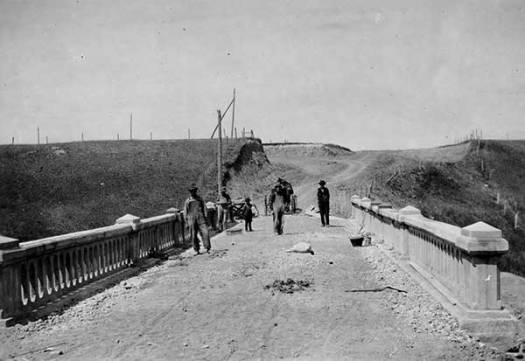
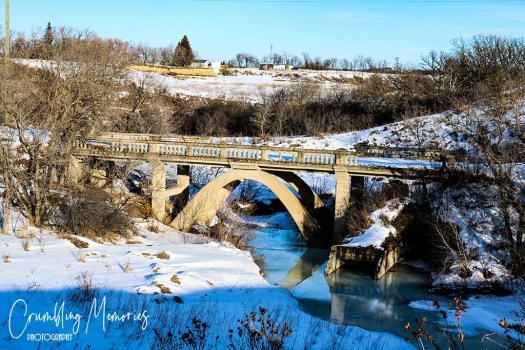
Constructed between 1916 and 1917 using day labour, at a cost of about $6,000, this abandoned concrete arch bridge is situated in the RM of Prairie Lakes, Manitoba.

margaretconcretebridge4

Now over a hundred years old and recently under the extreme pressure of a winter run off, the bridge remains at the edge of their small community and is used as a foot bridge.

Margaret Bridge email

The remains of a former concrete culvert bridge sits below it.


CLEARWATER

Remember that trip I took to the old abandoned town on New Years Eve when I almost turned around and abandoned mission?  The one I’ve been posting about for the last week?  How many finds am I up to now?  Ya, I’ve lost track too.

Well this is one that I could access from the road so I got it on the way back home as the sun was setting and the fog was lifting.

Clearwater house for email

As I was playing around with different lenses and angles I thought, this house looks familiar.  Well sure enough, when I got home, it was a house that I had been trying to find in the area.  It wasn’t really in the area that the original poster said it was but regardless I found it.  As I did not have permission to enter the property and I do not have an RM map for this area, I cannot provide a history of the property.

THE LONG WAY

Before Christmas Colton and I headed up to Birtle for a hockey game.  I thought I would take highway 83 as the 511 app showed good highways and I figured this would eliminate the zig zagging on the highways.  Well, it was icy and the closer we got to Birtle, the foggier it got.

house on 83 Melita 2 email

This was a real piss off as I had hoped to get some photographs of the old residential school for an upcoming unit at school AND I was going to head up to an old stone mansion about 20 kms from the rink.  Nope.  Mother Nature had other plans.

house on 83 Melita email.jpg

I did find a lot of potential photo ops along the way and did stop for a couple shots of this one as it was right alongside the highway.  This is also when I discovered that the highway was very icy, even though it didn’t look like it while I was cruising along.

I didn’t even bother to look up a history.

LOOK JUST A LITTLE BIT HARDER

I have driven by this place over and over and over again.  You see, there is something else at this location that likely grabs the attention of many when they drive by.  Yesterday as the sun was setting, I was trying to get the perfect sunset shot so I drove down this road and wow, jackpot.

barn email.jpg

I wanted to caputure what I found and I will definately be going back to shoot all of the glorious buildings on this old farmstead.  In the meantime I will be making the proper arrangements to locate and speak to the owner and get back to it.

house by barn email.jpg

Goes to show that you never know what is in that clump of trees!

Today I had every intention of getting out again to knock off another 5 or 6 properties off my list but the sky wasn’t to my liking and its given me a chance to update, research and orgainze the finds I found yesterday.

THE LONESOME ROAD

Yesterday on my travels, on the gravel road that I never thought would end, I came upon this little house.

house 1 email.jpg

The yard is still used but as you can see, the house is pretty grown over.  I didn’t wander over to the other side as this is as close I could get without having permission to enter.

house 2 email.jpg

HALLGRIM THE ONE-HANDED

The Great-Great Grandfather of this land owner was known as the “Hallgrim the one-handed” and was lost at sea in 1873.

Hallgrimson House email 1

My eagle-eyed husband spotted this house from the highway on our way to photograph another home in Cypress.  Fortunately, I had my maps and was able to locate the landowner and was granted permission to have a look around and photograph.

Originating from Vik, Flateyardal in Northern Ireland, “one-handed”‘s son immigrated to Canada in 1873.  Born in 1844 and passing on in 1936, he travelled to Halifax with his wife whom died giving birth to their first child.  He remarried and lived in Ontario and North Dakota.  He lost his second wife and when he re-married they settled in the RM of Argyle in 1919.

Hallgrimson House 1 email

His Grandson, AO was born in 1917 in Edmonton.  AO with his parents, JA and GK, they settled in Winnipeg.  JA, like his father, shared a love of music and while living in Winnipeg, played at the Rialto Theatre.  The family then moved to Los Angeles, California for a short time where JA pursued his love of music.   JA passed away in 1923 and shortly thereafter AO and his mother and sibling moved back to Manitoba.

Hallgrimson House 3 email.jpg

If you look off into the trees, you will see a small body of water.  I imagine that in its prime, this was a beautiful piece of property and a glorious place to raise a family.  Off in the fields and towards the water were a couple pieces of old farming equipment.

Hallgrimson House 2.JPG

During our visit to this property, we were in the prime of deer hunting season and the land owner warned us to please be careful as there were people that were given permission to hunt in and around the property.  I had my bright pink winter coat on and Cade & Makenna both had orange vests along.

Hallgrimson Car email

The home still had curtains and personal effects inside.  There was a large hole chewed in the basement door so I decided not to go inside to look around.

Hallgrimson Car 3 email.jpg

AO enlisted in WWII in Winnipeg and trained in Brandon.  He served in Italy, England, France and Holland.  After the war he came back to Manitoba and purchased this quarter section of land.

In 1955 he married.  They resided on the property until 1978 with their 3 children.

I very much enjoyed this old car.  I could not believe that most of the glass was still intact.  While there was nothing left of the seats, I’m sure it kept many a mouse warm in the years that it has been parked by this tree.


SNOWFLAKE, MANITOBA

Being on holidays and with the beautiful weather we’ve had, I had to get out and get some of my must see buildings off my to-do list.  I thought I’d venture out to the abandonded town of Snowflake, Manitoba.

snowflake sign email

As I got closer and closer, it got foggier and foggier and I one point, or two, I contemplated turning around.  When I realized it was further than I thought and there was about 16 kms of gravel to travel, I thought about it again.

street sign email.jpg

I pushed through and while I’m not happy with the photos, its done.  There really is nothing left in the town even though I’m sure there are 3 families living within the town, two just on the outskirts.

elevator email

There was even a lit , neon open sign in an old shop in a business close to this one.

old store_business email.jpg

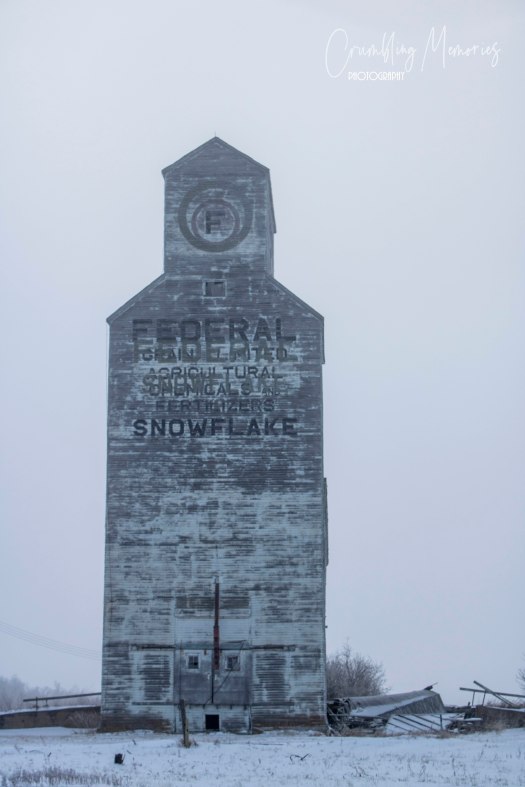
When the railway line into Snowflake was abandoned, the writing was on the wall for this small town in south-central Manitoba.

bungalow email.jpg

Border Branch No. 207 of the Royal Canadian Legion, originally founded at Snowflake in 1947, surrendered its charter in 1986 and its war memorial, built in 1961, was moved to La Riviere in 2006.

The Snowflake School was closed in 1992 and while I didn’t see it on my drive through the town, I did find this.

old desk email.jpg

The United Church closed in 1994.  Snowflake’s unmaintained roads and buildings bear testament to the gradual decline of this once-thriving farming community.

old truck emal.jpg

What I gather was once a busy town, enterwined with town folks and farms just along its outskirts, there was no evidence of anyone there today.

white house town email.jpg

One home I drove by looked new and another, which I initially thought was also abandonded, was not.

bungalow_2-2 email.jpg

This barn was the first building I came across as I entered the town off the highway.  The main road was snow covered and shale covered.

A fellow abandonded photographer advised me to be sure I drove a little further, so that I didn’t miss the beauitful old mansion.

old mansion email

As I did not have permission to enter any of these properties, today’s trip was all road side photography.

Maybe most exciting for the town at the time was that this is the home town of NHL’er, Justin Falk.  Drafted 110th overall in 2007, he was born October 11, 1988.  I’m sure the sign on the highway once proudly displayed his name.  It is faded and unreadable now.

THE BOAR HOUSE

This house has been on my list for some time.  There’s a good chance you’ve seen it before.  I will tell you that as of yesterday, November 23rd, the owner called me to make sure I had been out there as he was burning it down!  Cade and I are heading to Winnipeg this week and it’ll be different not seeing it there.

A month ago when we had our big snow storm, I called about getting onto this property.  I was told by the first person I spoke to that under no circumstances was I allowed onto the property as it was unsafe and wild boars lived behind the house in the bushes.  The idea of meeting up with a wild boar should have been enough to scare me off but I don’t typically like to be told no so I kept calling around.  If I couldn’t get onto the property I was going to fall back onto the good old Sigma 600mm.

A couple weeks later the owner called and said that I could go on to take whatever photos I wanted but that I was not to go into the bushes as he wasn’t sure if the well was covered and he did advise me that he has seen boars around the house but that they typically come out at night.  His biggest concern was the state of the home and the fact that the floor was caving in.  He advised me that because people continue to trespass he had decided to burn it down, soon.

boar house 1 email

Last weekend I called him to find out that he was planning on burning it down but that the wind was to high so he would give me the weekend to get out there.

Cade and I drove out last Sunday.  I have to admit that I was afraid of every little noise and was on high alert.  I didn’t get close enough to see what was going on inside.  I was just happy that I was given the chance to take photos before it was gone.

The owner of the home purchased the land in 1982.  The house has been vacant since 1971.  He couldn’t tell me much about the home or its history and I couldn’t find anything about its history.

boar house 2 email

As I write this post, I realize that there may be a way for me to find out more about this home.  I guess I’ll leave it as stay tuned!

CLICKITY CLACK

Mr., born in Crewkerne, Somerset, England in 1884 came to Canada in 1902 and worked at Pilot Mound.  In 1908 he moved to Glenboro but went back to England when the war started and as enlisted in the Royal Artillery for 5 years.  While there he met and married his wife.  They returned to Canada from Liverpool with their two children on March 27, 1925 upon the S.S. Montclair.

Clacks.jpg

I can’t say for certain that they built this home but research tells me that after the sale of this property, it was mostly used as farm land and not a homstead.

email 7

Mr. & Mrs. & their children were active in their community and were members of the local Church of England.

email 2.jpg

The family fondly remembers Christmas Concert and picnics held by their school.

email 3.jpg

Their son worked for different local farmers in the area but when his father was no longer able to farm the homstead, he took over the farm in 1947.

The farm is now home to a new owners and his herd of cows.

On the property, there remains a lot of the old equipment, much of it overtaken by trees and barely visable.

email 6.jpg

Mr. died in 1984 at 100 years of age.

THREE LITTLE PIGS

I found this house this Summer, on the way to the fallen house.

email 4

This I stopped again for a look around.  From far away I thought the “brick” on the house was asphalt siding.  It was real, red brick.

email 3.jpg

Oddly enough, the brick is only missing on the North and South sides of the house.  I did not have permission to enter the house but was happy with the exterior shots.

I could see from a distance, two Corel coffee mugs hanging on the side of the house.

email 2

On the property there was also an old stone foundation but I couldn’t tell what it was.

email 1

Again, I could not find any history on this house.  I do know that the first registered owner was George Robinson who claimed this land in 1894.  He sold the house 6 years later in 1901 to the Towns family.