SHORT WALK TO SCHOOL

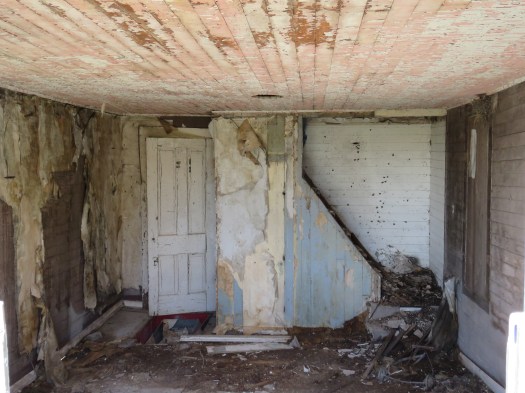
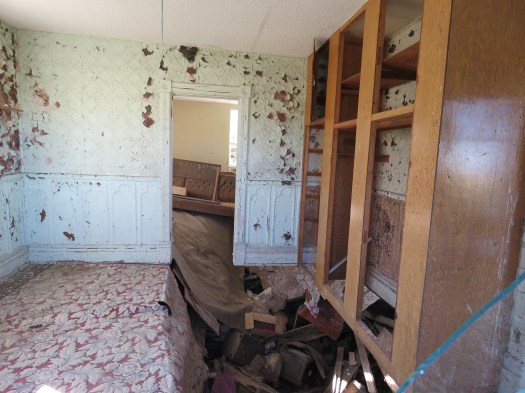
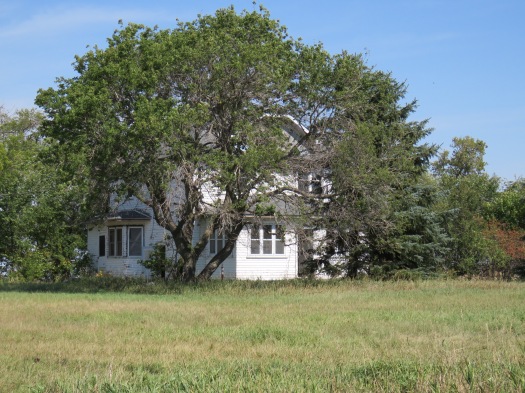
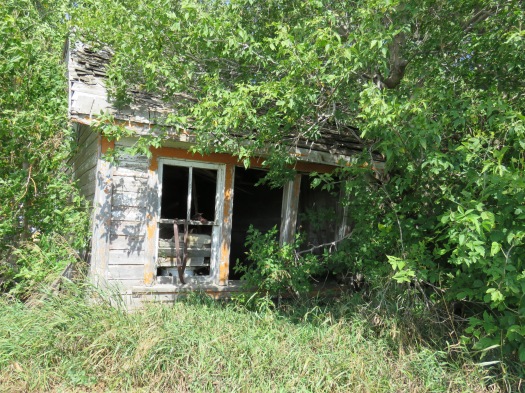
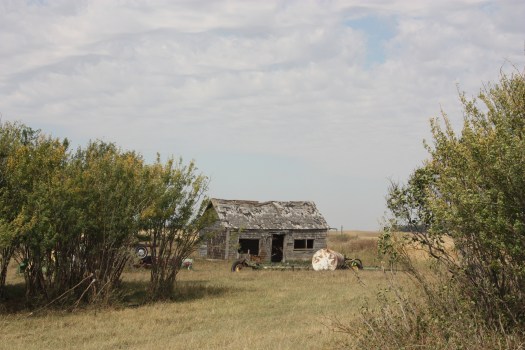
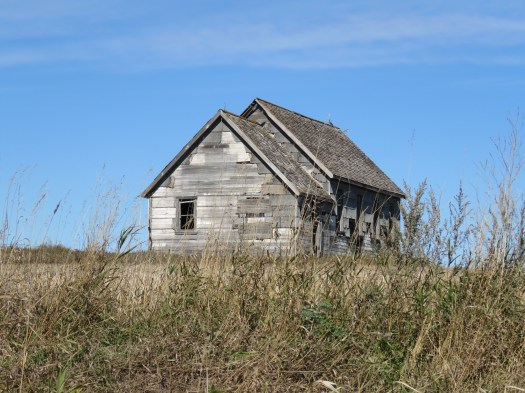
Mr. W was born in Cornwall, England in 1854.  He came to Canada and settled in Ontario. He found love and married his missus.  In 1881 they came to Manitoba and settled on this property.  The first home built there was a log home and then in 1896 this home was built.

IMG_7430.JPG

In 1883 a school was built on the SW corner of his property.  It was moved in 1902, 2 miles North.  Mr. W also owned the local Canadian Elevator in 1913 but it burnt down in 1917.  It was valued at $7,000 but he did not carry insurance.

His youngest son A, born in 1896 loved having the school close to home and at 5 years of age he would go to the school at 3:00 p.m. and sit with the teachers until school was dismissed.

IMG_2644.JPG

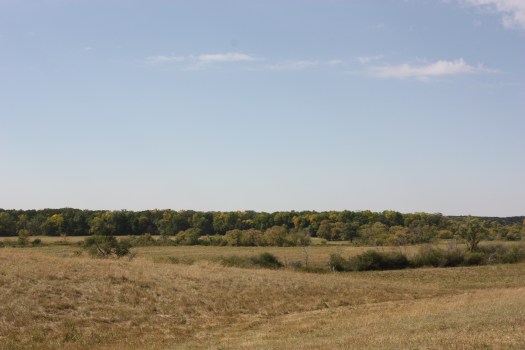
A married M in 1921 and lived on the farm.  M raised 50 ducks, geese and chickens every year.  She kept them in the coop during the day in incubators and at night time she moved them into the house until the warmer weather arrived.  There was evidence of one or two buildings that could have been chicken coops.

The raised 3 children on this farm, too.

IMG_2650.JPG

A & M’s only son, E born in 1938, started to farm with his Dad in 1953.  He married W and they had two children of their own.  They purchased the farm from E’s parents in 1966.

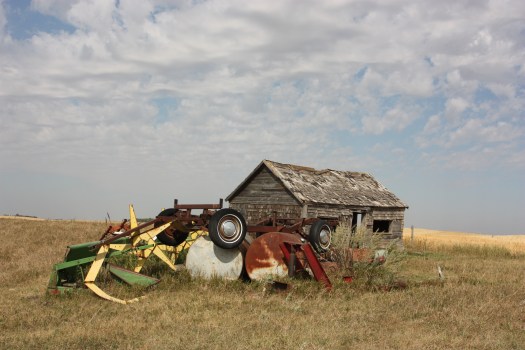
We found so many outbuildings and different machinery on this land.  I especially loved this old wheel the the tree it was resting upon which claimed it.

IMG_7440.JPG

E & W had one son whom still farms the land but lives nearby.  It was K & H that granted me permission to photograph the property and have asked me for copies of the photos that I take for her Mother-in-law as a keepsake.  I hope that the photos I have taken can do justice to the memories they must have of this farm.

IMG_7525.JPG

TAG ALONG

Sometimes the kids gets dragged along on an exploration. So I try to make it a photo shoot. Usually the girl goes along with it but on this day she was having no part of it. Likely for the benefit of her friend!

SURGE BUCKET MILKER 1922 – 1999

Story written by Paul Hamby

During the 1800’s many farmers dreamed of a milking machine to ease the chore of hand milking. Dairy farmers were beginning to milk more cows in larger herds. By the year 1900, hundreds of patents had been granted for milking machines. But none of them proved to be worthy on the farm.

In the fall of 1922, Herbert McCornack invented the Surge Bucket Milker. He used a large roasting pan from his family kitchen as the base to design his new milking machine. This revolutionary milker would hang under the cow suspended on a steel spring rod that was attached to a leather surcingle strap over the cows back. The new Surge Milker used the proven Pine Tree pulsator.

Herbert McCornack also invented the Sharples Cream Separator, a can washer, and many other useful items. He was awarded at least 50 United States patents.

The new milker had a natural surging action as the milker moved back and forward while milking. Thus its name – The Surge Milker. This tug-and-pull movement was similar to the tugging and pulling of a calf. Fred Babson began testing a prototype on his Guernsey dairy cows at Four Pine Farm located near Hinsdale Illinois.

“Four Pine Farm is the real home of the Surge Milker. Here, the machine was developed and used for a long period before even one unit was sold; here extensive experimental work is carried on constantly. No change is ever made without a thorough tryout on the cows”– “Used on the Best” a 1930 Babson sales booklet

The new milker surpassed all their expectations. The biggest advantage was the ability to easily clean and sanitize the Surge. No long milk tubing to try and keep sanitary. “Only 4 pieces of rubber to wash” “Only 4 inches from the teat to the pail”

“Occasionally the teat cups come off the teats; the engine stops, or the cow jumps or for some reason they come off. On an ordinary machine they land on the floor and time must be taken to wash them before milking can proceed. On the Surge, they simply swing down against the pail, away from the floor, out of the dirt. On the usual type of machine if the cups fall to the floor with the pump running they suck up filth and spoil the milk in the pail – this may happen once a day or once a month. On the Surge it never happens at all because the Surge cup automatically shuts off the instant it drops from the teat.” – from 1924 sales book on the Surge Milker

Another advantage of The Surge Milker was better milking. This was due to short pulsation tubes and good vacuum to the teat ends. The teats are only a few inches from the stable vacuum supply inside the bucket.

In 1923 the Surge Bucket Milker was offered For Sale to dairy farms in North America. One of the problems with prior milking machines was that the farmers were unable to easily maintain them. Babson Brothers made a pledge that anyone who bought a Surge Milker would have a dealer visit their farm at least once a year for parts and service. Babson Brothers maintained 10 locations in the US and Canada by 1930 to support the growing dealer network. They offered a 3 year warranty and guaranteed that every part of the Surge Milker was absolutely rustproof. This commitment to keep the units running in top condition along with a quality product contributed to the success of the Surge Bucket Milker.

Farmers were delighted to find that they were getting more milk from their cows with the Surge Bucket Milker.

“I would install a new Surge Bucket Milker system and stay for the first milking that night. The farmer would set out say 10 cans that he usually filled in the evening milking. Many times the farmers had to get another can to hold the extra milk harvested by the Surge Bucket Milker.” – quoted from a retired Midwest Surge dealer.

“We made an actual gain on the thirty head of cows in the first week, changing over to the machines, of 18.9 lbs of butterfat. This at 57 cents a pound, the price we received at the creamery last month, is $10.74 …Louis tells me the separator contains not half so much dirt when he has to wash it…I’ll have to take my hat off to you” – W.F. Schilling, Northfield, Minnesota – March 22, 1929

The farmer increased his income by harvesting more milk and not having to dump contaminated or dirty milk from the claws falling off and sucking up dirt. This put more money in the pocket of Surge Milker users.

“The Surge Milker was built to meet what really amounted to an emergency. Milk inspectors were condemning mechanical milkers; dairymen were going back to the expense and annoyance of hand milking. In so many cases, it was difficult under ordinary farm conditions, to produce clean milk with a machine – entirely possible but not practical. All machines were too complicated to be cleaned properly in the time at the disposal of the average farmer. We were in the milking machine business and we wanted to continue, so we set out to build a machine that would be so simple and easy to clean that there would be no temptation to slight the job – that would settle once and for all the problem of producing milk of a low bacteria count with a milking machine. The Surge Milker is the answer! The fact that we were able to develop a machine that does an obviously better job of milking was a happenstance but that doesn’t decrease its importance; the important thing is the proved fact that the Surge does milk cows quicker and better – and with a degree of safety never before approached.

The Surge is no longer new. In three years,<1923 to1926>its use has spread from Maine to Hawaii – from central Canada to the Rio Grande and a high percentage of its most enthusiastic users are men who have failed with other machines. So far as we are concerned, the emergency no longer exists – the Surge has solved the problem. Pine Tree Milking Machine Company (1926)

The first Surge Buckets were marketed under the name The Surge Milker – Pine Tree Milking Machine Company. Around 1930, the Pine Tree name was dropped and the buckets were labeled The Surge Milker – Babson Bros Co Chicago. This labeling continued for the next 70 years. Check out the variety of logos by clicking Surge Logos.

Mellote Introduced The Surge Milker to Europe in the 1930s.

Dear Sirs (Ozark Electric Coop). . .We have had a Surge milker about eighteen months, but we ran it with an engine. Last month we got a motor so we could use electricity. We are very pleased as our bill is not one-half as much as the gas and oil had been per month. Yours for more electricity. Irvin H. Cook, Republic, Mo. ~1940

By 1940, The Surge Bucket Milker had 40% of US market share. By 1950 just over 50% of the US market and by 1955 – 76% of the US market. 1955 is also the year the patent ran out and soon everyone was trying to make a look-a-like pail including Sears, David Bradley, FarmMaster, Montgomery Wards, DeLaval, Universal, and Conde.

The Surge Milker was originally made of Monel Metal, an alloy of 67% nickel, 28% copper, and small amounts of other metals such as steel, iron or aluminum. This metal held up well to the harsh cleaning solutions and protected the flavor of the milk better than other metals of the time. It was also offered in a very rare pure Nickel model. The pure Nickel model was marketed to farms producing milk for babies and hospitals.

Starting in April 1936 Surge buckets were manufactured from 18/8 “Republic Enduro Stainless Steel“. Stainless steel was a new metal alloy. This food grade alloy is commonly called 18/8 referring to the chrome and nickel content. It is also referred to as type 304. 18/8 stainless steel is made of chromium (18%), nickel (8%) and steel (74%). Stainless steel resists acids and alkaline cleaning chemicals and can be polished to a “Looking Glass Finish” that is very sanitary. The Surge buckets were made in 2 pieces and silver soldered together. This type of stainless steel Surge bucket was produced until the 1950’s. During the Second World War, the handles were made from carbon steel that was strapped on. This was due to a shortage of Chromium – making stainless steel hard to get. Babson Brothers offered to put a stainless steel handle on those war time buckets (at no charge to the farmer) after the war. They also produced some plastic Surge buckets during World War II. These were not sold for farm use, just to be used by dealers as salesmen demos and farm show displays. Plastic technology in the 1940’s was not advanced enough for a durable plastic Surge Bucket Milker. If you find one of these plastic buckets, they are rare.

Surge had aggressive and creative advertising campaigns. Surge literature and ads are quite collectable. In the 1940’s Frank Hendron joined Babson Brothers marketing department. He drew the Johnny Surge cartoons, electric fencer cartoons, put out a regular newsletter to customers and produced many of the magazine ads. Frank left the Kansas City Star newspaper where he had worked beside Walt Disney, just before coming to Babson Brothers. You can see a resemblance in Disney’s early cartoon drawings and Frank’s Surge cartoons.

The one millionth Surge Milker was manufactured in the 1950’s. It was gold plated and is on display at the WestfaliaSurge North American headquarters in Naperville Illinois.

In the 1950’s Babson Bros Co introduced an all new Surge Milker. It featured a seamless stainless steel bucket. The technology for this type of welding was developed in Belgium. Once the process was perfected, the Babson factory in Chicago adopted it and started making Grade A seamless buckets in 3 sizes. They also improved the lid at this time with slanted milk inlets to reduce the chance of getting milk back into the pulsator. “The new lid angle provides better distribution of Tug & Pull on each quarter of the udder.” More than a dozen lid modifications were made over the 80 years of production. All lids take the same lid gasket. The pulsator was also improved in the 1950’s. The block was changed for a different type of mount on the new lid and the new block was easier to clean during overhauls. “A new wider pulsator cover resists dripping and splashing water.” The new style pulsators were manufactured from the mid 1950’s until 1999. New style pulsators serial numbers start with a “C”. Old style pulsators were manufactured from about 1916 until about 1960. Their serial numbers start with the letter “S”. Most repair parts interchange from the 1st Pine Tree pulsators to the last Surge pulsators built 80 years later.

The Surge Milker could be “completely taken apart and all parts cleaned with a brush in 5 minutes” This advantage plus an aggressive advertising campaign took The Surge Milker to number 1 in sales in North America. In the 1960’s, pipeline milking systems replaced bucket milkers as the preferred way to milk cows in North America. Pipeline milkers require much less labor and are easier on the humans doing the milking. Pipeline systems were developed in the 1950’s and 1960’s. Thousands of Pipeline milking systems were installed in the 1960’s and 1970’s as farmer’s herds were getting larger. The trend of fewer dairy farms milking more cows continues today.

Sales of the Surge Bucket Milker declined from 1975 to 1999. Production ended in 1999. Thousands of Surge bucket milkers are still in use today. Many are on small hobby farms or homesteads where they milk a family cow or a few dairy goats for their home use. Some are still used on smaller commercial dairy farms to milk all their cows and others are just used to milk fresh cows or treated cows on commercial dairy farms. In 1999, Westfalia’s parent company purchased Babson Brothers Company and merged the two brands for a new worldwide dairy equipment company – GEA Farm Technologies .

1900 CENTURY FARM

The H family came to Manitoba in the Spring of 1890.  The family settled in the area, his wife and 6 children.  In 1900 one of his young sons married, during a double wedding ceremony, with his sister and both settled on different sections of this land.  The siblings lived out their lives farming as neighbors on this section of land in the heart of Boissevain-Morton.

IMG_7581.JPG

The son played a role in the organizing of the East Lynne School District in 1904.  They belonged to the Ninga Methodist Church where Mrs. played the organ.

Water was always an issue on the farm.  Water was hauled in barrels from another section of land.

IMG_2709

In fact, one year on a hot July day Mr. had been working hard for days breaking sod and took a drink from the nearby slough.  He ended up with typhoid fever and was bedridden for weeks.  Luckily his sister-in-law was a newly trained as a nurse and nursed him back to health.

IMG_2708.JPG

In 1938 the government paid for a 120 foot long by 60 feet wide and 14 feet deep well.  The farm never saw a dry day after that.

IMG_2724.JPG

They were kind and generous people who in 1931 adopted a six year old boy.  The boy was only to stay with them for a couple days.  He became an integral part of their family.  He joined the World War II and returned home in 1945.  He unlike his siblings moved to the Virden area while the rest stayed in the area.

IMG_2697.JPG

Mr. suffered a major heart attack in 1941 and was not able to work again.  He passed away in 1952.  Mrs. passed away in 1968 at 91 years of age.

IMG_2695.JPG

Two of his children then took over the farm until 1971 when they passed on the farm to their Grandson.

IMG_7592.JPG


FORD GALAXIE

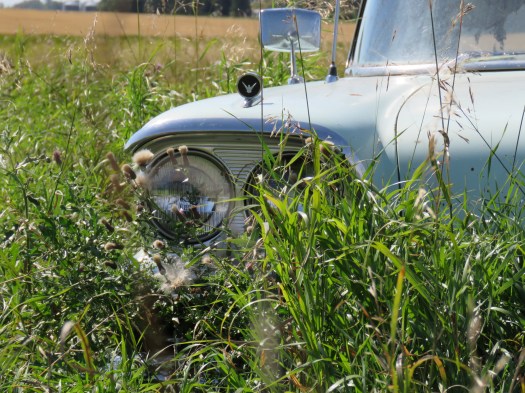
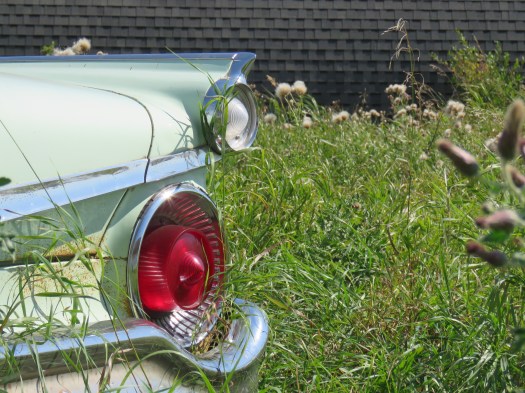
On an exploration trip we found this car.  I was actually here to see the old barn but when I seen this I knew I had to get permission to photograph this.

IMG_2189

After weeks of phone calls we were granted permission to take some photos.

IMG_2191

This car was, one of those cars.

IMG_2192

There were good shots of it from every angle.

IMG_2198

I would have loved to light this car up at night.


12 YEARS OLD

The original owner of this land, born in 1846, left his large, poor, religious family in Lac Megantic, Quebec at the age of 12 years old with only  .90 in his pocket and the clothes on his back.  He had intentions of making big money.  He took on whatever jobs he could find and for many years was part of a railway construction gang as a cook in Winnipeg.

In 1881 himself and another landowner, whose old property we have visited, headed to the land titles office in Winnipeg to purchase land in the R.M. of Prairie Lakes.  They reached their farms over 100 years ago with a team of horses, a plow to break land and food supplies.  Working as a cook gave him a good idea of what food supplies would best suit them.  They stocked up on cured salted pork, flour, sugar, coffee and tea.

On his 30th year he arrived at his property.  He started breaking land by hand and built a small house.  It was hard work but he was able to break land.  He also purchased a sow that had 12 little pigs.  He sold the extra meat for money.  He also purchased a cow and calf for milk and meat and 6 laying chickens.

He never married and when he got older and the work got to be to much he asked his brother to help him.

In 1887 a minister arrived in the area and had the idea to build a small chapel on the land.  The downstairs served as the living quarters, the upstairs as a chapel and a small corner on the main level served as the post office.  Eventually the church was moved to Dunrae, MB.  They also started building a blacksmith shop and a general store.  The building of the new railway through Dunrae stopped construction and the small church was moved.  The first St. Felix Cemetery remained on the property.

He died in 1915 at the age of 69.

The property shows no signs of this history any longer, except the St. Felix Cemetery in the middle of the 1/4 section.

This is the present home on the land.

IMG_2194.JPG

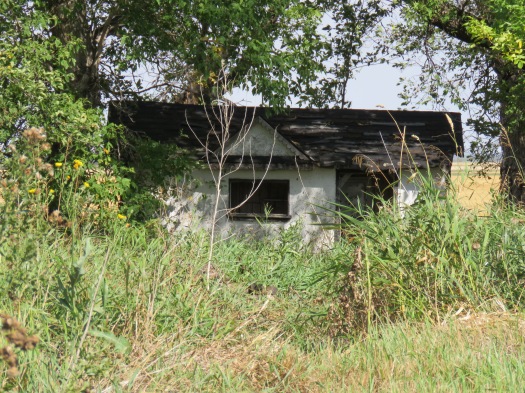
On the property was this neat little play house.  You could see in the distance that someone has used it as target practice.  That day I wasn’t brave enough to venture through the long grass for a closer look.

IMG_2248.JPG

There were a couple of old buildings on the land which maybe could have been part of the original land owners.

IMG_2251.JPG

Maybe one of these old buildings were built all those years ago.

IMG_2253.JPG

LITTLE THINGS

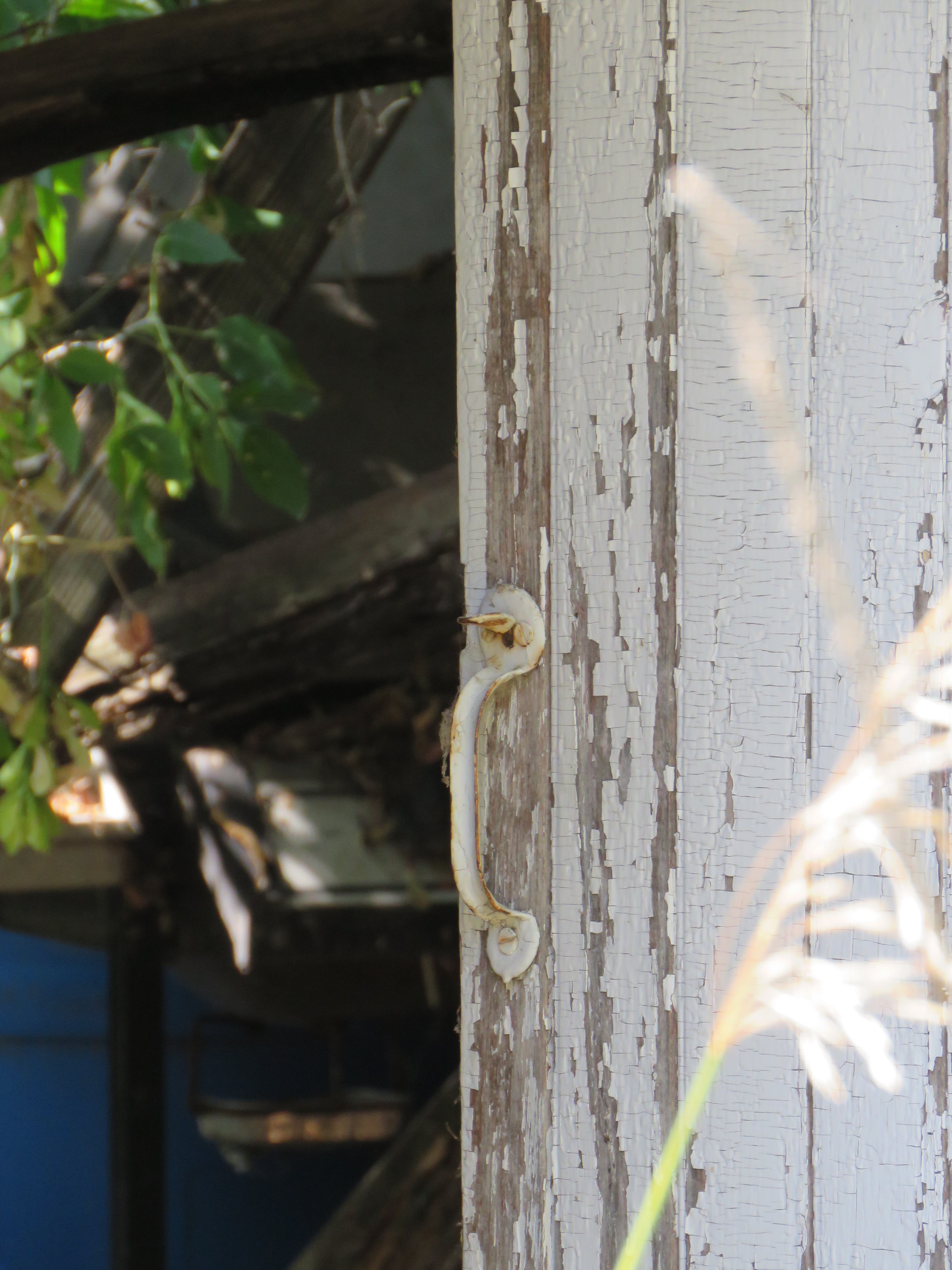
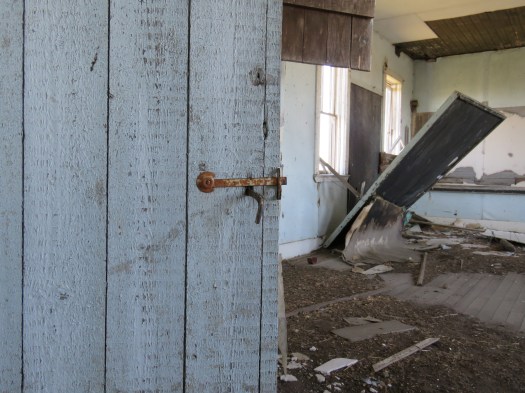
I’m drawn to these little things sometimes. Door handles, nails, different, old door latches.

And the rustier the better.

LITTLEST HOUSE ON THE PRAIRIE, SO FAR

This is by far the smallest house I have been in yet.  In fact, it is so small that the dozen of times that I have driven by it I was sure it was just an old shed.

IMG_7271.JPG

Tucked away in a pasture, you don’t really see much except a very small roof.  The view once you get to the house is spectacular.  My pictures don’t do it justice.

IMG_7274.JPG

There wasn’t a whole lot to see here, the remnants of some old equipment and a gas tank.  I was sure that the house was moved off its foundation and likely served as some sort of shelter.  Regardless we were able to enter it, the roof was pretty much intact but there were no windows or doors.

IMG_7275.JPG

It was very small and there was no floor, it was right on the bare ground.  The tires on the frame of the care were still completely intact.

Heading off the property we came across this pile of wood, wires and scrap.  I was then convinced that the house had in fact been moved.

IMG_7321

BUTTRUM PART 2

A couple weekends ago I finally got myself inside this school.  I don’t know what it is that keeps me going back.  One thing for sure is that the sky always looks fabulous in the background.  It never disappoints.

IMG_2583.JPG

Once inside I tried to envision the very first Christmas concert with family & friends peering through the windows to get a better look.

IMG_2613.JPG

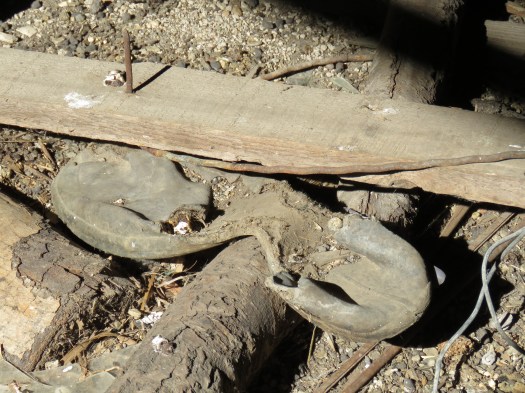
And of course what is an abandoned exploration without me finding a shoe!

IMG_2626.JPG

Such a neat old place with so many of the old settlers having played some sort of role as trustee, contributor or student.  Love that its still here to be a part of history.

EATON’S CATALOGUE ORDER?

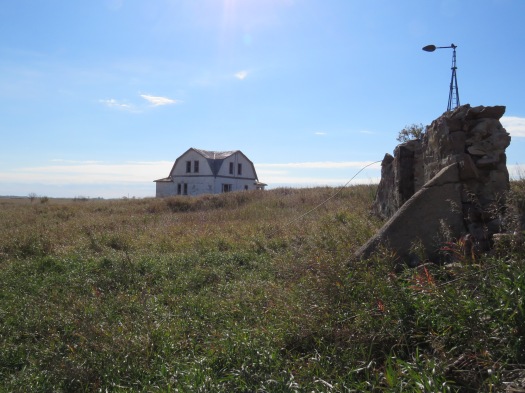
I have been waiting all summer to get into this house.  I found it online on an abandoned home site and was lucky enough to be told its location by a local lady in town who lived there as a young bride.   I then discovered that Reg knows the family and he was able to get us permission to enter the home and photograph it.

Set up high overlooking their land, this home still is as stunning as I imagine it was in its time.

IMG_2456.JPG

I won’t post a lot of photos of the home at the request of the land owner but I can give you little bit of history about it.

IMG_2546.JPG

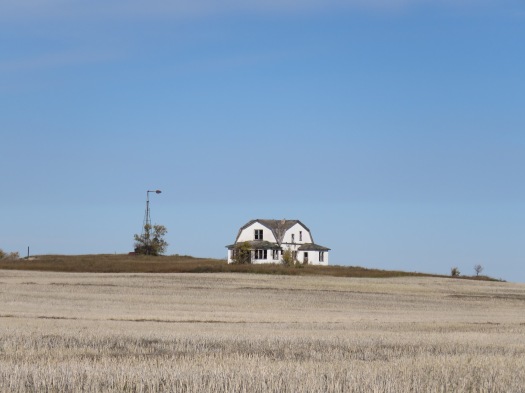
The original homesteader came from Owen Sound, Ontario.  His family originated in England and were mainly bankers.  Mr. R choose sea life.  Becoming bored with his profession he immigrated to Canada in 1868 where he married his wife J.  Their first born son was born in Portage la Prairie, MB and at 6 weeks old they traveled to the area and settled into this homestead.

I am told that the home was purchased through the Eaton’s Company.  You can find a list of the home plans here.

From comparing photos I took inside and outside of the home I would say that this would be the original listing of the home for purchase through Eaton’s.

28.-IdealHome_Earlsfield.jpg

There were many mail order home companies back in the early 1900’s but the most famous was the T. Eaton Co. Ltd.  The business was centered at its Winnipeg branch. Eaton houses were made for Western Canada and most of the houses are found on farms.

They had dozens of different models but the most popular was the Earlsfield — a 1-½ storey house with a double gambrel roof. The barn-like roof made for very efficient use of lumber to provide a lot of living space.

The materials cost for the Earlsfield in Fall and Winter 1917-18 was listed at $1,193 (that’s $16,482 in 2015 dollars). Inflation was rampant in the teens so they quit posting prices in 1919.  Lumber was shipped by rail from mills in BC and millwork from Winnipeg.

Also on the property is what is left a an old stone barn.

IMG_2468.JPG

This was certainly worth the wait.  Of course I took way more pictures but you can only post so many.


CAN’T STAY AWAY

I’m going to keep going back to this one until there is nothing left.

Every time I go it scares me that there is nothing and then boom, it’s there. It’s big and it doesn’t want to be taken over by the trees but slowly it’s losing.

I went back last week because first of all, I can’t get enough and I need to do a re-do cause I’ve grown as a photographer since the first time I was there. Secondly, I need to see what it looks like in the Fall and the Winter and the early Spring. Lastly, I need to make sure it’s still standing.

I love this old house.

BEAUTIFUL FALL COLORS

I always talk about how much I LOVE the prairie sunsets I see from my back yard.  Well yesterday on my way home the lake was like glass and the leaves are gorgeous.  So I raced home for my camera and wouldn’t you know it, the wind picked up!

The water was calm on the Bay side though.

IMG_2737.JPG

I don’t know if its just me but I’m just not seeing all the usual colors in the leaves.  First I think it was so dry that they just started dropping off the trees and now they just might be drowning and covered in snow!

Regardless, Fall is such a beautiful time of year.  Enjoy it.

IMG_2743.JPG

The Robertson’s

Last week I was out and about and found the final resting place of the homeowners of one of the abandoned homes we photographed this summer.

I love that someone still goes there and pays their respects. Children? Grandchildren? Do they go to the old homestead?

ST. FELIX CEMETERY

This one had me stumped.  Until today.  So now I will edit it.

This land was owned by a bachelor who left home at 12 years old for bigger and better things.  He was determined he was going to make it big.  He left his large, poor family with .90 in his pocket.  He worked his butt off to make ends meet and eventually bought this 1/4 section of land which he broke by hand.  He raised animals and worked hard and eventually built himself a log home.

When he started to get older and the work became to much he asked his brother for help.  Eventually a local minister and a small chapel was built on the land.  Living quarters on the main level with a small post office in the corner and a chapel upstairs.  A general store and blacksmith shop were in the works and when the railway was built the decision was made to move the chapel to Dunrae.

This small cemetery is located in the middle of a farmer’s 1/4 section, marked off by poles which holds approximately 30 graves, most of them unmarked and some of them with bare wood crosses.

IMG_2259.JPG

I am told that this particular cemetery was marked by the local Knights of Columbus group.

IMG_2269.JPG

A small town site was in the works for this property but the building of the railway changed all this.  That is why there are two cemetery’s in the area.

IMG_2434.JPG

This cemetery is also in a farmer’s field but its not smack dab in the middle of one and its closer to a church.

The headstones at first St. Felix Cemetery were not easy to get to.  There were not as many markers there as there were names on the plaque and there were many deep holes in the uncut grass where the stones were.  We were able to get closer to a couple of them.

IMG_2266.JPG

The grass was really high which made it hard to see the stones that were lower to the ground unless you could get closer to them and move some of the tall grass away.

IMG_2265.JPG

Some of them were the traditional stone and there were a couple made of iron.

IMG_2262.JPG

Others were just wood crosses that may have been marked with a name but has weathered over time.

IMG_2263.JPG

Some of these graves have been here before the 1900’s.

BELL PIANOS

A Canadian company started in approximately 1865 making organs. When the popularity of pianos started to surge they changed their focus to pianos.

BERETUN

This old beretun, although I’m pretty sure was not used to store barley or any other grain for that matter is a magnificent sight.

123E2A2B-E966-4BD6-96A2-3619DAAD9BF7.jpeg

The photo opportunities were endless as there was sky and crops as far as the eye could see.

This old barn had a widows peak or what they really called it, hay hood. I couldn’t get a decent shot of it.

I’m assuming this barn once held cattle, their names still in the barn.

The rustic old wood and the prairie views from every corner of this barn were worth the wait to see it.

NIGHT SHOOTING ATTEMPT 2

So I’m a glutton for punishment and self criticism!

I took the family out armed with glow sticks, tripod, camera and Uno.

The boys set the lights, I picked my spot, focused and started to wait.

Well wouldn’t your know it, a grain truck is coming right for my camera in the middle of the field. So much for focused to perfection!! Ah.

So I set back up and try my best to focus back in with the headlights of the truck and 3 inpatient family members. Little do they know, we’ve got a long wait cause it’s not dark enough yet.

So we wait, I kick some ass at UNO – no I didn’t, Cade actually won the first game.

So I get out and take a couple test shots, check the focus, which is virtually pointless in the dark and wait.

After all that, this…

I realize now, fast moving grain trucks in fields are not ideal and I need a little more moon on my night shooting expeditions.

By the way, my kid has crappy aim cause I didn’t want a glow stick in the eavestrough!