BALD EAGLE

What is it about a bald eagle that makes people stop to watch them, usually in awe of their beauty?  I know when they get flying around the lake by my house, they get my attention.

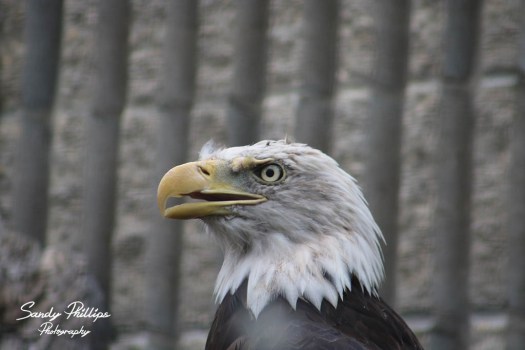
On our recent trip to the zoo, we walked by the enclosure (I can’t bring myself to say cage), and of course we stopped.  Typically a good photo without the bars at the zoo is not possible but I did manage to get a couple decent ones.  Unfortunately, there’s a brick wall behind the bird.

orginal eagle - email.jpg

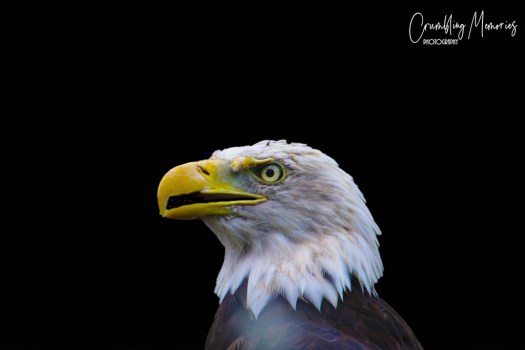
With my new aquired Photoshop skill, I was able to save the photo.

IMG_1102 eagle email

SOME THINGS NEVER GET OLD

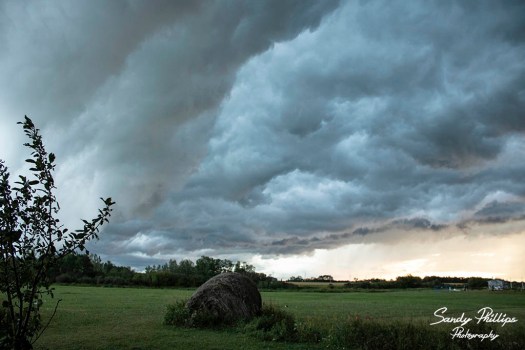
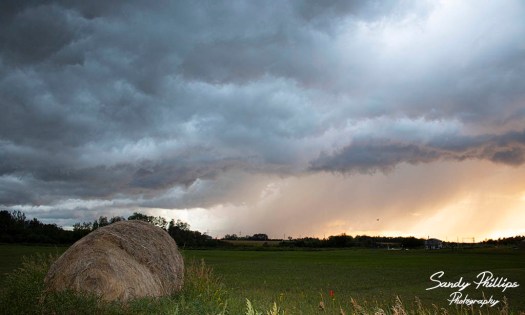
I was out and about exploring a couple weeks ago as the sun was going down. I did shoot a house on my list, found another that I had forgotten about until now and found some places I had stumbled upon last summer.

I have to admit it was just what I needed. Out by myself, turning which ever way I wanted and stoping for whatever I wanted without anyone asking “are you done yet?” They were worried though. I got one Snap from Colton asking if I had fallen down a well and two from Cade asking if I was okay. See, they do love me. They just don’t love being dragged around doing what I love.

DAISY and A PHOTOSHOP LESSON

I took this photo in BC and liked it but hated the background.

One of my goals this summer was to start learning Photoshop to help with my photography screw ups. Well, a little bit of you tube and viola.

This easy process got me thinking about all those photos o deleted over the years because I didn’t like the background.

While I have to admit, patience while learning new techniques is not my strong point, this was well worth it.

URSUS MARITIMUS

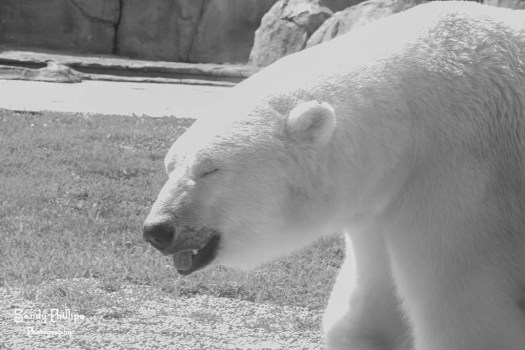
If you have never been to the Journey to Churchill exhibit at the Assiniboia Park Zoo in Winnipeg, I highly recommend it.  I do not condone wild animals being held in captivity and honestly, I avoid these sorts of exhibits at all costs – sometimes we do it for our kids even though we don’t necesarily agree with it.  Regardless, this exhibit and research facility at the zoo has saved countless bears from being euthanized because they have become problem bears.

IMG_1066.JPG2 email

This year Colton and I attended on an afternoon when we were in the city and had nothing to do.  We went for two of the exhibits, the bears & seals – they are also there because they have been badly injured in the wild and after rehabilitation would not survive in the wild – and to see the stingray exhibit.  We had the opprotunity to pet stingrays in Minneapolis a few years back but thought we would check this out too.  While the stingrays were interesting, its the bears that keep me going back.
IMG_1068.JPG2 email

On our first walk through, no one was swimming but we did come around the corner to one display area to catch the start of a “fight”.

IMG_1041.JPG2 email

I was thrilled.  After getting the news about my camera sensor and being upset, I thought, here is the chance to get some great shots AND find out for sure if I can see the damage on my photos.  I took at least forty or fifty pictures.
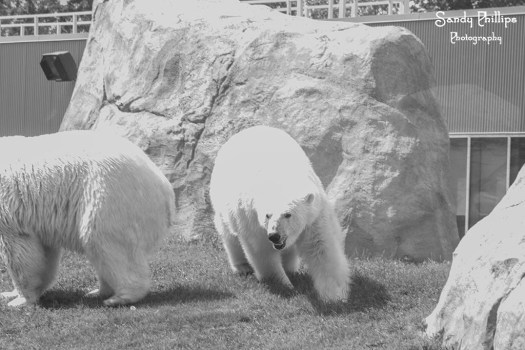
IMG_1046.JPG2 email

New to me, a pool that they have built by this viewing area.  It was quite deep and you couldn’t see the bears bobbing around in the water and it appeared they needed to take quite the leap to get in.  We watched this for about 5 or so minutes while these 3 bears played.  One was more passive and wasn’t really interested in the chase but did get the odd jab in.
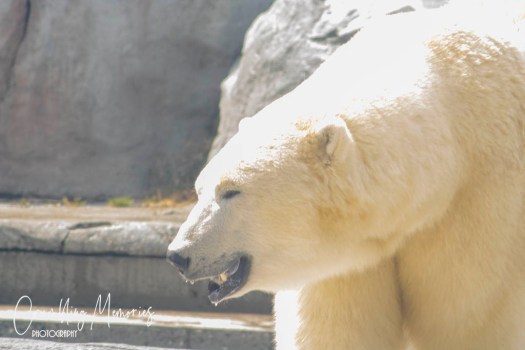
IMG_1050.JPG2 EMAIL

Or maybe he was just a lazy bear.

IMG_1059.JPG2 email

After watching the lazy bear drink water and becoming impatient waiting for the other two to get out of the pool, we carried on to the stringrays.
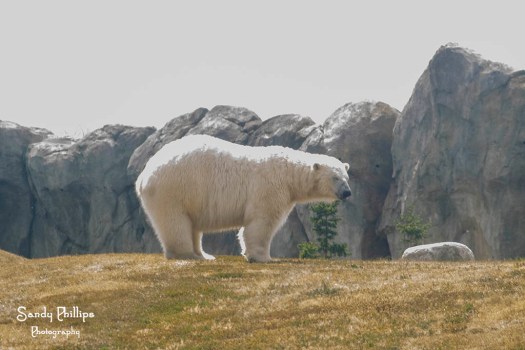
IMG_1044.JPG2 email

When we got to the stingray exhibit and I took a quick look at the shots I got I realized that while my camera was being cleaned my shooting mode dial had been changed.  I’ll admit that I am guilty of never double checking BEFORE I start taking photos and I am bad at not taking a test shot.  Well, my camera was set to manual which was perfect for what I was doing with it the night before when I was taking photos of the moon!  Another lesson learned because a full moon is to bright to shoot, you loose the fine details.  My summer photography has been full of lessons.
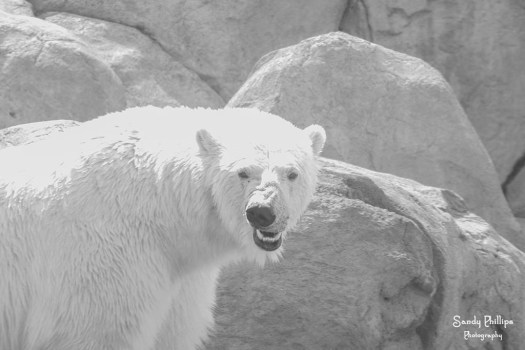
IMG_1049.JPG2 email

Needless to say, back at the hotel, it took me a while to salvage some of the photos, most of which I just converted to black & white to save them.  Thank goodness for shooting in RAW and thank goodness for Photoshop!

IMG_1052.JPG2 email.jpg

I hope to one day go on the Tundra Buggy – its on my bucket list – and witness these creatures in their natural habitat.  No dirty glass.  And hopefully by then I’ll have learned to always check my camera settings first and remember that a test shot is so important.  I knew this fly by the seat of your pants crap was going to catch up with me one day.


SENSOR CLEANING

Have you ever had the sensor in your camera cleaned? Have you ever tried to clean it yourself?

If you do not have the proper equipment, don’t. And don’t EVER put one of those micro eye glass cleaning clothes in there.

Just before my BC holiday I could see a hair and speck of dirt in my view finder but it wasn’t showing on my photos.

Turns out that as a result of my effort the sensor on my camera is severely scratched and “one of the worst” he’s ever seen. I may never notice those scratches but that remains to be seen. I did buy the camera used but I’m going to say I am likely the guilty culprit.

The sensor in my camera cannot be replaced therefore I would have to replace my camera if those scratches were ever to affect my photos. The current replacement value is $780.00.

Spend the money!

INUKSHUK

Last week after training Colton and I headed to the zoo to check out the stingrays.

We did not check out the entire zoo, just the bears and the stingrays and the gift shop.

We have pet stingrays in Minneapolis before so we knew what to expect. The stingrays at the zoo were not as sociable as the ones in Minneapolis.

As you may have heard, earlier this year the mating stingrays, who are apparently aggressive during their season caused the exhibit to be shut down until the could figure out a solution and prevent further deaths and injury.

The separated the males and females in the large pond – for lack of a better word – with a plastic type grate.

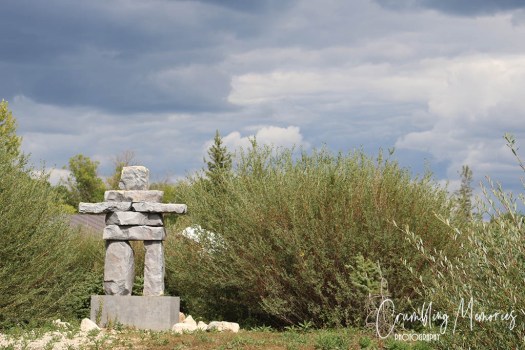
On our way back to the bears I thought the sky looked good and for this shot of the Inukshuk at one of the entrances to the Journey to Churchill.

Traditionally, Inukshuk’s were used by the Inuit in the north as directional markers. An Inukshuk is designed in the shape of a person signifies safety, hope and friendship. Inuksuit have been transformed into a symbol of hope and friendship that transcends borders to reach people all over the world.

POLISH BIBLE

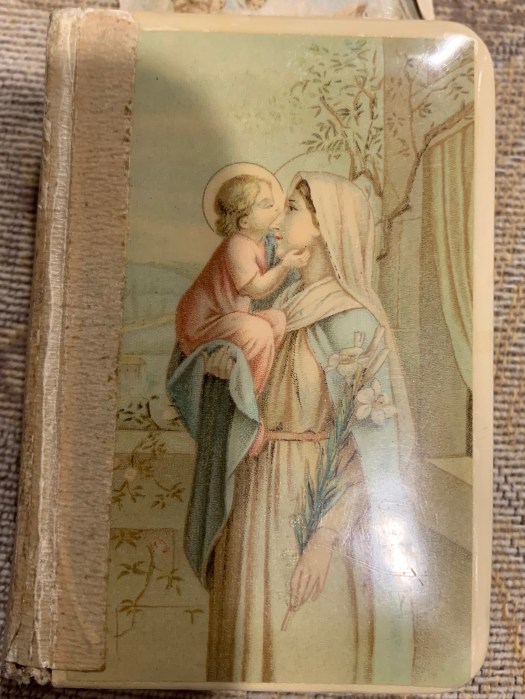
When Colton and I went to Vancouver this summer my Mom showed me a family heriloom she was gifted from my Great Aunt Louise.

IMG-3791.JPG

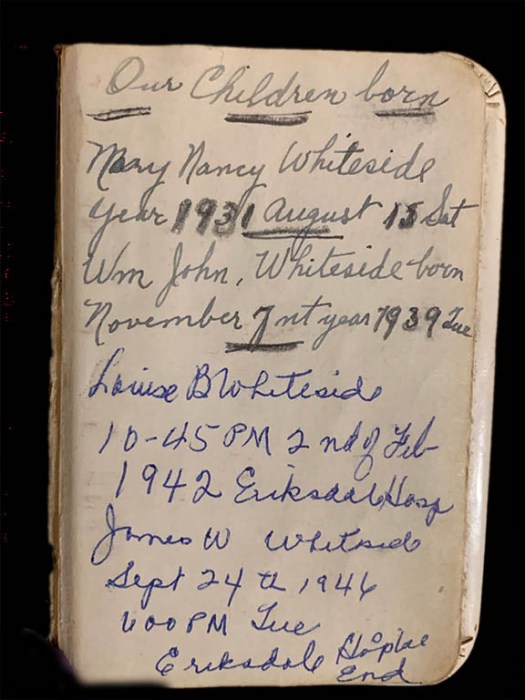
This little bible belonged to my Great Great Grandmother, who then gave it to my Great Grandmother, Mary.  Great Grandma recorded the births of her children in the back of it.

bible 1 email.jpg

My maternal Grandmother, Nancy, whom my little sister was named after was their first born.  They were born in Eriksdale, Manitoba where my Great Uncle and his wife still live.


FULL MOON RISING

Lately, the moon is the only thing that I get the camera out of the closet for. And I guess it’s a good thing cause you never know what you’ll learn when you post a photo.

This photo was taken on the 9th (of August). I thought it was pretty good but couldn’t figure out why I could not get more of the graters, etc. Now if I zoom in and crop, yes you see more but I love the blackness that surrounds the moon and makes it pop.

This was taken last week in Headingley in the hotel parking lot. More lights around and while you can see the whole moon, still not the ideal shot.

Why? Cause at its fullest, the moon is too bright to photograph to get all those fine details. I knew there was a reason I followed all those photography/lens pages on Facebook.

TURNED AROUND

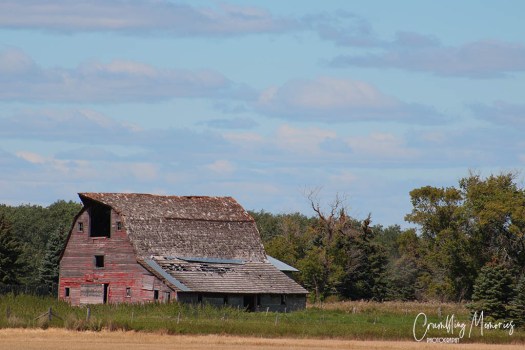
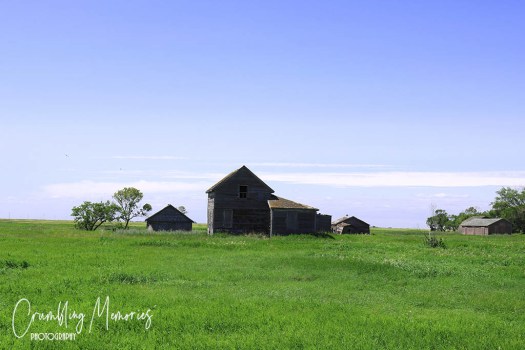
On this day of exploring, I was in new territory.  I had vistited a home on my to-do list and then attempted to get into another but didn’t want to distrub the crop in the field and decided to come back in the Fall.

IMG_0883 email

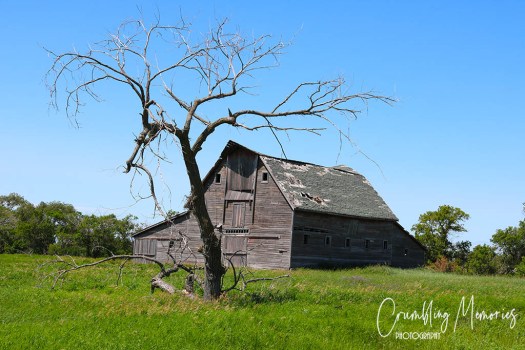
On our way home, hubby (aka Eagle eyes) took a turn of the main highway to investigate a roof in the distance.  As we carried on we came across this old place.

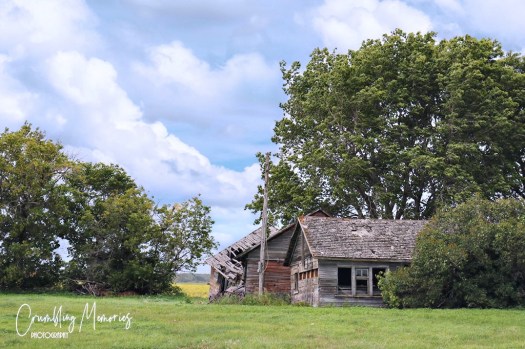
Driving away from what I think will be a real gem, once I get permission, I got all turned around and lost track of the road numbers.  Then we stumbled across this.

IMG_0893 email

I admit, I don’t like when I can’t find some sort of history on the property.  It feels like the job is incomplete.  Anything I can find doesn’t confirm who the actual land owner is or their life there.


FAMILY OF 12

Sam came to the Ninga District with his family in 1882.  He worked for others for a small wage until he bought this property on October 23, 1893.  He married Isabel in March 14, 1894 and raised 12 children on this property.

IMG_0926 email

In 1966 the property was sold to the Peters Family, also immigrated from Russia.

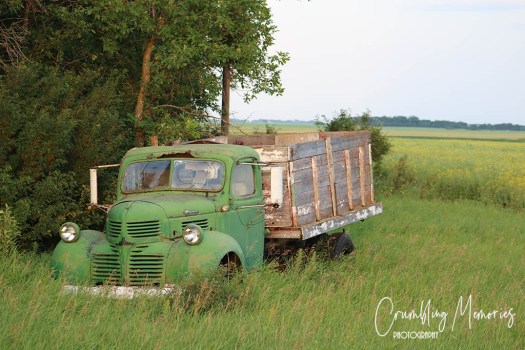
There is no home visable on the land except for this truck.  The front of the property from the road is completely grown over by cariganas.  I took a walk down a field lane and was met by many birds and butterflies but the dense bush did not reveal what it was hiding.

IMG_0923 email.jpg

I do love this old truck that sits proudly outside its home.

HILL CRESCENT FARM

Born on July 1, 1867, AM came to Manitoba at the age of 26 years of age.    He arrived in Hartney on August 13, 1895 on a harvest excursion train.  In the spring of 1897 he bought his first section of land and broke 60 acres using 3 horses and a walking plow.  Two years later, he bought this homestead.  He worked summers in the fields and winters at his camp in the Turtle Mountains.  One winter fire took out his camp.  He lost everything, including his horses.

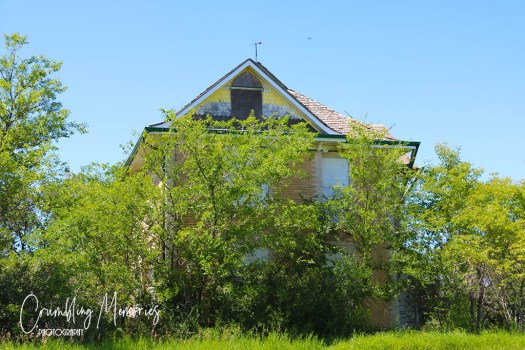
In 1909 he built this big, beautiful brick house.

IMG_0850 email

In 1912 he purchased an E.M.F. car, one of the first in the area.  And on January 1, 1914 he married Grace, a registered nurse.  They had three children, 2 boys and a girl.

IMG_0847 email.jpg

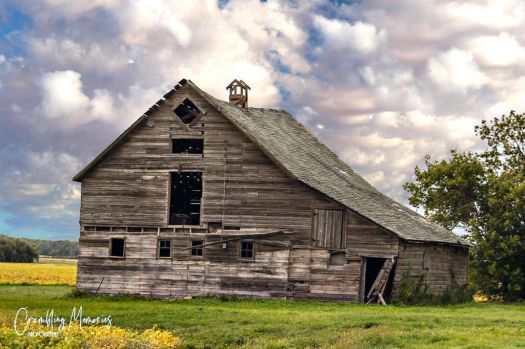
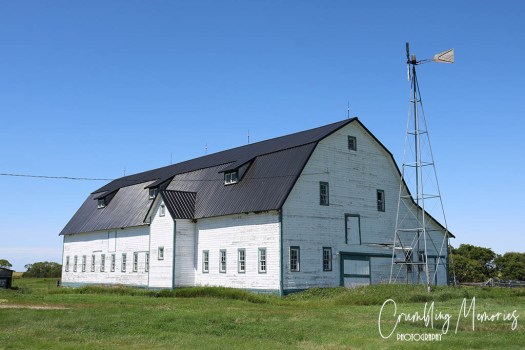
The same year this big barn was built and has been a familiar landmark since.  In 1932 the original barn burnt but another was built on the same foundation that same year.

IMG_0844 email

He 1916 they built a large granary with horsepower installed to elevate grain.  The same year they had a 16 volt lighting plant installed in the home.   There was a building there, close to the house that I assumed was the granery.  Unfortunately I did not take a photograph of the building.  Dang.

I have to admit that driving out to these properties, I was a little annoyed the that sky got clearer and clearer as we got closer.  Not the skies I was hoping for.  I don’t typically research the property before I photograph it with the hope that I can pick up all the key parts I sometimes find in the history with the naked eye.  Guess I missed this one.

IMG_0845 email

Mr & Mrs. passed in 1962 and 1965, in their nineties.  Their son took over the farm where he farmed the land many years with his wife J, who married in 1957.   R & J had 4 children.  J was married previously and lost her husband at a young age to diabetes.  She was a teacher in the area and remained with her two children. She took great comfort in having her in-laws living on the farm in a separate house.  She eventually met and married R and her and the children moved to this farm.  J stopped teaching to raise her two youngest children.

R & J were both active in their community playing sports, hosting 4H Rally’s and club events.   When farm work was caught up the couple enjoyed travelling.  They travelled to western USA, Hawaii, Europe, Ireland, England and across Canada.

The diagnosis of Parkinson’s Disease forced R to quit farming in 1996 where him and J built a retirement home in town.


SHANNON FALLS

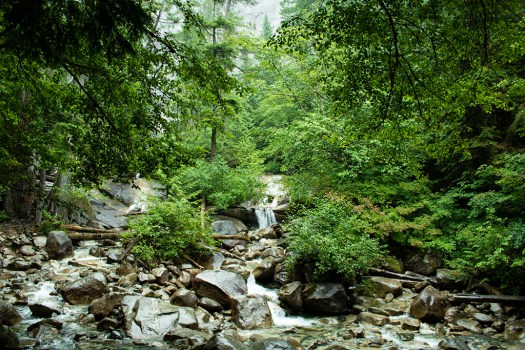
One of the things on our to-see list for our trip was a ride up to the Sea to Sky Highway to ride the gondola and see the Shannon Falls.  Well once the clouds roll in, everything “socks in” and ruins the views of the ocean and mountains.

Drizzling, we headed up the highway anyways.  The ocean was completely covered and I couldn’t see anything on the way there.  When we finally came upon Shannon Falls, it started to rain just a little bit harder!  Go figure.  Thankfully the trails to the falls are treed in so the rain was more of a drizzle.  This was not what I wanted to see as we headed up!  It certainly brought back our trips to the Grand Beach Campground as a kid, being paranoid of coming across a bear on the trail.  It was at this point that I announced to my family that if a bear was to come, it was each man for himself!

IMG-3855

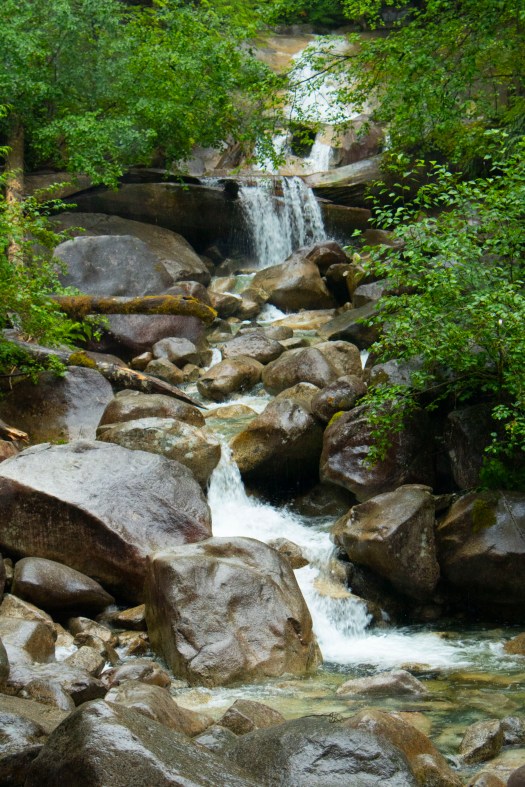
Shannon Falls is composed of a series of cliffs, rising 335 metres above Highway 99, making it the third highest falls in the province.  The tumbling waters of Shannon Falls originate from Mount Habrich and Mount Sky Pilot.

shannon falls bottom email.jpg

In 1792 Captain George Vancouver set up camp just west of the falls. The falls were named after Shannon who in 1890-1900 owned the falls and surrounding area and used the clay deposits to make bricks. He then sold the land to Brittania Copper Mines in 1900. In the 1930’s, the area was used as a relief camp for the workers building Highway 99. In 1976 the area was purchased by Carling O’Keefe Brewery, who used the pure mountain water to brew their beer, and made the area a logging show park. In 1982 O’Keefe donated the land to BC Parks. Throughout the park area there is evidence of logging activity that occurred here roughly 90 years ago. A number of excellent spring board notches on old stumps are scattered throughout the forested area and much of the deadfall also exhibits evidence of the logging techniques of this period.

shannon falls 2.JPG

This park holds significant spiritual value to the Squamish First Nation, the first people to live in this area. They told of a two headed sea serpent, Say-noth-ka who lived in and around Howe Sound. According to legend this beast travelled both on land and in water. Some versions say it was Say-noth-ka who formed Shannon Falls by slithering and twisting his powerful body up the mountainside on repeated expeditions, Say-noth-ka gradually wore down a spillway for those cascading waters.

shannon falls 3email

We only went as far as the third view point of the falls as the higher we went, the thicker the cloud cover became.  And because of the rain, the trail got muddier and muddier and of course, more slippery.  This would be a place I’d like to go back to on a clear, warm, sunny day.

ANOTHER RE-DO

Many moons ago I met Grandma & Grandpa Phillips for the very first time. We went out to their home out Henderson Highway where they had lived since the 60’s.

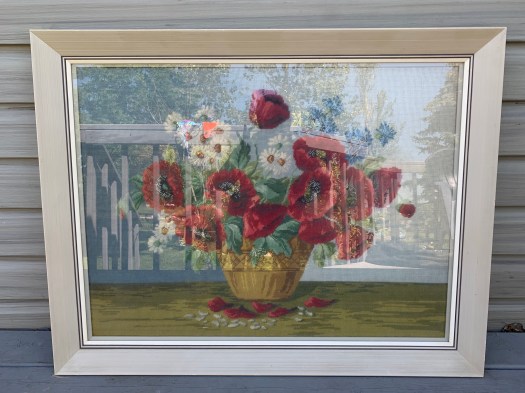
In the dining/living room was what I thought was a gorgeous cross stitch of a bowl of poppies. No one else shares my enthusiasm. The Phillips’s have many grandchildren, etc so I figured the chances of Cade ever being gifted that art was slim to none.

Many years later my BIL and I were clearing the belongings from the care home where Grandma was living when she passed away. Low and behold, there it was. My BIL looked at me and said, that thing is not coming to my apartment! I couldn’t believe it was now mine.

It must have been important to Grandma too cause of all the things in their large home, this was one of the personal effects she chose to take with her.

For many years it has hung on my walls, dusty and dated. A large part of my hesitation was what would happen to the cross stitch when I opened it. Would it fall apart? Every framed item in the Phillips’s home was done at Eaton’s, where Grandpa worked for many years in the shoe department. I should have known it was framed well.

Yesterday I took it apart and it came apart easily with no damage. The glass was very dusty but easily cleaned. I decided though that the frame needed to be changed and so, out came the chalk paint, again.

This piece was something Grandma started when they moved into the house in the early 60’s. My MIL figures she finished it a couple years later.

BLUE HERON

I love the blue heron.  Last Spring the one in town liked getting its photo taken.  The bird hanging around this year, does not feel the same and really is quite shy.   I’ve hidden in the tall grass but as soon as he sees me, he takes off and watches me from across the bay, on the dock where I am just out of range with my regular 300mm lens.

Well, the heron is B.C. aren’t shy.  I found this one in Stanley Park on my first outing out with the new lens.

IMG_0530 cropped for email

This bird was very photogenic.  I had to group this photo as Speedo clad swimmer stepped into my viewer!  I got a lot of shots of him but this is one of my favourites.  This bird stood in the ocean, not far from swimmers.  And I saw a few more when we were out fishing for sturgeon on the Fraser River in Chilliwack.

Regardless, I was happy with the shot and am looking forward to taking was more photos with this lens.  This photo was handheld and I must say, while the lens is heavy, its not out of this world and impossible to use without a monopod/tripod.

MONKEY PUZZLE TREE

Araucaria araucana or commonly called the monkey puzzle tree, monkey tail tree, piñonero, or Chilean pine is an evergreen tree that grows from 1–1.5 m (3–5 ft) in diameter and 30–40 m (100–130 ft) in height. It is native to parts of Chile and Western Argentina.  The monkey puzzle tree is the official tree of Chile.  This one grows in my parents front yard in Burnaby, B.C.

The origin of the popular English language name “monkey puzzle” derives from its early cultivation in Britain in about 1850, when the species was still very rare in gardens and not widely known. Sir William Molesworth, the proud owner of a young specimen at Pencarrow Garden in Cornwall was showing it to a group of friends when one of them remarked, “It would puzzle a monkey to climb that”.  As the species had no existing popular name, first “monkey puzzler”, then “monkey puzzle” stuck.

6725144991521665100-IMG-0502.JPG

Known for its longevity, it is described as a living fossil.  It is suspected that they can live up to 1000 years.  Saying that, tts conservation status was changed to endangered in 2013 due to the dwindling population caused by logging, forest fires, and grazing.

The leaves are thick, tough, and scale-like, triangular, 3–4 cm (1.2–1.6 in) long, 1–3 cm (0.39–1.18 in) broad at the base, and with sharp edges and tips, rather similar to the leaves of the unrelated succulent.  The leaves have an average lifespan of 24 years and cover most of the tree.  You can see some of the brown branches in my parents tree.

IMG-3624.JPG

The monkey puzzle tree is dioecious, with the male and female cones on separate trees, though occasional individuals bear cones of both sexes. The male (pollen) cones are oblong and cucumber-shaped and approximately 1.6 in long at first, expanding to 3.1–4.7 in long by 2.0–2.4 in broad at pollen release. It is wind pollinated. The female (seed) cones which mature in autumn about 18 months after pollination, are globose, large, 12–20 cm (4.7–7.9 in) in diameter, and hold about 200 seeds.   This is a seed pod in my parents tree.   I would say that my parents have a female tree.

.

The cones disintegrate at maturity to release the 1.2–1.6 in long nut-like seeds which are edible AND tasty.  The piñones are similar to pine nuts but larger; these roasted seeds are 3 cm and 5 cm long, from two different cultivars.  We found some of the little brown seed pods on the ground but when we opened them, the nut inside was tried up and only a powdery substance remained inside.

We seen a couple more of these while we were in B.C but none were as full and mature as the one that grows in my parents yard.  Most were spindley and small.

SIGMA CONTEMPORARY

For sometime I have been contemplating the purchase of this lens for many reasons.  First off, eventually I am going to run out of abandoned homes in this area, secondly, I love wildlife and thirdly, I wanted it.

I have been seeing all sorts of photos online of these amazing bird shots and I developed a severe case of lens envy.  I know that its not the camera and not the lens that makes the photos!

I found a good deal on one before I left for B.C. and decided that I did not want to go there without it in case I saw whales in the ocean or bears while up on the gondola.  I had it shipped to my parents place and it was there when I got there on Saturday evening.

I did a lot of searching when I decided I was going to take the plunge.  No one is selling these lenses.  I tried to rent one while in B.C. but most of the rental places were to far and the rental rate was a little high.

lens

Its heavy but not heavy enough that you cannot hand hold it, which I did with my first day out with it.  I will need to buy a monopod to get the best I can out of it though.  I also need to purchase a new camera bag.  While it does have its own case that fits inside the bag I’ve been using, its not ideal.

And not only that, it comes with its own manual which is okay for days like this when its too hot to go out.  Good day to read and get ready.

As I get aquainted with it and learn how to use it properly, I’ll write more.

Its so big I feel like I should name it.

FRASER RIVER TUG

We’ve spent most evenings down along the Fraser River, fishing.

There are a lot of tugs. Busy, busy River.

There’s an eagle that flies around but he’s to fast and once we spot him he hides.

So instead I take photos of the tug boats, this once towing a HUGE barge.