BILLY’S PLACE

One night last winter on my way home from exploring an abandoned town, I couldn’t help but notice the sunset.  I was really close to a location that I thought would make a great photo.  A spot that I have driven by many, many times.  I wanted to get a photograph of this machinery up on the hill.

brogden house 9 email

I couldn’t get a decent shot so I turned around to head home and found this!

barn email

I took a couple shots from the road and wrote down the location to investigate and find landowner information for.

house by barn email

A couple weeks ago I was speaking to a gentleman about another property and asked about this one and he gave me the information I needed.  I thought I better get out there before the grass gets to long.

brogden house 10 email

Unfortunately, I cannot confirm who lived here first (and any info I do have I cannot confirm with any written history that I have access to) nor can I confirm who built what buildings, when.

As you can see from this new photo, the caragana or peashrub have taken over and the bees were buzzing around like crazy.

brogden house 3 email

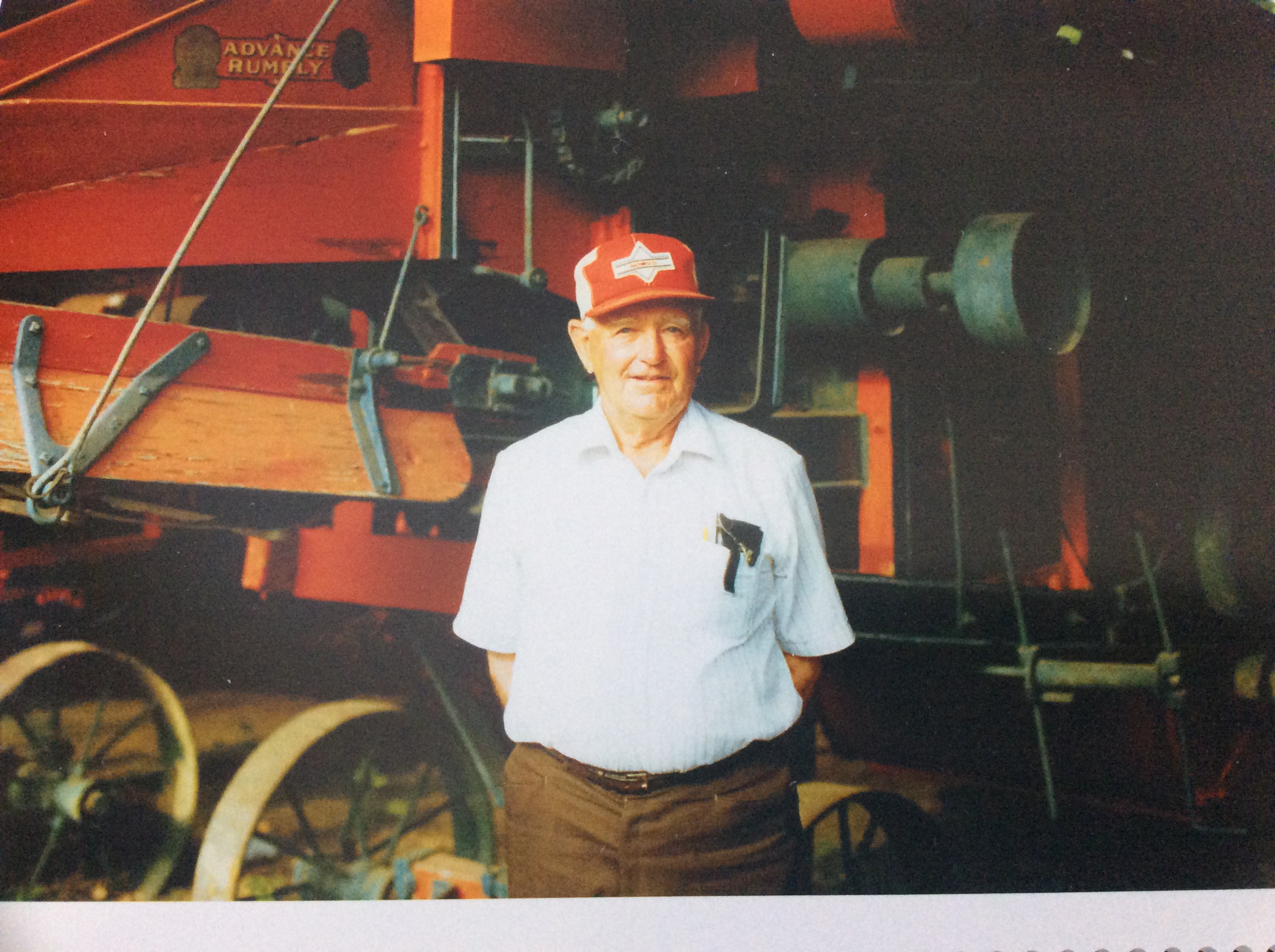
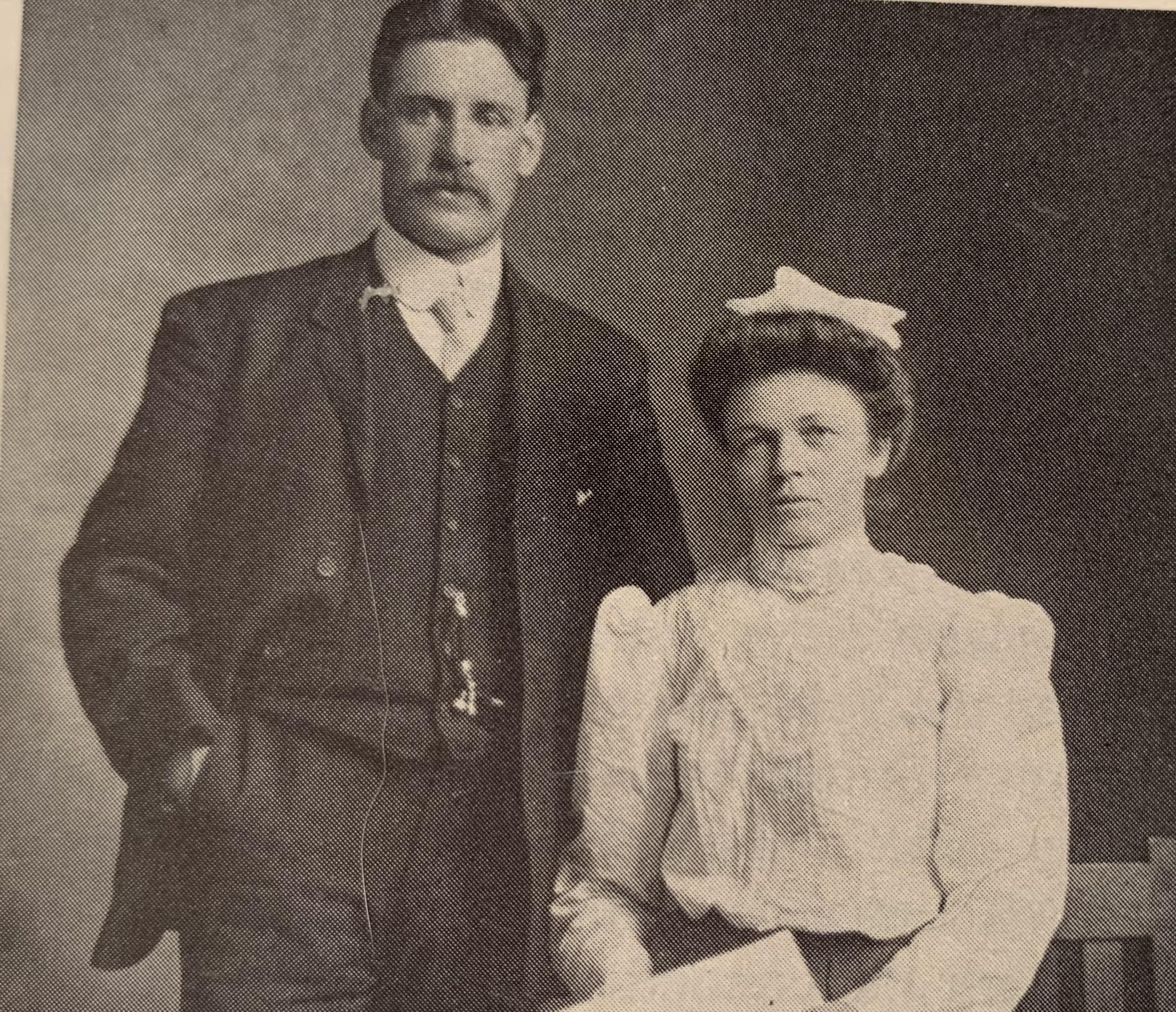
Bill was born on a farm south of Cartwright on July 11, 1916.  He never married but was said to be a dedicated family man who was always there for those in need.

IMG_9644

Bill, an enthusiast with the Heritage Village in his community and served on the committee for many years.   Bill purchased this land in 1944 and proudly displayed the advertisement for the Heritage Park on his property where everyone that went by it could see it.

brogden house 4 email


Bill began farming as a young boy with his father and his love for farming kept him busy until he was in his 70’s.  When he wasn’t farming, Bill sang with the United Church choir and served on their committee for many years.

brogden house 6 email

After a trek through the farm yard I headed out to the pasture and up the hill.  I cam alone some old wagon wheels and then almost tripped on a piece of wire in the grass.  I also picked up a lot of hitchhikers on my journey.

brogden house 5 email

Being alone I also started to think about skunks, badgers and of course, well holes.  I am a chicken shit.  Not sure that exploring is really for me, lol.

brogden house 8 email

I have passed by Bill’s old threshing machine (or separator) and Cockshutt tractor many, many times.  I never did notice this little machine way up on the hill until I walked closer to it.

brogden house 7 email

I do not know anything about tractors except that this is what they call McCormick Deering or a Cockshutt tractor.  I believe this one is approximately built in 1924.  At least that’s what a quick search on Google tells me.

On my way back to my car I again started to think about all the critters and as I was going through the ditch I found two lady slippers, all alone.  Of course I searched for more but I couldn’t find any.

ladyslippers-2 email


THE CIRCASSIAN

The family of Patrick & Mary is one of the first to settle into this municipality. To date, 6 generations have lived in the area. Patrick (1821) & Mary (1850) left Ireland in April, 1879 bound for Montreal on a ship called The Circassian. Upon their arrival in Montreal, they traveled by train to St. Paul (Minnesota?) in the USA and then to Winnipeg via Red River steamer.  Together, Patrick and Mary had 10 children.

When the family arrived in Winnipeg, the women were settled in to their new home while the men carried on in search of suitable land to homestead on. After purchasing a wagon, a team of oxen and the necessary provisions, they set off. After several days of travel, in and out of sloughs, the men arrived at Badger Crossing. They then made their way to Morden to file land claims. They returned to the land and built a “sod shanty” and Patrick and his sons began working the land. The first two winters in Canada (1879 and 1880), the men would travel back to Winnipeg to stay with the women. The boys would work on the new railroad being built and in the spring they would head back to farm. By 1881, a 1 1/2 story home and outbuildings were built and the entire family was reunited and began their new life on their homestead in Manitoba, Canada. Mary passed away in 1889. She served as a Justice of the Peace for many years. Patrick passed away in 1902. He was a valued member of the community serving as a warden and the President of the local agricultural fair for many years.

I must add that their oldest son Joseph served in the military in Ireland before coming to Canada with his family. Upon his arrival in Canada he was selected as an auditor for a new local school. He purchased his own land and farmed for a few year but was never married. He decided to move to Boston, Mass., and in 1917, while en route to deposit church funds, he was beaten to death.

Patrick and Mary’s son, John was a successful business man. In 1898 he purchased a section of land which was later farmed by his son and his grandson. His grandson just happens to be my neighbors Dad. When I stumbled upon this house on the way home from photographing another, I thought, I’m going to pull into this yard and see if they will let me take a couple photos so that I do not have to come back. When the young fellow came out I thought, he looks familiar. Well turns out, I had seen him before. He is the nephew of my neighbor.

This house was built in approximately 1906.

Great-Grandpa John started his own livery and feed business which he later sold. In 1902 he built the necessary building and started an implement business which he later sold in 1910. In 1915 he was appointed the Police Magistrate. He was also involved in the local agricultural society and served two terms as reeve. Great-Grandpa John was also actively involved in the church and educational affairs within the community. Great-Grandpa John and his wife Bessie had two children.

mckibbon-1

Great-Grandpa John left the farm to his son, John Jr. who married and had three children of his own.  One of his children, Jack is the father of my neighbor.  John Jr. and Mary raised two children of their own in this home.  Jack’s son now lives in a new home on the land, where he can still see the home he grew up in.  

McKibbon house 5 email

There are still many outbuildings on the property but I didn’t want to stay to long and poke around to much.  I could have photographed for some time on this property.


McKibbon house 1 email

It was nice to see the windows and doors intact on this home.  As you can see from the older photos, it was always well kept and at one time had a large porch.  I guess this is the benefit of having someone living on the property with the old home.

McKibbon house 2 email

The young man who answered the door asked me if I would like to go into the home but I declined as I didn’t want to be pushy and thought it was nice enough that he let me take photos as it was.  My neighbor has offered to take me back to go inside if I would like.  

Aside from making a connection to this property and knowing someone who actually lived inside the home, and my neighbor sharing the old photos with me, here is a photo of her inside the house.  That’s pretty neat.

BROKEN DOWN ON THE SIDE OF THE ROAD

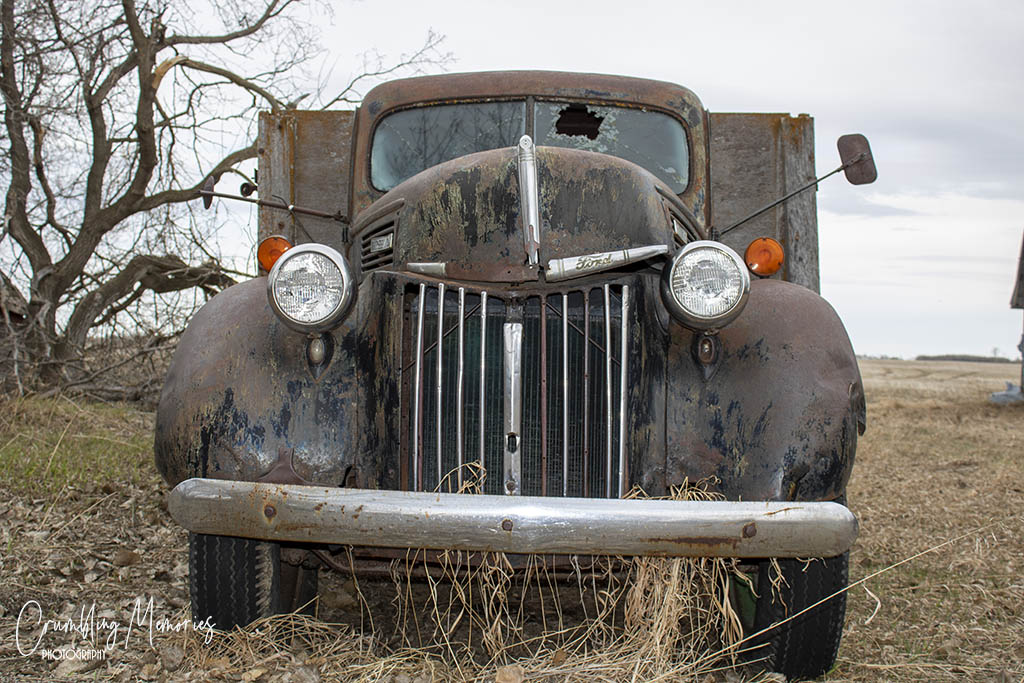
Likely not. Or maybe. This truck and another car were parked on the edge of a field, up off ditch, in a field. Their placement was hard to take good pictures of because all around them were piles of other stuff that seemed to be pushed aside and out of the way.

This truck probably played a big part of someone’s farming operation at one time.

THIS OLD, PLACE

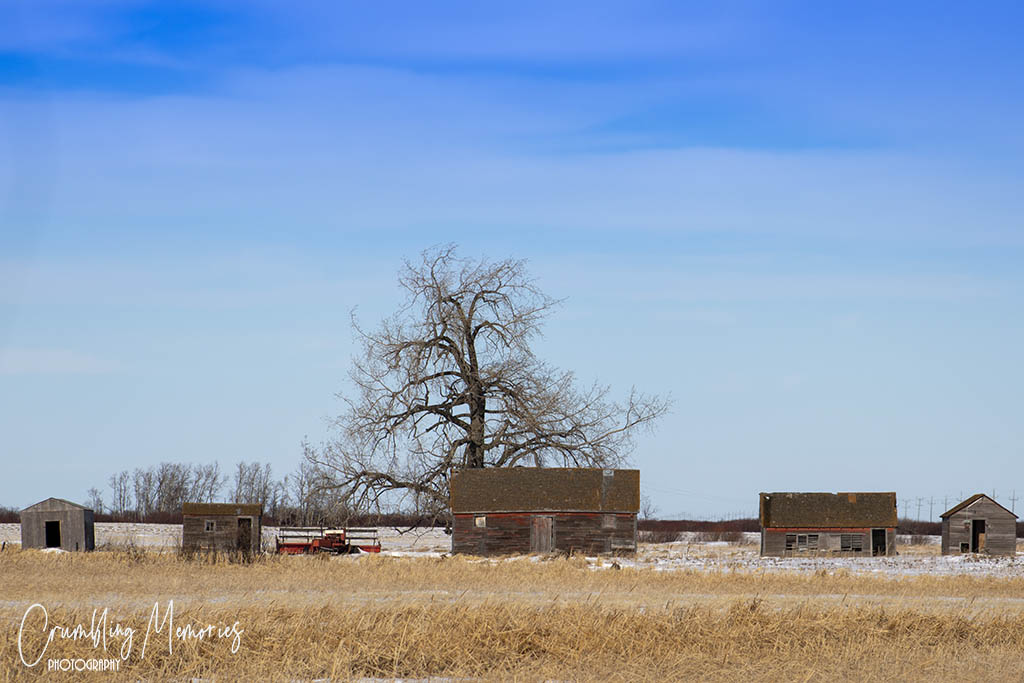
I found this old place on a tour I took one day. There wasn’t a house or anything there and I didn’t have permission to enter so I took the photos from the road. I figured, I’m out and about, I’ll take a few photos and see what I come up with. Well, I couldn’t find anything worth writing about except that the first recorded land owner was recorded in 1894 and then the land was sold to another family in 1904 who sold to another family in 1913. The current registered owner of the land has owned the land since 1943.

The sky was beautiful that day and honestly, there was a photo you couldn’t screw up.

THE DAILY MILK RUN

W.S.S was born in Tyner, North Dakota on December 22, 1881.  He worked on various farms until 1910 when he decided to seek a “non-flooding area to farm” and moved to Canada.

family

He came to this area and purchased this land.  He didn’t live there right away and lived in a rental or “boarded” across the road in a small village.  In 1922 he purchased a house that he purchased from the local blacksmith and moved it onto his property.

Smirl 2_1 email

I do not know if this is the original house that was hauled onto the property but I do know from the current land owner that the house was small and as the family grew they added more and more on to it.  It makes perfect sense to me that this could very well be the original house just from the layout of it.

Smirl 5 email

W.S.S. eventually got married and together they raised 3 children on this farm, not to mention the grandchildren that would also be raised here.  The family pasture was the site of many baseball games.

Smirl 3 email

W.S.S. and his wife were community minded people and his efforts were instrumental in forming the local elevator, Co-Op and united church.

Smirl 6 email

The family kept Percheron horses and they jointly owned a Case tractor and separator with another family.

Smirl 1 email

In 1927 this barn was built and the family ran a dairy cow operation.  The cows were milked in the morning and the children would deliver the fresh milk in little bottles to village members, by cart, on their way to school.

The boys farmed with their Dad for some years until the oldest left and moved to Oregon.  Father and remaining son farmed together until Mr. & Mrs. retired and moved to town.  Mr. passed away in 1968 and Mrs. in 1972.  The son continued farming on the land and married and raised 4 children of his own on the family farm until he moved to town in 1990.  The current landowner purchased the property in approximately 1996/97.

Smirl 7 email

M & M were very active in their community, just like his parents.  For many years the basement of their home was used to collect, sort and wrap gifts for the Christmas cheer.  Upon moving to town Mr. was very active in establishing the recycling project.


IN THE MIDDLE OF NOWHERE

Well, not really but this house would be right smack in the middle of a section of land and of course, I can’t confirm anything with the material that I have here.

woods 4 email

I have had permission to photograph this house for some time.  I went in the Fall and it was muddy.

woods 2 email

Iwoods 3 email

So Cade and the kids stopped with me on the way home from Brandon one day and Cade drove in part of the way and I hiked in the rest.  I didn’t go into the house but I did wander around as far as the snow would permit to get this tractor and a couple different angles of the house.

woods 5 email

While it was the house that got my attention and led me to this old homestead, once I was there it was this barn that I really liked.  Its held its own in our harsh Manitoba weather.

mouse for email

When we were driving out, Cade spotted this little rodent in our tire tracks so I got out of the car to chase him away so that we wouldn’t drive over him.  I truly think he was blind because I could literally reach out and grab him if I wanted to and I followed him down our tire tracks for some time.

COMING OR GOING

I found these old photos the other day and realized I never posted them on Instagram so I thought I’d repost them here, just in case.

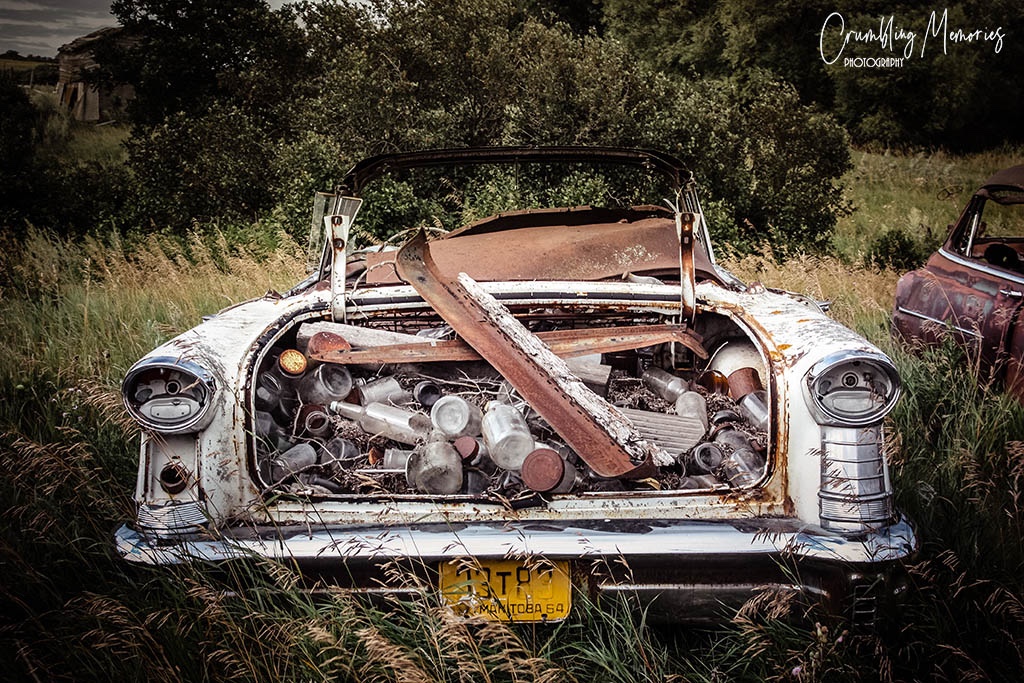
We visited this property thinking we were going to a house and found these cars and trucks and farming implements. And now that I’m talking about it I’m recalling the history of the home and know that I have posted about this day.

So I’m just going to leave these photos here and call it a throwback.

ONE SNOWY STORM

My last couple of outings have proved somewhat disappointing when it comes to finding a history for the properties and buildings I’ve been photographing.  Well, not this one.

On Mother’s Day, Cade obliged and took me to this house that has been on my must see list.  I had to get to it sooner rather than later as the landowner told me that once the cows moved onto the land, I would have to wait until they were gone.

Gudnason home 1_1 email

Tucked into the section of land, we traveled up a road that went by a slough, around a nice little wooded area, right up to this house.  When we pulled up, two large, black birds flew out of the house.  We weren’t certain if they were vultures or ravens.

front of house

The original owner of this land, Mr. G was born in Kaldback, Iceland in 1855.  He married his Mrs. who was described as “a handsome 23-year old lass from Fnjoskadal” on December 31, 1888.  Together they had 10 children, 3 of which died in infancy.

gudnasons

Mr. came to Winnipeg in 1887 and worked on the railroad until he moved to the area in 1889.  The couple lived on another farm until 1905 when they purchased this land and cleared it.  They then built what was quoted as being “excellent buildings”.  The home was said to be a haven to many a friend and stranger.  The couple were known for their generous hospitality.

IMG-4422 (1)

Mr. was a willing worker, despite of many years of blindness.  Regardless he was able to complete many tasks.  In 1934 he passed away and his wife died in 1940.  Their oldest son Vilhelm (Bill, 1890 – 1969) farmed the land until 1940.  Their other son, Siggi (1901 – 1974) farmed with his older brother for many years but left for the city after getting married in 1937.  Siggi and his wife then returned to farm the family farm until it was sold to the M family.

Gudnason home 2 email

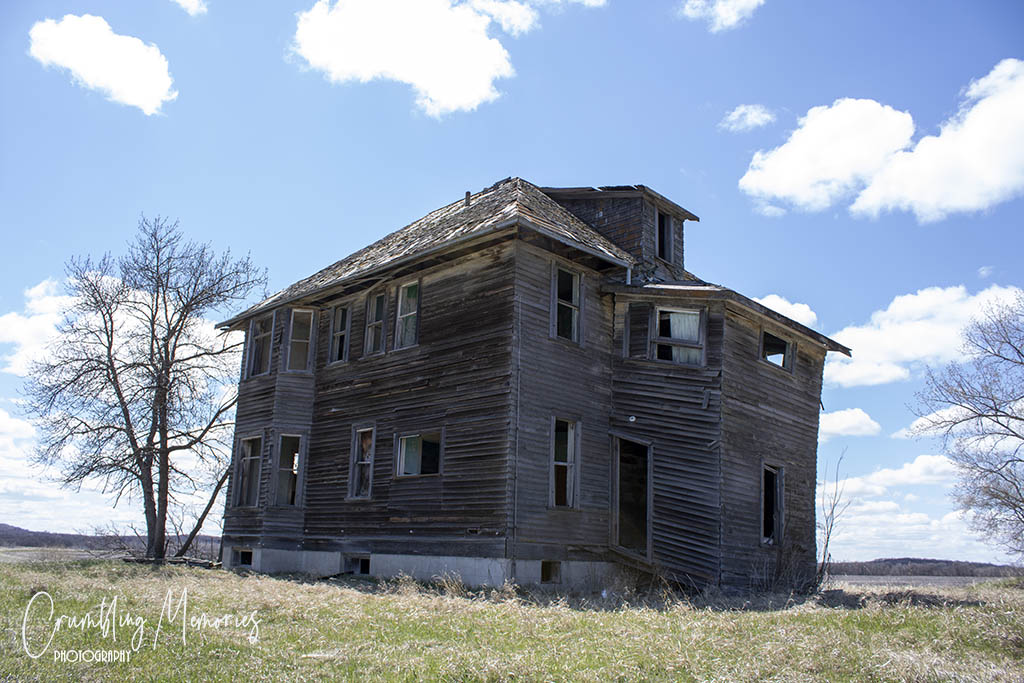
The M family lived in the home for 21 years.
Gudnason home 9 email

I am told by their son, Henry, that he has fond memories of the big old house and still visits it often.  He told me that when his parents sold the home to move to Brandon, it was sold, move-in ready.

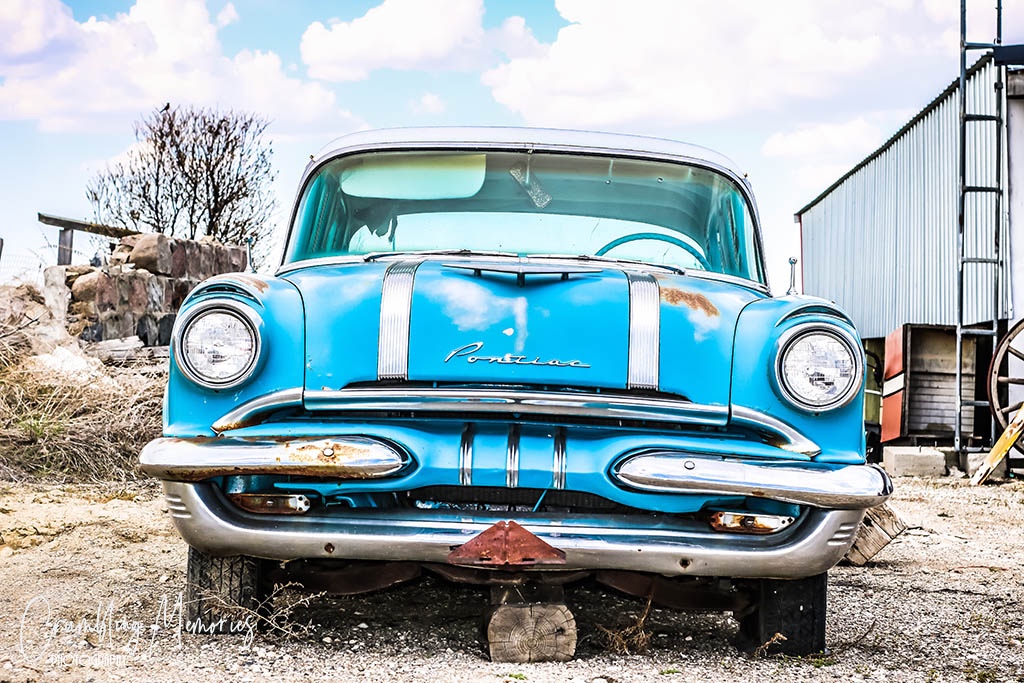
Then we found this, a 1948 Chevy Fleetside, 4 door.

Gudnason home 3 email

When I asked Henry about this old car, I was really hoping he could tell me something, and he did.  This old car was taking the family to church in a snowstorm when it got stuck and the engine blew.  The car was parked in this spot and never moved.

Gudnason home 5 email

The frame of the car was moved to another part of the yard and another engine was purchased with the intention of the boys making a go-cart with it.  I found it.  As you can see, and confirmed by Henry, they never finished the project.

Gudnason home 6 email

I am so happy I stopped to take these photos and that I was able to get the story on them.

Behind the house stood what I can only imagine, with a little help from the old black and white photo, what was once a magnificent old barn.

Gudnason home 7 email

The barn was built into this hill and we were able to walk up the side to what remains to be what is left of the stone foundation.  In the walls are the old hooks that tethered the horses.

Gudnason home 8 email

I understand why Henry has such fond memories of this old farm and can only imagine how he must feel when he sees his old home in a state of ruin.

Gudnason home 10 email

Thank you Henry, for sharing your memories and stories with me.

HOLA SCHOOL

Nestled in the oak-studded hills, Hola School District, (Hola is Icelandic for hills) was formed in 1897 and the school and a four-team stable was built that spring on land bought from the Crown for $3.00.  The district borrowed $495 from Mr. Maulson and Mr. Olafson built the school.  Classes started in June of that year and Mr. Thorne was the first teacher whom had 53 students enrolled all at various ages.

Hola School 1 email

The school suffered some fire damage in 1923 and the floor had to be rebuilt.  During the same decade, 4 side windows were also installed on the West side and two “piano” windows were installed on the East side of the school.  In 1929 a larger basement was dug out and cemented and which allowed for a passage to the outside.  This was a welcome addition for the young boys who feared ghosts would jump out of the trap doors they were accustomed to using on dark mornings when they came to light the fire.

Hola School 2 email

Each November, the area would be crawling with men in white suits, deer hunting in the area.  Children were not allowed out for recess in the school yard and were encouraged to stay inside.  The surrounding hills were perfect entertainment in the winter for skiing and tobogganing.  The spring run off was just as exciting with lots mini rivers and waterfalls that rushed towards the lake about a half a mile North of the school.

On June 30, 1953 only 8 students remained enrolled at the school and nine were needed to receive a grant to operate the school.

Hola School 3 email

The building sits behind a commemorative cairn which was erected on June 28, 1987.

DEAD WOOD

We found this old tree driving through a field lane to an old house.

There seemed to be a lot of them in the area but I really liked the contrast of this one on the sky.

A fellow abandoned seeker messaged me and said, I took a photo of the same tree. Turns out this tree has a doppelgänger!

STRATFORD, ONTARIO

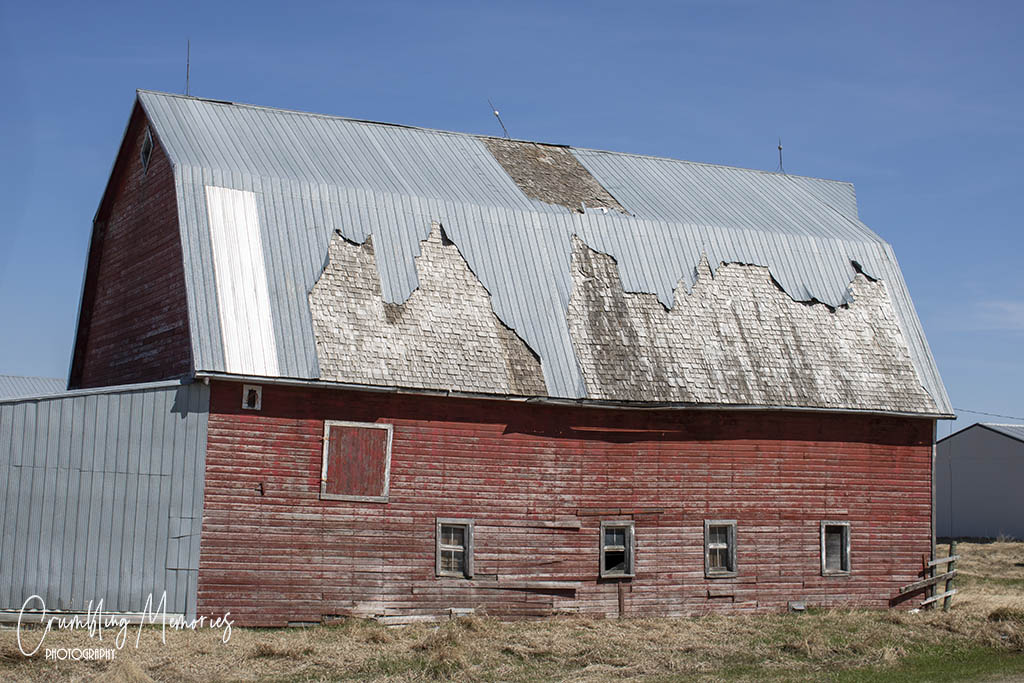
This was another property with not much history but as you can see, there’s not much there to report anyways.  With the skies, I had to stop a take a couple of photos.

Aitken farm 2 email

All that’s left is an old grainery and a shed of some sort.  It was a warm but very windy day when I ventured out on my own and I didn’t feel like trekking through the snow which was still quite deep at the time.
Aitken farm 1 for email


LAND OF PLENTY

This is another tough one.  I think I’m going to blame the current COVID-19 pandemic on this one as our library is not permitted to do inter-branch transfers.  Anyways, I have some info but can’t confirm other info so I guess I’ll just go with what I know, kinda.

champman farm 1 email

On a recent outing with Cade and the kids, we set out with the intention of finding and photographing one house and visiting a ghost town.  Along the way, we found so many old houses and many of them we didn’t even stop at.  I think I may have found a bit of a honey hole.  Wahoo!

champman farm 2 email

Okay, so back to the history.  The first recorded family of this property owned the land for approximately 10 years.  I was able to find a lengthy family history, I could not use any of the info because I could not match any info with certainty.

champman farm 3 email

This land turned hands a few times since the start of this RM’s history.  Mr. was born in 1869 in Waterford, Ireland and came to Canada in 1888.  He landed in Brandon on July 4th and the next day headed to his first piece of land by oxen.  He lived in a “shack” until he married and built a new home in 1893.  The land he initially lived on was sold and this farm was acquired.  Did they build this house?  I do not know and I cannot confirm.  They lived here until 1926 when they moved to town.

champman farm 4 email

Mr. joined the United Church in town upon his arrival in Canada.  He was a good singer and often sang to his family.  He had been afflicted with infantile paralysis as a child and was lame because of it but he never allowed this handicap to interfere with his work or his community involvement.

chapman

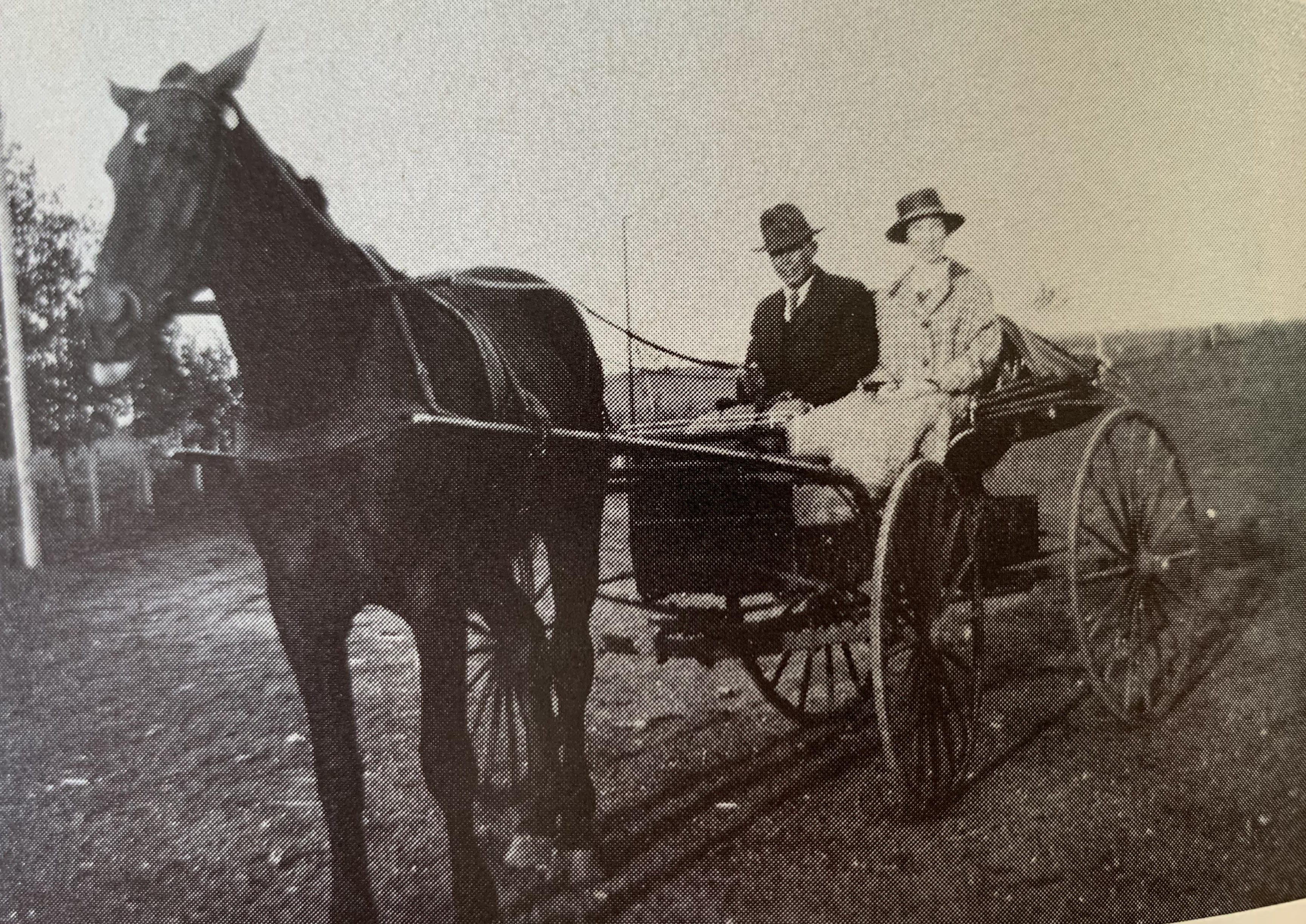
Mr. was very fond of good driving horses and he and his family often drove to Oak Lake to visit his in-laws.  Mr. passed away in 1940 and his wife in 1943.  Together they raised five children.

As I said, the land is then sold again, multiple times but I cannot find any further information.


BUILDING A MYSTERY

This is a tough one.  One, I can’t get the books I’d like to have to do the research and two, there is nothing in the stack of about 10 books that I have.

edited-2 email

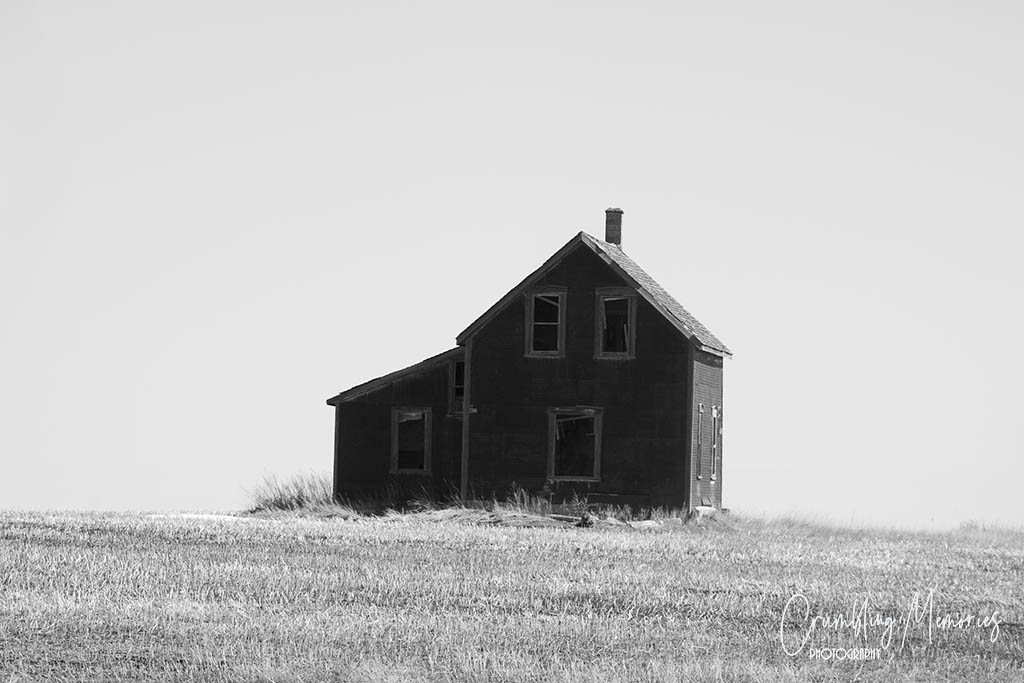
This house was about half way into the section but I could reach it with my long lens.  Of course I wasn’t happy with the closer shots.  While I’ll never turn down an opportunity to take a photo of an old house, it wasn’t why I was in the area.

house black & white email

This land is recorded to be acquired for the first time in 1898.  It was then sold in 1901, 1902, 1906, 1907, 1909, 1911, 1917, 1919, 1923 and then to the current family (different owners within the same family name) in 1948.  I would imagine it was a nice place to farm with a creek close by for watering animals and the home is set a little higher on the land.

I wish I could share more, but I can’t.

NORTHCOTTE

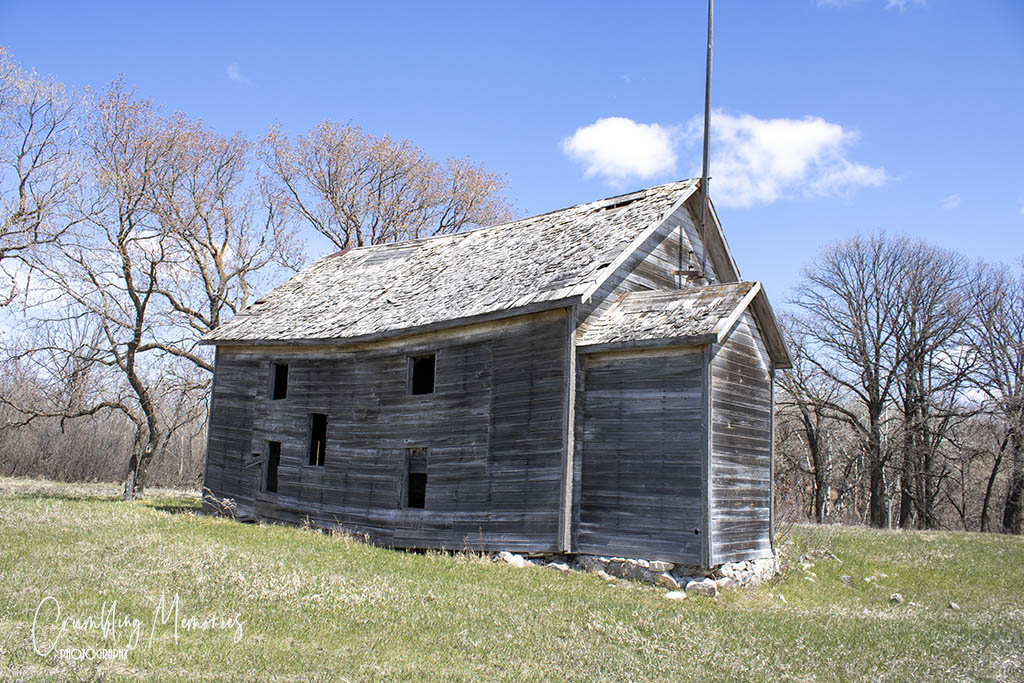
I love this little school.

Many times I leave this location thinking that I still haven’t achieved the perfect shot of it, so I keep going back hoping that one day I’ll get the perfect shot of it.

It doesn’t hurt that it’s close to home either.

LANCELOT

R.W. was born December 4, 1882 in Cumberland, Ontario and moved to Manitoba in 1886 when he was just 4 years old.  His Grandparents immigrated to Canada from Belfast, Ireland.

Roberta and Adealine

Upon arriving in Manitoba his father listed his worldly possessions as his wife, children (4 at the time), two horses, two colts, two cows and $7.00 in cash.  They knew their destination and settled in a one room 14 x 16 log shanty with a sod roof.  Within 4 years, 4 more children were born.  His wife was considered a frail woman.  At the age of 36 she developed a cough and died.

lancelot

Their son R.W. settled on this piece of land and in 1905 he married a woman from Fairfax.  Their home was said to be very welcoming and the door was always open, so much so that ministers and evangelists made it their headquarters.

williamson 10 email

They lived first in a log house and then built this beautiful brick Eaton’s Earlsfield home which was later occupied by his Grandson and his family.

williamson 11 email

When I first spotted this house from a mile over, pulling up I knew this had to be an Eaton’s home.  This is the 3rd one in my area that I have found.  This was Eaton’s most popular style.

williamson 2 email


R.W. served on the local board for many years and was the chairman of the yearly local Christmas concerts.

williamson 3 email

Mrs. died in 1947 and Mr. eventually re-married and moved to Calgary.  He passed in 1965.

williamson 7 email

Their son, L.W. married a widow with four children.  Together they had a son of their own who went on to farm on the land.  L.W. married and together he and his wife had three children.

williamson 8 email

Grandfather, son and grandson were all educated at the same school.

williamson 6666 email

MORNINGTON

B.W. was born in Chili in 1871 and as a young boy returned to England with his family where they stayed until his mother passed away in 1887.  At that time his family of 6 brothers and 4 sisters all went their separate ways.  He came to Canada in 1888 and his brother followed him a year later.

bruce

In 1890 the brothers acquired this piece of land and lived in this old log house.

waitt darling 10 email

The land was broken with walking plows and oxen.

waitt darling 2 email

In 1891 their sister came to Canada and helped her brothers on their farm until she married.  Her husband passed away in 1894 and at that time she decided to return to England.  In 1892 their other brother came to Canada and purchased his own land not far from them.

The family was known for the musical ability and in particular their ability to play piano, organ and to sing and act.  They also enjoyed cricket, tennis and football.

In 1899 they built a new house.

waitt darling 4 email

This property is beautifully treed and there are many outbuildings.

waitt darling 5 email

In 1910 they built this steel barn.

waitt darling 8 email

The brothers started raising horses and did so until the 1930’s.  At one time there were 36 horses in the barn to be fed and watered and when needed, there were as many as 8 to 10 horses ready to work in the fields each day.

waitt darling 11 email

Horse power was used for crushing and the grain was cut and stacked until the Fall to await the steam threshing outfit of many workers.  In 1918 they bought their own threshing machine and slowly the heavy machinery took over the work on the farm.

waitt darling 1 email

B.W. was married in 1903.  Together they had 3 daughters.

bruce and emma

B.W contracted pneumonia and passed away on November 18, 1923.  May, his oldest daughter returned to the farm with her husband in 1927 when Uncle L took ill.  In 1929 they moved into the small cottage with their sons to take over the farm from her father and uncle.

waitt darling 7 email

Uncle L and BW’s wife both passed away in 1965.  BW’s grandson, CD later took over the farming operations on this land.  He married in 1950 and raised 4 children here.

waitt darling 6 email

When Mrs. D sold this property, this farm had been a part of her husband’s family history for over 100 years.    Even after their retirement, Mr. D still drove out to the farm to keep up the property and do a little bit of farming.  When Mrs. decided to sell, she was offered help to clean the property.  By clean the property she assumed that these people were offering to clean the yard, etc.

grown in truck email

These individuals attended to the house and property and helped themselves to personal belongings in the home, as well as grates and wood banisters from inside the home.  They attempted to sell same online for a profit and when police were involved the discussion was deemed a misunderstanding between the parties.

IRISHMEN

Originating from Northern Ireland, this family traveled to Manitoba in 1899 from the Strathroy-London area in Ontario.  With them were 6 of their 8 children.  The family arrived in Deloraine and purchased land.

Baskier

Two years later, they purchased this piece of land as well.  Over the years, their older children made their way to Manitoba.  Their son decided to move to Montana and later to California.  Their daughter, her husband and their children settled into the area.

baskier house laneway email

Mr died 10 years after arriving in Manitoba.  In 1911 Mrs. transferred ownership of this piece of land over to their youngest son Albert.

IMG-4051

Albert was born in Ontario and traveled with his family to Manitoba in 1899.  He married Lillian in December, 1909 after she came to Manitoba to visit another family.  After their marriage in December, the couple headed to Ontario and returned to Manitoba in the Spring of 1910 and homesteaded on this land.

Baskier girls

Together they had 4 children.   Albert and Lillian were active in their community.  Albert was the secretary-treasurer of the nearby school and Lillian was a member of the Ladies Aid.  Their home was always open to friends and neighbors.  In 1942 they retired from the family farm.  Lillian passed away in 1951 and Albert in 1955.

house looking east email

Jack worked for other farmers in the area but eventually took over the farm from his father, Albert.  He married Rita in 1942.  Tragedy struck the young couple the following year when their gasoline iron exploded, burning them both very badly.  Rita died shortly after.  Jack went on to meet his second wife, a widow, whom had two daughters.  Together they had 2 children of their own.

house looking south email

Albert’s mother passed away in 1920 at 79 years of age.  At the writing of the family history, Jack was still alive.  This was a beautiful piece of land.  The lane way was treed on both sides and the property had a well established tree line on the north property line.  There were many remnants of old buildings.  The only thing left were the foot plates of where they once stood.

HIDDEN BEAUTY

This beautiful home was built in the early 1900’s.

mansion from book

Mr. M. came to Manitoba in 1899 and married Bella in 1890.  Both were from Ontario. Together they had 4 children but sadly lost one girl at just 3 years of age.

side of house email

My photograph above was taken before I seen the photograph of the family and house from the Municipality history book.  A fellow abandoned seeker, Lee, who also photographed the house just days before me, took a shot at the same angle.  The house is a magnificent sight and I was determined not to miss a thing.

east side of house

I was told by the present land owner that when he purchased the home more than 20 years ago, the home was in excellent condition.  Over the years people have attended the home and stripped the brick of the front of the house, removed wood trim from the inside and broke the windows.

interior

If you note the door on the second floor, from the other side of the house I could see the staircase that leads up there.  All of the wood banisters have been removed as has most of the wood trim around the doors and windows.  The lack of glass in the windows has caused extensive damage to the inside of the home and there are now large holes in the floor.  The owner asked me not to go inside the house so I only peered through the windows.

feed barn email

There were many outbuildings on the property and a long stream flowed through the property.  The views from the home would have been spectacular at any time of the year.

walking up email

Mr. died in 1938 at the age of 77, 15 years after he lost his wife.  At that time, his youngest son, whom never married, took over the farm.  I am told that he lived in his own home across the road.  A friend asked his mother about the home and the family. She grew up in the small town near the home and she can remember them.  She remembers the son, a bachelor who wore a black top hat and smoked a pipe.

Years later when his sister lost her husband, he took her and her children in and eventually they moved back into this big, brick house.  When he retired in 1967 his nephew took over the family farm.