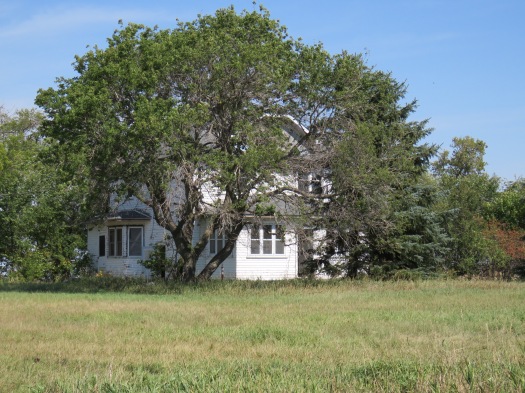
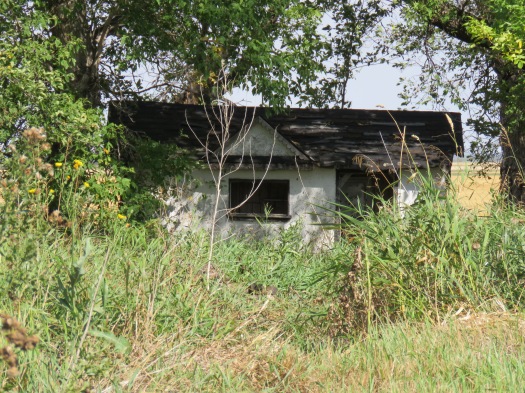
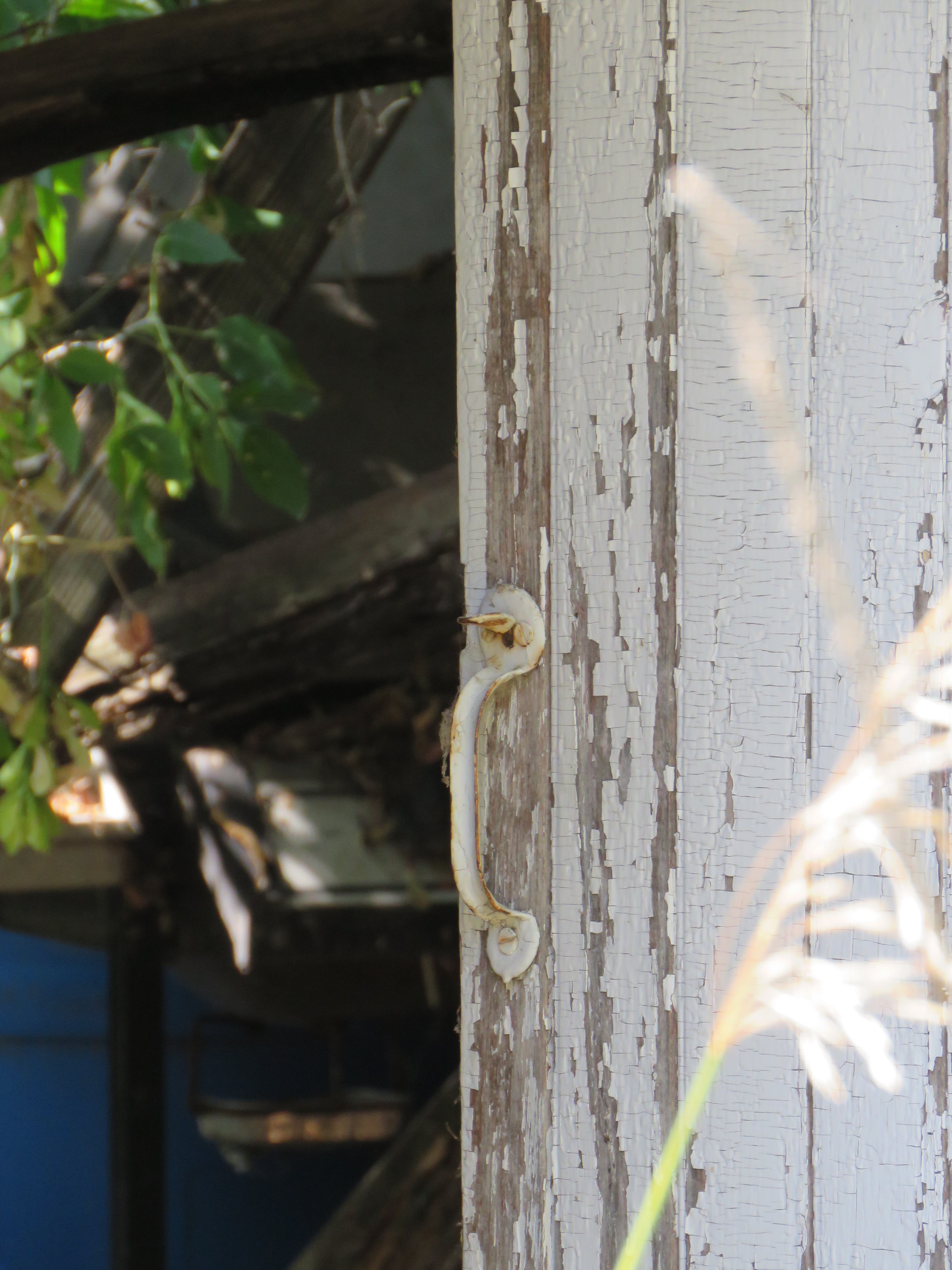
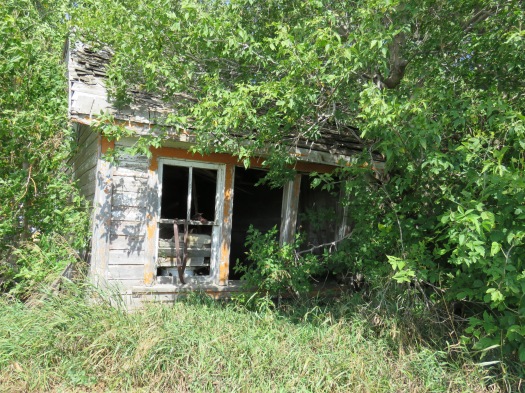
LITTLEST HOUSE ON THE PRAIRIE PART 2

While Reg goes along with me to shoot houses, his true passion is the farm equipment and old vehicles.  He knows that I go home and I start researching to find out the history of the home with the hopes that I can find some connection in the town history books and word of mouth and through what we are told from landowners when we ask for permission to enter upon their land and photograph their buildings.

IMG_7272.JPG

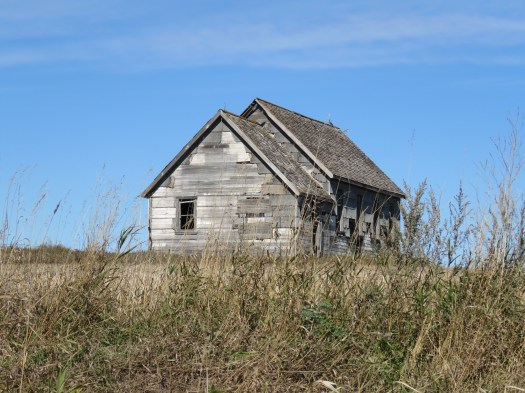
I found out this week that this was in fact a house, a very small house.  The family divided the rooms with cloth for privacy.

IMG_7290.JPG

This small home was built in 1946 when Mr. R returned from the war.  He lived in the home with his wife for many years.

And I was right when I assumed that the home had been moved off the wood pile we found to where it currently rests.

IMG_7322.JPG

And while it appears that today might not be a good day for me to try to wrap around my head around pages of family history, I can say that there is some relation from this home and the home of the unmarried lady whom took the bus to school with the kids once in a while.

COUNTY DERBY, ONTARIO

This family purchased this land in 1903.

IMG_1715.JPG

I cannot tell you when this house was built but I can tell you it was very large and spacious with large sliding doors which separated the dinning room from the sitting area at the front of the house.

IMG_1679.JPG

On the one side of the house there was a stairway leading up with a large wood banister and railings.

IMG_1675

The view from the top floor of the home was amazing.  There is a large bathroom and 4 bedrooms with a big hallway and large linen closet.  This is also where we found the door to 3rd story of the home where someone took it upon himself to get a look around from the roof!!! There was a large eat-in kitchen with a side door off of it and a stairway to the basement which is wasn’t brave enough to try.


KITTIES EVERYWHERE

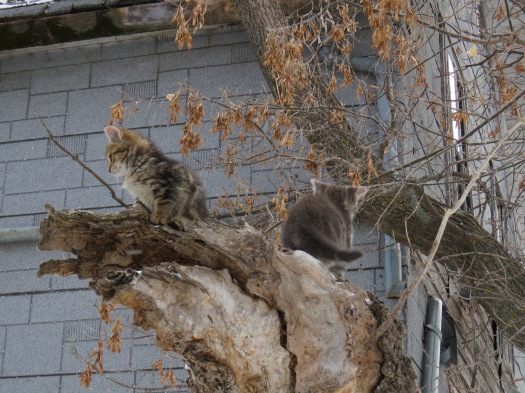
We weren’t expecting to find a house but we did.  And a whole lot of cats.  We were lucky enough to meet the gentleman who owns the land and was very familiar with the old homes surrounding him.

IMG_2948.JPG

His ancestors were born in England but immigrated to the area in the late 1800’s.  He started working for a gentleman in the area and in 1899 bought this section of land and built a house and married his wife.

The area school was on the corner of the road leading to his property and history reports that the current teacher allowed the children in her class to watch Mr. drive by with the first car in the area.

In 1914 this home was built.  He was a four bedroom home with electric lights and a power washer.

IMG_2946.JPG

Mr. had a threshing outfit and threshed for many of his neighbours.  Farming changed, horses were replaced by combines.  That didn’t happen for this family on their sloughy land until 1929.  The drought came.

IMG_2943

The current land owner is the third generation to farm this land.


ONE HORSE TOWN

My dear husband and son found this place for me a couple weeks ago on their way fishing.  After a quick phone call I was granted permission to have a look and received an invite to check out another place when I had time.

IMG_2862

The home is now in the middle of a pasture and on that day we were visited by a very vocal mare.

IMG_2875.JPG

Behind the home was a large body of water that was likely a source of water for cattle and now, the mare.  I was told by the current land owner that his friend lived her and was actually knocked into this water by his bull, knocked out cold and drowned.

IMG_2886.JPG

We did find an old barn and a piece of old equipment which was really neat.

IMG_2872.JPG

This was a neat old machine.

IMG_2869.JPG

I really liked how the setting for your different grains was attached right to the machine for your easy reference.

IMG_2870.JPG

I have done some searching on this family and the property but have come up empty handed.  I won’t stop though and if I do find more info, I will be sure to add it.


HAUTE

I was lucky enough to be told the location of this home from a fellow abandon seeker in the area whom I believe’s great grandmother or grandmother once lived in the home.

The original owner of this land came to Manitoba in 1885 from Quebec.  He married in 1894 and then bought this land.  The first buildings on the land were a low frame house a log barn and a shop.  The two latter were sod covered.
In 1918 Mr. decided it was time for a new house and planned for a two and a half storey home that was 25 by 32 feet.  The materials were purchased from G.B. Robinson, a lumber dealer in Elgin, Manitoba.  Recorded total cost for the materials and labor to build the home was $4,448.53.
IMG_2802.JPG

Mr was an avid goose hunter and I would imagine the hunting was very good off the Whitewater Lake.  It is said that many loads of geese were shipped to Winnipeg via rail and served as a delicacy in posh hotels.

Mr. & Mrs. had five children.

IMG_2785.JPG

The home was a stop over for men hauling wood from the Turtle Mountains across the Whitewater Lake who would warm up and have refreshments before carrying on to the Elgin District.

IMG_2941.JPG

The youngest son farmed the land until 1966 when they moved to a nearby town.

RIVERSIDE SCHOOL

Remember the little boy that rushed to the school to sit with the teachers until dismissal?  Well this is the school.

IMG_1896.jpg

Built in 1883 on the SW corner of his parents property for $843.00.  They collected a further $10.00 for benches as well as a heating stove for $9.00, 22 lengths of pipe for $0.18 cents each, a broom for $0.35, a box of chalk for $0.30 and desks for $8.50 each.

IMG_2895.JPG

Church services were held in the church starting in 1884 until 1915.

IMG_2888.JPG

As the nearby village grew, it was decided that the Riverside School should be moved to its current location in 1902.  In 1904 a storm prevented the children from getting home that evening and they were stormed stayed until noon the following day.

Changes to the school happened over time and in the summer of 1912 metallic shingles were put on the roof.  The inside walls were changed from tin to wallboard and wainscoting in 1936.  In 1951 electricity was installed.  An oil burning furnace was added in 1953.

IMG_2892.JPG

The last teacher employed was Aggie Jean Martin in 1956 where she was paid approximately $215 per month.  The school, like many other small, one room schools in small communities were the centre of activity where they would hold dances, card parties or box socials.  The school closed in 1956.

IMG_2901.JPG


OUT and ABOUT

This Spring when my mission to find and shoot as many abandoned properties around me began I traveled to and from work searching for barns and rooftops.  Here is one I spotted from the highway on my way to work.

IMG_9405.JPG

IMG_9402


BISCUITS & BASEBALL

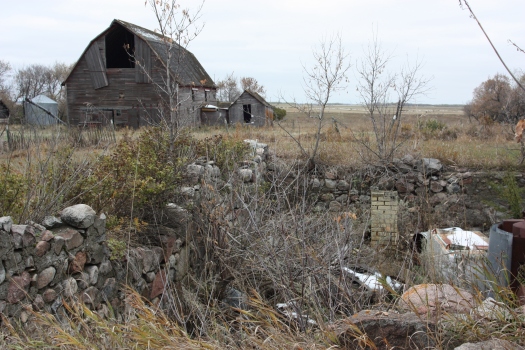
On the way to a property Reg asked me to take a turn to “check something out”.  Off we went down a muddy, not maintained, gravel, not lets call it mud, road to a barn we could see in the distance.  I’m sure I’ve seen this before but when I didn’t see a house, I didn’t make note of the property.  Its a good thing we had the Jeep cause it was muddy. Well all the mud was worth this stop.

IMG_7598.JPG

The house was gone and all that was left was the stone foundation, the fridge, freezer, a couple pieces of furniture and many, many knick-knacks.  I found several kettles that day.

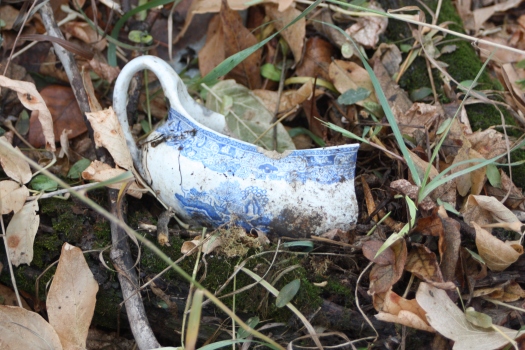
In a metal/glass pile away from the house I even found what was left of an old gravy boat.  I found it fitting, considering it was Thanksgiving weekend.

IMG_7682.JPG

Mr. D. C’s father was born in Perthshire, Scotland in 1856.  They moved to Ontario in 1876.  D was born in 1877 and helped his father farm the original homestead purchased upon their arrival in Manitoba.    In 1926 he married E and they lived on his father’s land for 4 years.  Then in 1930 he purchased this particular piece of land and started building the barn and the other buildings.  D was a member of the Oddfellows Lodge.  He was interested in the education of his children and served as a school trustee for the nearby school district.

A, D & E’s youngest son remained on his father’s farm after his retirement.  He had helped his father farm the land his entire life, even while going to school.  As a youngster is played with the local fastball team as well as the local Linament League.

IMG_7635.JPG

One of the neatest things about all the exploring I’ve been able to do is when I get home and look over my pictures and then start researching the family only to find that I actually have a photograph that helps solidify the facts that I am reading and researching, like these baseballs.

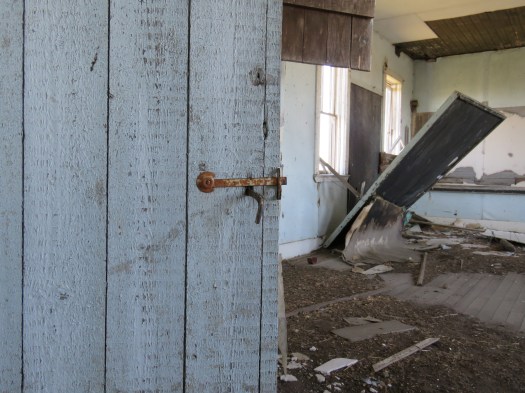
There were many outbuildings on the property and some old equipment.  And just my luck, an old wooden door knob – I love old door knobs and latches.

IMG_7646.JPG

I loved this little old building tucked away in the trees.

IMG_7697.JPG

And of course, this old cart.

IMG_7701.JPG

A was the second generation to farm this land.  I am told that this original home that stood on that old stone foundation was moved to town when Mrs. left the farm and was put up near our town school.

THE LONG HAUL

I am told that this home was hauled 40 km to its resting place by a 40 horse team wherein 3 ravines had to be crossed.  While I did not get this confirmed in writing, I will say that the information comes from a reliable source and a fellow abandoned home seeker in the area.

IMG_7799.JPG


The home has been designated a heritage site by the RM that it is in and is now home to several bee hives.

The family of this homesteader originated from Ireland and settled in Ontario.  The homesteader, Mr. B was born in 1899 on a nearby farm.  He was the eldest of 11 children.  He was the first baby baptist in the nearby church.  At a young age he left school to help his sickly father farm and his sisters fondly remember him taking care of them and ensuring they had skates and knew how to skate, took them to dances and traveled back and forth with them to and from their boarding schools to ensure they came home on the weekends.

IMG_7734.JPG

In 1918 he tried to enlist in the Army, under-aged.  His mother sent his birth certificate to headquarters before he could be sent overseas.  He trained as a barber for the military.

IMG_7768.JPG

In 1942 after farming with his father, working in Alberta and farming with his new wife’s brothers he purchased the land that this home stands on.  At the same time he purchased his very first shorthorn heifer and this began a long career of breeding and showing them.  He was described as a good herdsman who loved his animals.  He was a hard working man who did many things to earn money.

IMG_7737.JPG

Mr. & Mrs. B also had sheep, chicken’s, turkey’s, ducks and geese. They also had a bountiful garden and many berry bushes which they sold to others.  They were active in their community.

They were well loved in their community and fondly remembered by their children.

I have passed this home many times over the years and appreciate it a whole lot more given the knowledge of its history.

I was also told that the home was vandalized, virtually over night, many years ago, leaving a large hole on the exterior.  What a shame that someone would/could do this to something that 1. doesn’t belong to them and 2. that holds many memories to many.

IMG_7787.JPG

SHORT WALK TO SCHOOL

Mr. W was born in Cornwall, England in 1854.  He came to Canada and settled in Ontario. He found love and married his missus.  In 1881 they came to Manitoba and settled on this property.  The first home built there was a log home and then in 1896 this home was built.

IMG_7430.JPG

In 1883 a school was built on the SW corner of his property.  It was moved in 1902, 2 miles North.  Mr. W also owned the local Canadian Elevator in 1913 but it burnt down in 1917.  It was valued at $7,000 but he did not carry insurance.

His youngest son A, born in 1896 loved having the school close to home and at 5 years of age he would go to the school at 3:00 p.m. and sit with the teachers until school was dismissed.

IMG_2644.JPG

A married M in 1921 and lived on the farm.  M raised 50 ducks, geese and chickens every year.  She kept them in the coop during the day in incubators and at night time she moved them into the house until the warmer weather arrived.  There was evidence of one or two buildings that could have been chicken coops.

The raised 3 children on this farm, too.

IMG_2650.JPG

A & M’s only son, E born in 1938, started to farm with his Dad in 1953.  He married W and they had two children of their own.  They purchased the farm from E’s parents in 1966.

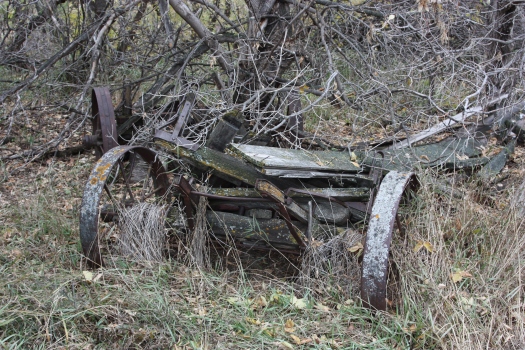
We found so many outbuildings and different machinery on this land.  I especially loved this old wheel the the tree it was resting upon which claimed it.

IMG_7440.JPG

E & W had one son whom still farms the land but lives nearby.  It was K & H that granted me permission to photograph the property and have asked me for copies of the photos that I take for her Mother-in-law as a keepsake.  I hope that the photos I have taken can do justice to the memories they must have of this farm.

IMG_7525.JPG

1900 CENTURY FARM

The H family came to Manitoba in the Spring of 1890.  The family settled in the area, his wife and 6 children.  In 1900 one of his young sons married, during a double wedding ceremony, with his sister and both settled on different sections of this land.  The siblings lived out their lives farming as neighbors on this section of land in the heart of Boissevain-Morton.

IMG_7581.JPG

The son played a role in the organizing of the East Lynne School District in 1904.  They belonged to the Ninga Methodist Church where Mrs. played the organ.

Water was always an issue on the farm.  Water was hauled in barrels from another section of land.

IMG_2709

In fact, one year on a hot July day Mr. had been working hard for days breaking sod and took a drink from the nearby slough.  He ended up with typhoid fever and was bedridden for weeks.  Luckily his sister-in-law was a newly trained as a nurse and nursed him back to health.

IMG_2708.JPG

In 1938 the government paid for a 120 foot long by 60 feet wide and 14 feet deep well.  The farm never saw a dry day after that.

IMG_2724.JPG

They were kind and generous people who in 1931 adopted a six year old boy.  The boy was only to stay with them for a couple days.  He became an integral part of their family.  He joined the World War II and returned home in 1945.  He unlike his siblings moved to the Virden area while the rest stayed in the area.

IMG_2697.JPG

Mr. suffered a major heart attack in 1941 and was not able to work again.  He passed away in 1952.  Mrs. passed away in 1968 at 91 years of age.

IMG_2695.JPG

Two of his children then took over the farm until 1971 when they passed on the farm to their Grandson.

IMG_7592.JPG


12 YEARS OLD

The original owner of this land, born in 1846, left his large, poor, religious family in Lac Megantic, Quebec at the age of 12 years old with only  .90 in his pocket and the clothes on his back.  He had intentions of making big money.  He took on whatever jobs he could find and for many years was part of a railway construction gang as a cook in Winnipeg.

In 1881 himself and another landowner, whose old property we have visited, headed to the land titles office in Winnipeg to purchase land in the R.M. of Prairie Lakes.  They reached their farms over 100 years ago with a team of horses, a plow to break land and food supplies.  Working as a cook gave him a good idea of what food supplies would best suit them.  They stocked up on cured salted pork, flour, sugar, coffee and tea.

On his 30th year he arrived at his property.  He started breaking land by hand and built a small house.  It was hard work but he was able to break land.  He also purchased a sow that had 12 little pigs.  He sold the extra meat for money.  He also purchased a cow and calf for milk and meat and 6 laying chickens.

He never married and when he got older and the work got to be to much he asked his brother to help him.

In 1887 a minister arrived in the area and had the idea to build a small chapel on the land.  The downstairs served as the living quarters, the upstairs as a chapel and a small corner on the main level served as the post office.  Eventually the church was moved to Dunrae, MB.  They also started building a blacksmith shop and a general store.  The building of the new railway through Dunrae stopped construction and the small church was moved.  The first St. Felix Cemetery remained on the property.

He died in 1915 at the age of 69.

The property shows no signs of this history any longer, except the St. Felix Cemetery in the middle of the 1/4 section.

This is the present home on the land.

IMG_2194.JPG

On the property was this neat little play house.  You could see in the distance that someone has used it as target practice.  That day I wasn’t brave enough to venture through the long grass for a closer look.

IMG_2248.JPG

There were a couple of old buildings on the land which maybe could have been part of the original land owners.

IMG_2251.JPG

Maybe one of these old buildings were built all those years ago.

IMG_2253.JPG

LITTLEST HOUSE ON THE PRAIRIE, SO FAR

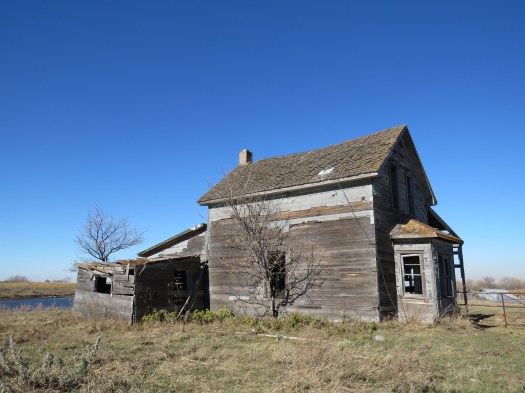
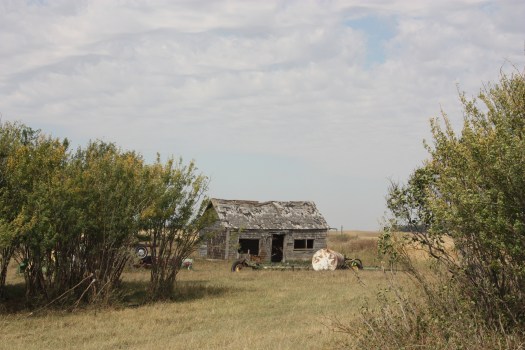
This is by far the smallest house I have been in yet.  In fact, it is so small that the dozen of times that I have driven by it I was sure it was just an old shed.

IMG_7271.JPG

Tucked away in a pasture, you don’t really see much except a very small roof.  The view once you get to the house is spectacular.  My pictures don’t do it justice.

IMG_7274.JPG

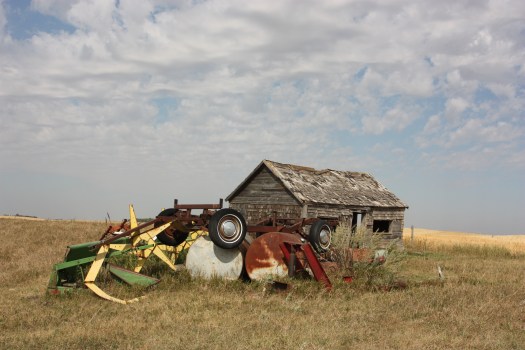
There wasn’t a whole lot to see here, the remnants of some old equipment and a gas tank.  I was sure that the house was moved off its foundation and likely served as some sort of shelter.  Regardless we were able to enter it, the roof was pretty much intact but there were no windows or doors.

IMG_7275.JPG

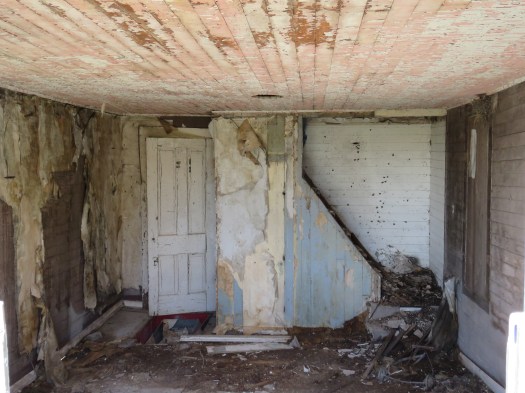
It was very small and there was no floor, it was right on the bare ground.  The tires on the frame of the care were still completely intact.

Heading off the property we came across this pile of wood, wires and scrap.  I was then convinced that the house had in fact been moved.

IMG_7321

BUTTRUM PART 2

A couple weekends ago I finally got myself inside this school.  I don’t know what it is that keeps me going back.  One thing for sure is that the sky always looks fabulous in the background.  It never disappoints.

IMG_2583.JPG

Once inside I tried to envision the very first Christmas concert with family & friends peering through the windows to get a better look.

IMG_2613.JPG

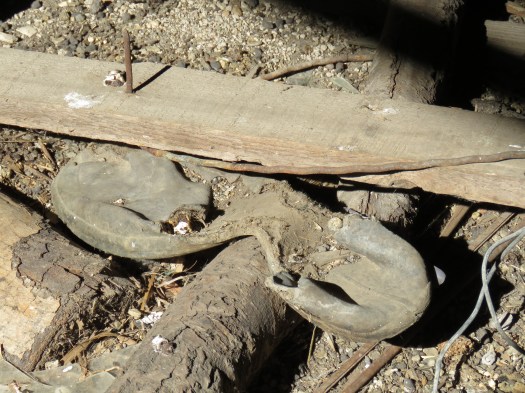
And of course what is an abandoned exploration without me finding a shoe!

IMG_2626.JPG

Such a neat old place with so many of the old settlers having played some sort of role as trustee, contributor or student.  Love that its still here to be a part of history.

EATON’S CATALOGUE ORDER?

I have been waiting all summer to get into this house.  I found it online on an abandoned home site and was lucky enough to be told its location by a local lady in town who lived there as a young bride.   I then discovered that Reg knows the family and he was able to get us permission to enter the home and photograph it.

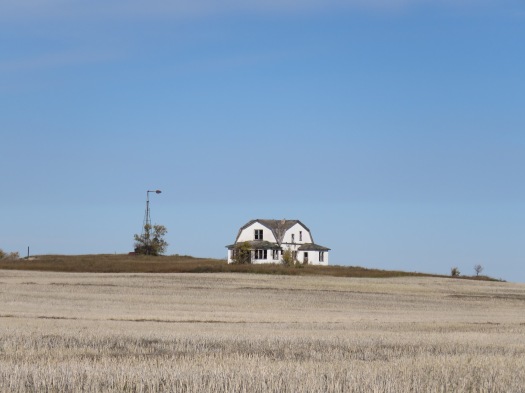
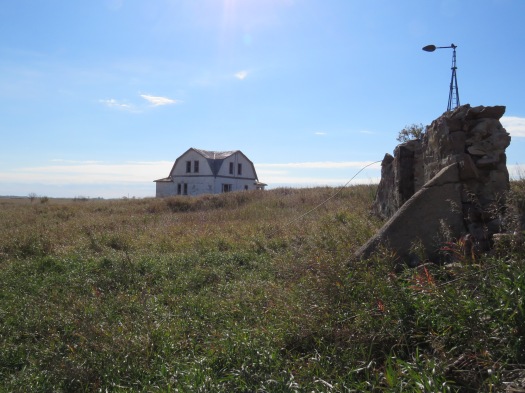
Set up high overlooking their land, this home still is as stunning as I imagine it was in its time.

IMG_2456.JPG

I won’t post a lot of photos of the home at the request of the land owner but I can give you little bit of history about it.

IMG_2546.JPG

The original homesteader came from Owen Sound, Ontario.  His family originated in England and were mainly bankers.  Mr. R choose sea life.  Becoming bored with his profession he immigrated to Canada in 1868 where he married his wife J.  Their first born son was born in Portage la Prairie, MB and at 6 weeks old they traveled to the area and settled into this homestead.

I am told that the home was purchased through the Eaton’s Company.  You can find a list of the home plans here.

From comparing photos I took inside and outside of the home I would say that this would be the original listing of the home for purchase through Eaton’s.

28.-IdealHome_Earlsfield.jpg

There were many mail order home companies back in the early 1900’s but the most famous was the T. Eaton Co. Ltd.  The business was centered at its Winnipeg branch. Eaton houses were made for Western Canada and most of the houses are found on farms.

They had dozens of different models but the most popular was the Earlsfield — a 1-½ storey house with a double gambrel roof. The barn-like roof made for very efficient use of lumber to provide a lot of living space.

The materials cost for the Earlsfield in Fall and Winter 1917-18 was listed at $1,193 (that’s $16,482 in 2015 dollars). Inflation was rampant in the teens so they quit posting prices in 1919.  Lumber was shipped by rail from mills in BC and millwork from Winnipeg.

Also on the property is what is left a an old stone barn.

IMG_2468.JPG

This was certainly worth the wait.  Of course I took way more pictures but you can only post so many.


ST. FELIX CEMETERY

This one had me stumped.  Until today.  So now I will edit it.

This land was owned by a bachelor who left home at 12 years old for bigger and better things.  He was determined he was going to make it big.  He left his large, poor family with .90 in his pocket.  He worked his butt off to make ends meet and eventually bought this 1/4 section of land which he broke by hand.  He raised animals and worked hard and eventually built himself a log home.

When he started to get older and the work became to much he asked his brother for help.  Eventually a local minister and a small chapel was built on the land.  Living quarters on the main level with a small post office in the corner and a chapel upstairs.  A general store and blacksmith shop were in the works and when the railway was built the decision was made to move the chapel to Dunrae.

This small cemetery is located in the middle of a farmer’s 1/4 section, marked off by poles which holds approximately 30 graves, most of them unmarked and some of them with bare wood crosses.

IMG_2259.JPG

I am told that this particular cemetery was marked by the local Knights of Columbus group.

IMG_2269.JPG

A small town site was in the works for this property but the building of the railway changed all this.  That is why there are two cemetery’s in the area.

IMG_2434.JPG

This cemetery is also in a farmer’s field but its not smack dab in the middle of one and its closer to a church.

The headstones at first St. Felix Cemetery were not easy to get to.  There were not as many markers there as there were names on the plaque and there were many deep holes in the uncut grass where the stones were.  We were able to get closer to a couple of them.

IMG_2266.JPG

The grass was really high which made it hard to see the stones that were lower to the ground unless you could get closer to them and move some of the tall grass away.

IMG_2265.JPG

Some of them were the traditional stone and there were a couple made of iron.

IMG_2262.JPG

Others were just wood crosses that may have been marked with a name but has weathered over time.

IMG_2263.JPG

Some of these graves have been here before the 1900’s.

BUTTRUM SCHOOL

This school in the RM of Prairie Lakes  opened its doors in 1982 and closed permanently in June of 1972.

buttrumschool1

This is what the building looks like now in 2018.

IMG_9413.JPG

The school is nestled on a little hill in the middle of a farmer’s field.  If your looking far and wide and in the right area, you will see it.

IMG_9418.JPG

Miss A.L. MacLachlan was the first teacher at this school was paid $35.00 a month for her term position.  She was given 5 months training to become a teacher.

IMG_9420.JPG

History surrounding the story of this school tells that the schools first concert was a huge success and in fact, so many people attended the concert that there was no room inside the building and parents and town people watched the concert through the windows from their horse carriages up against the side of the building.

IMG_9424.JPG

Due to a drop in students registered at the school, the school closed for a period of time from Fall of 1939 to 1943.

The school held district social events, dances, card parties and concerts.

Unfortunately we were denied permission to enter this property so road shots it is.  I’m sure I’ll be back as the backdrop is spectacular.

SAND & GRAVEL

I am told that this old home, built of concrete and standing up to the elements was built with local sand & gravel, then mixed to make concrete and poured by hand.  Here is a photo of the house taken in 1882.

IMG_1111

This huge home, I am told, was the home of a large family whom had their help live inside with them.  The family came from Ontario and Mr. moved to this property in February, 1882 and started to build the home.  In August of that year Mrs. and 3 of their children joined him.  The boys took over the farm after their parents died in 1920 and 1926.  The farm was then sold to another family that still remains in the area.

IMG_1348.JPG

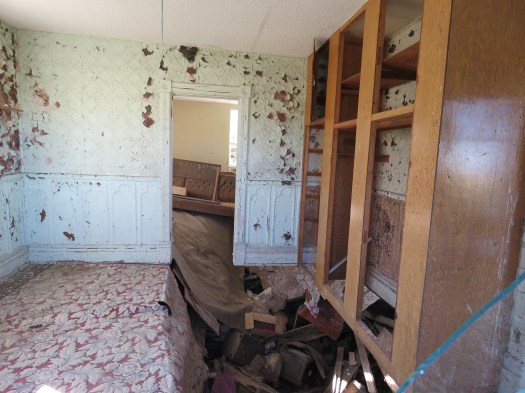
The inside tells a very different story of its ability to hold its own against the harsh elements of the prairies.  The roof is gone, the walls are coming down and the floor doesn’t exist in some places.  Really, anything that is wood is gone.  There was no evidence of the once wrap around porch.

IMG_1334.JPG

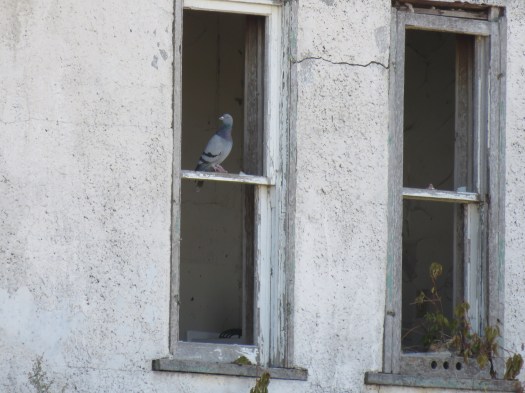
The best picture I could get of the home was from the back.  The one side is almost completely treed in, so much so that the trees are growing through the windows.  The front was no different.

IMG_1338.JPG

There were a lot of outbuildings and spectacular prairie views where ever you looked.  On this particular day a storm was brewing in the area and off in the distance, Reg and I could hear the thunder.  It was hot too!

IMG_1352.JPG

I wish I had found this yard years ago.  I wonder if there would have been more there than what is now.

IMG_1360.JPG

Most abandoned seekers will tell you about there dislike for caragana’s.  They will literally take over and provide a shield around an old abandoned home.

FIELD STONE BEAUTY

Over the years, a couple of families have resided on this property but I cannot confirm from the history books who built this home.  I did manage to find this photograph that was taken in 1892.

IMG_1110.jpg

This is what the home looks like now.  I can’t tell you enough how much I hate hydro poles!

IMG_1332.JPG

With the exception of one wall, this house is strong and stable.  I admired it from the outside for quite some time.  I can tell you that the inside of the home did not disappoint either.

IMG_1296.JPG

The details inside the home showed the pride the owners had in this home with fine little detailing on the cupboards and in the bathroom.  It was lived in for quite some time.

IMG_1320.JPG

I can only assume from my research that the family that once owned this land immigrated to Canada in the later 1800’s and remained in the area for some time.  Many of their ancestors are buried in the local cemetery.  They were very involved in their community and were very successful in their farming endeavors.  Some of the family endured tremendous loss, losing two sons at very young ages and a wife who became a widow very young as well.  The endured and her sons took over her farm and she lived some time.

I wish I knew more.